
For commercial pre-roll brands and multi-state operators (MSOs) in mature markets like North America and Europe, product compliance is a fundamental requirement. Since paper wrapping sheets constitute a direct component of the final consumable product, any chemical contamination in the paper will transfer directly into the smoke, triggering costly batch failures, product recalls, and severe brand damage.
To secure your product line, sourcing teams must implement testing standards that comply with the strictest global regulations, such as the heavy metal limits SC Labs rolling papers study highlighted. Sourcing from an audited OEM factory that provides independent Certificate of Analysis (COA) batch reports for heavy metals (Lead, Cadmium, Arsenic, Mercury) and pesticide residues is the only way to guarantee regulatory compliance in highly supervised jurisdictions like California.
Understanding the results of the SC Labs study, the details of California’s Department of Cannabis Control (DCC) action limits, and plant bio-accumulation behaviors will help you establish a zero-defect supply chain.
—
What did the SC Labs compliance report reveal about rolling papers?
A landmark industry study published by SC Labs (a leading ISO-accredited testing laboratory) analyzed 118 retail rolling papers, pre-rolled cones, and cellulose wraps purchased in California. The laboratory results revealed high rates of contamination across the retail market:
- 90% Positive Rate: Over 90% of the paper products tested contained detectable levels of at least one heavy metal.
- 8% Over-Limit Rate: Eight percent of the sampled papers directly exceeded California’s strict DCC legal action limits for inhalable products, rendering them illegal for commercial packaging.
- Transparent Cellulose Papers: The study identified transparent cellulose rolling papers as the highest-risk product category, showing severe lead contamination levels that exceeded action limits by over 120 times (reaching up to 60.3 ppm).
—
What are the California DCC heavy metal and pesticide action limits?
The California Department of Cannabis Control (DCC) enforces some of the strictest heavy metal action limits in the world for inhalable goods (Title 4, Section 15723). Because plants like hemp, flax, and bamboo act as natural bio-accumulators—absorbing metals and chemicals from soil and groundwater—controlling the raw agricultural sourcing environment is critical.
B2B buyers must ensure their rolling paper supplies remain well below the following maximum allowable limits:
| Target Heavy Metal | California DCC Action Limit (ppm / μg/g) | Common Source of Contamination | OEM Factory Control Method |
|---|---|---|---|
| Lead (Pb) | ≤ 0.5 ppm | Recycled fibers, industrial water, low-grade inks | 100% Virgin FSC fiber, RO water filtration |
| Arsenic (As) | ≤ 0.2 ppm | Chemical fertilizers, low-grade soil | Soil testing, organic hemp sourcing |
| Cadmium (Cd) | ≤ 0.2 ppm | Industrial waste fallout, soil pollution | Raw pulp batch verification |
| Mercury (Hg) | ≤ 0.1 ppm | Agricultural runoff, soil pollution | Trace pesticide/heavy metal screening |
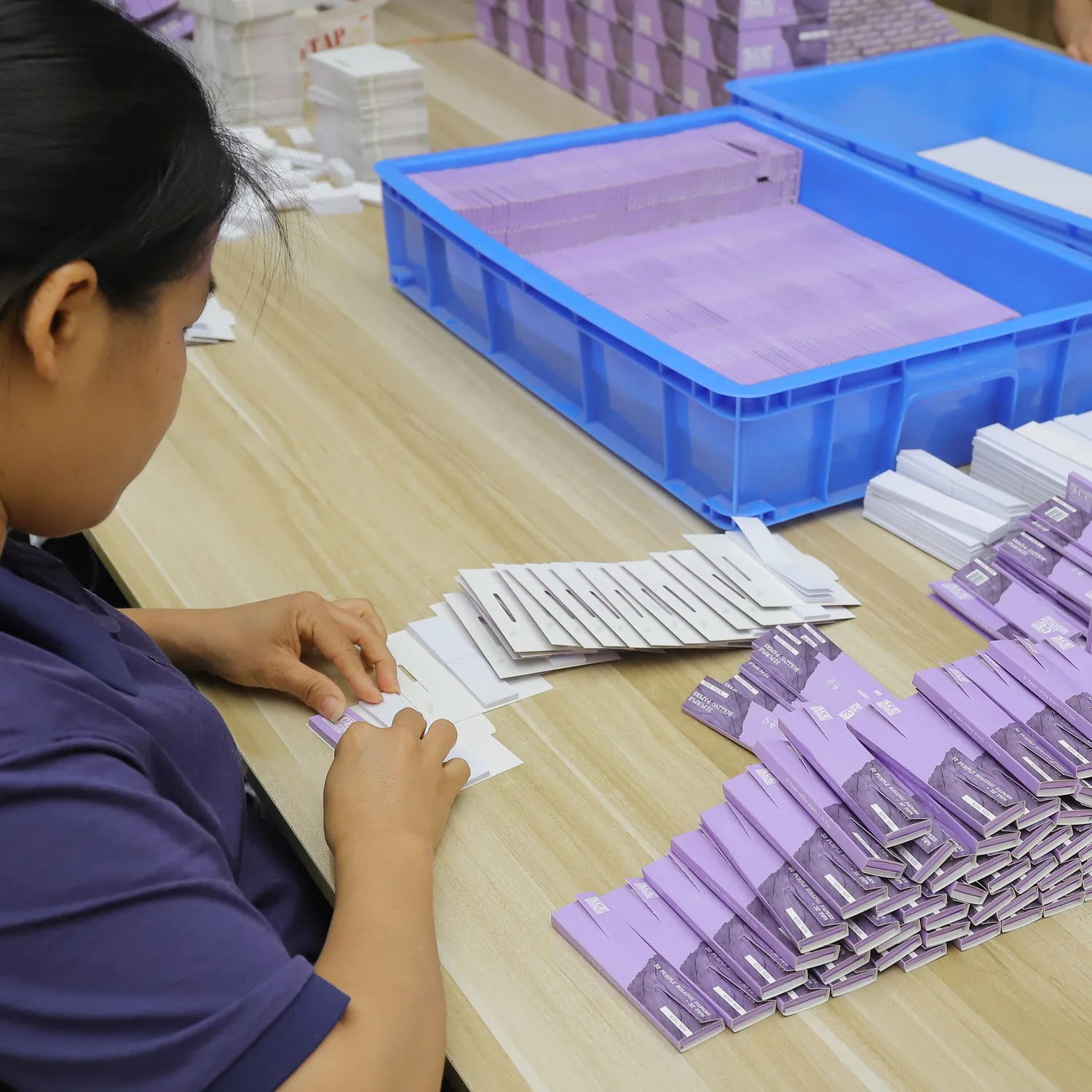
In addition to heavy metals, the paper must pass a 66-pesticide screening panel, showing negative results ( — Maintaining heavy metal compliance requires a systematic approach to raw material selection and wet-end manufacturing. To guarantee clean, compliant pre-rolled cones and booklets, premium OEM factories implement the following quality controls: — Ace Rolling هي شركة مصنعة مباشرة تعمل في ورشة إنتاج بمساحة 4000 متر مربع و7 خطوط إنتاج آلية. بدعم من الخبرة الصناعية لشركة Hengfeng Paper المملوكة للدولة، نضمن أمن التوريد الكامل:How do premium OEM factories prevent heavy metal contamination?
احصل على مصادرك بأمان مع Ace Rolling
قائمة التحقق من الامتثال في التوريد