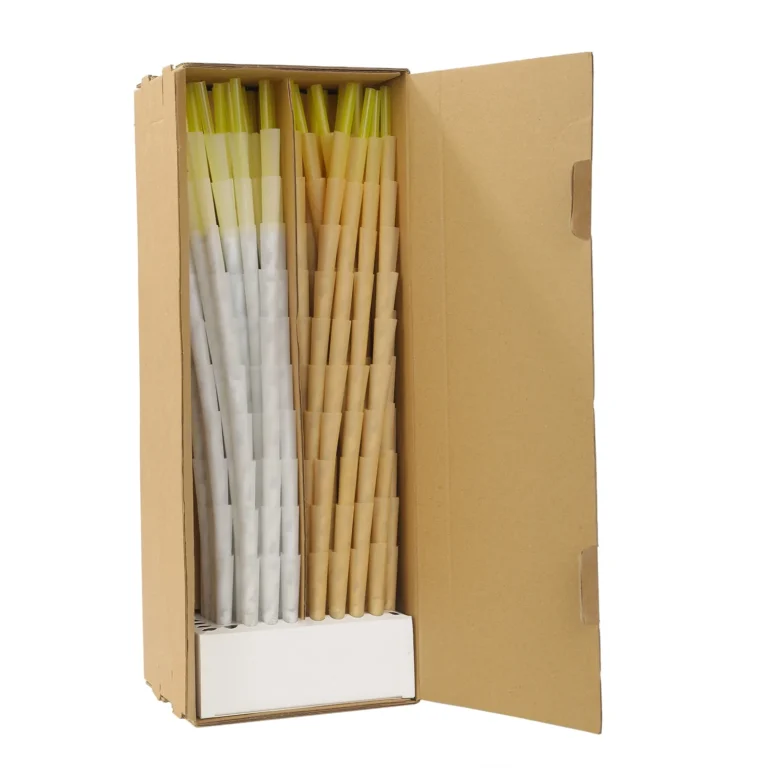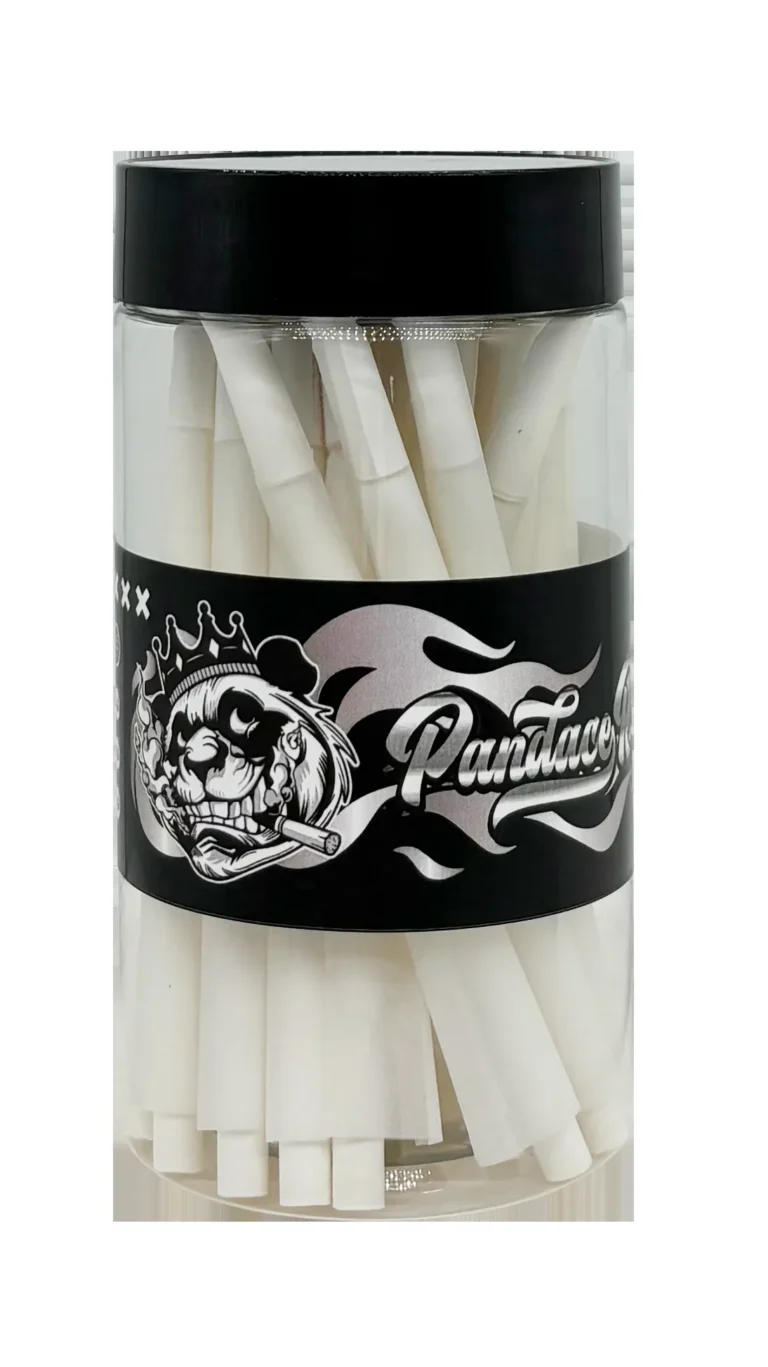

How many pre-rolls come from one ounce of fill? One ounce is 28.35 grams; divide that by your target per-cone fill weight to get your yield—at a 0.5g fill you get roughly 56 pre-rolls, at 0.75g roughly 37, and at 1g roughly 28, so yield is entirely a function of your chosen fill weight, not a fixed number.
SERP peers such as Roll Your Own Papers walk through this yield math as a production planning reference. This guide focuses on the full-ounce yield calculation for production planning, distinct from a per-cone fill weight discussion covered elsewhere.
What’s the Basic Math Behind Ounce-to-Pre-Roll Yield?
Lead-in: The calculation is simple division once you know your fill target.
Summary: One ounce equals 28.35 grams. To calculate yield, divide 28.35 by your target fill weight per cone in grams. This gives the number of pre-rolls one ounce of material produces at that specific fill weight—there’s no fixed “pre-rolls per ounce” number independent of fill weight.

| Fill weight per cone | Approximate yield from 1 oz |
|---|---|
| 0.5g | ~56 pre-rolls |
| 0.75g | ~37 pre-rolls |
| 1.0g | ~28 pre-rolls |
Ключевой вывод: Yield is 28.35 divided by your fill weight—there’s no single universal answer without specifying fill weight first.
Fill planning: https://ace-rolling.com/how-many-grams-go-in-a-pre-rolled-cone-fill/.
Why Does Fill Weight Vary So Much Across Brands and Products?
Lead-in: Fill weight is a brand and market positioning decision, not a fixed standard.
Summary: Fill weight varies based on target price point, cone size, market expectations, and brand positioning. A budget-focused brand might target a lower fill weight for a lower price point, while a premium brand might target a higher fill weight in a larger cone format. This is why yield calculations always start with your specific fill target, not an industry-wide constant.
| Positioning factor | Fill weight tendency |
|---|---|
| Budget/value tier | Often lower fill weight |
| Premium/larger format | Often higher fill weight |
| Market expectation | Varies by region and category |
Ключевой вывод: Set your fill weight based on your specific price tier and cone size first—yield calculations follow from that decision.
Варианты конусов: https://ace-rolling.com/pre-rolled-cones/.
How Does Cone Size Affect Realistic Fill Weight Targets?
Lead-in: A smaller cone physically can’t hold the same fill as a larger one.
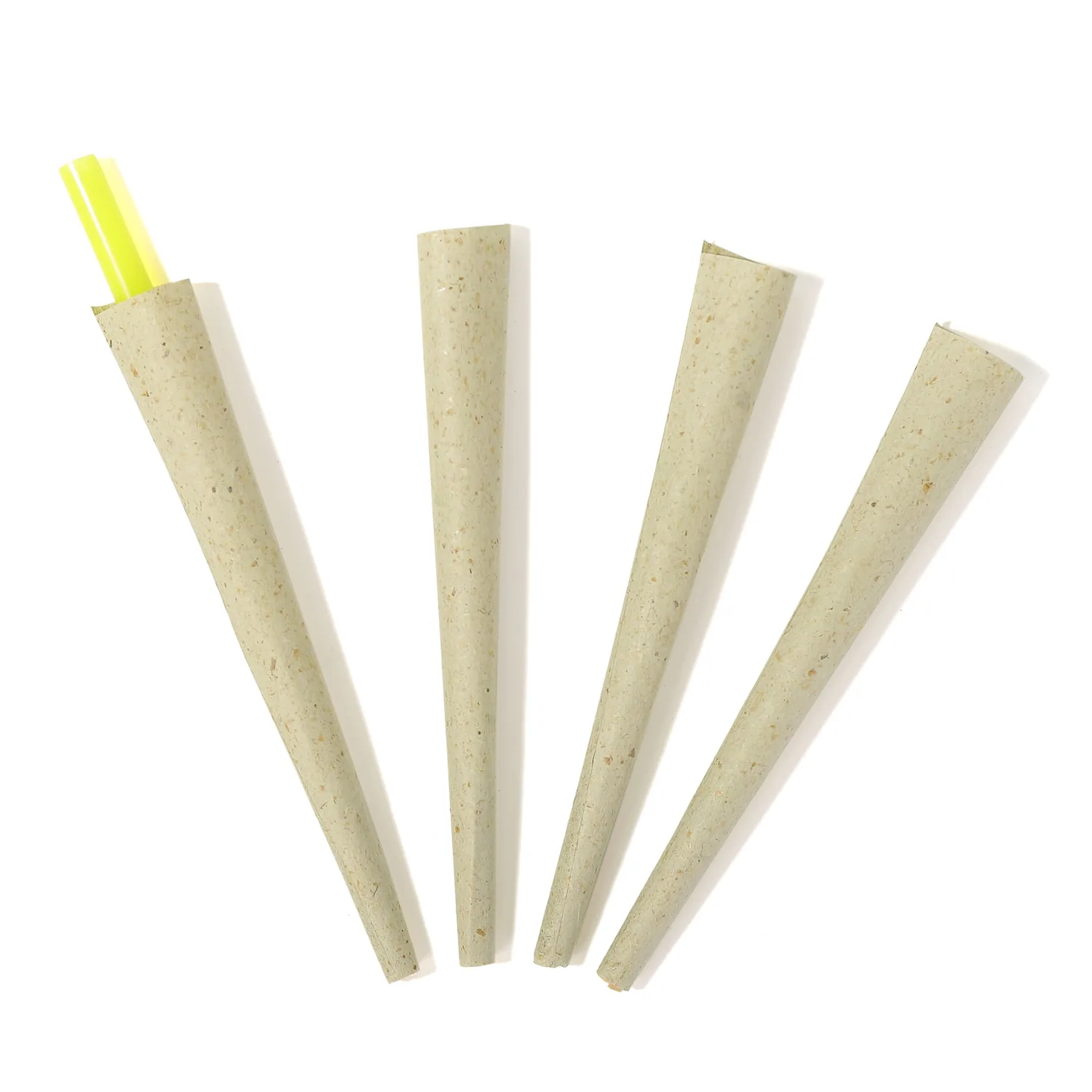
Summary: Slim/1¼-size cones (paired with 6mm tips) generally support a lower maximum fill weight than 98mm or 109mm king-size cones (paired with 8mm tips), simply due to cavity size. Your yield calculation needs a fill weight that’s actually realistic for your chosen cone format, not an arbitrary target.

| Cone format | Realistic fill weight range tendency |
|---|---|
| Тонкий/1¼ размера | Lower fill weight range |
| 98mm/109mm king-size | Higher fill weight range |
Ключевой вывод: Confirm your fill weight target is realistic for your chosen cone size before calculating ounce yield—not every fill weight fits every cone.
Size reference: https://ace-rolling.com/should-you-buy-98mm-or-109mm-pre-rolled-cones/.
How Should You Use This Yield Math for Production Planning?
Lead-in: Yield math scales directly to larger production volumes.
Summary: For a full production run, multiply your target unit count by your fill weight per cone to get total fill material needed, or divide your total available fill material by fill weight to get total unit output. This same ratio scales linearly whether you’re planning for one ounce or a bulk production quantity.

| Planning direction | Calculation |
|---|---|
| Units → material needed | Units × fill weight = total material |
| Material → units produced | Total material ÷ fill weight = units |
Ключевой вывод: The same fill-weight ratio scales linearly from a single ounce to your full production volume—use it for planning at any scale.
Fill planning: https://ace-rolling.com/how-many-grams-go-in-a-pre-rolled-cone-fill/.
Does Machine Filling Change the Yield Calculation?
Lead-in: Automated filling can affect consistency, which matters for planning accuracy.
Summary: Machine filling generally achieves more consistent per-unit fill weight than hand filling, which makes yield calculations more reliable in practice—hand-filled batches can show more variance around your target fill weight, affecting real-world yield versus the theoretical calculation.
| Filling method | Yield calculation reliability |
|---|---|
| Machine filling | More consistent, closer to theoretical yield |
| Hand filling | More variance around target |
Ключевой вывод: Machine-filled production tracks closer to theoretical yield calculations than hand-filled batches—factor this into your planning buffer.
Варианты конусов: https://ace-rolling.com/pre-rolled-cones/.
What Buffer Should You Plan for Beyond the Theoretical Yield?
Lead-in: Real-world production rarely hits the exact theoretical number.
Summary: Plan for some variance buffer beyond the pure theoretical yield calculation to account for fill weight variation, material loss during handling, and quality rejects. A small buffer in your material ordering prevents falling short of your target unit count due to normal production variance.

| Фактор | Impact on planning |
|---|---|
| Fill weight variance | Slight yield reduction |
| Material handling loss | Small material buffer needed |
| Quality rejects | Reduces final usable unit count |
Ключевой вывод: Order slightly more material than the pure theoretical calculation suggests to buffer against normal production variance.
Документация по качеству: https://ace-rolling.com/quality-certifications/.
How Do You Plan Your Production Order Using This Math?
Lead-in: One brief combines your fill target, cone size, and total unit goal.
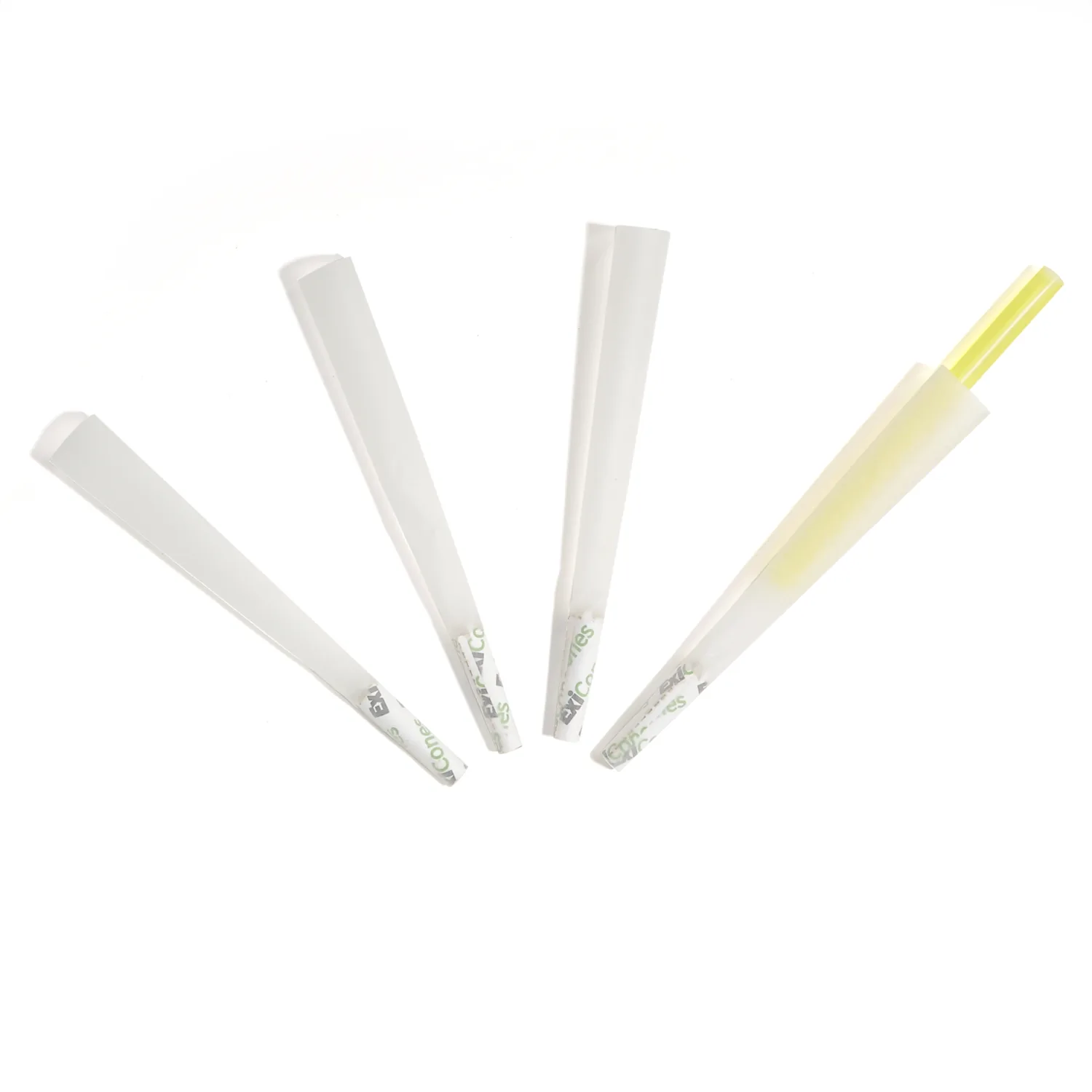
Summary: Send Ace your target cone size, fill weight per cone, and total unit goal (or total fill material available). Ace can help confirm whether your fill weight target is realistic for your chosen cone size and quote production accordingly.
| Шаг | Действие |
|---|---|
| 1 | Set fill weight target realistic for cone size |
| 2 | Calculate yield or material needed |
| 3 | Add buffer for production variance |
| 4 | Confirm with Ace and quote |
Ключевой вывод: Bring your fill weight, cone size, and unit goal together in one brief—yield math only works once all three are set.
Start: https://ace-rolling.com/contact/.
Часто задаваемые вопросы
How many pre-rolls come from one ounce of fill?
One ounce is 28.35 grams. Divide that by your target per-cone fill weight to get your yield: roughly 56 pre-rolls at a 0.5g fill, roughly 37 at 0.75g, and roughly 28 at 1g. Yield is entirely a function of your chosen fill weight, so there’s no single fixed number without specifying that target first.
Why isn’t there one standard answer for pre-rolls per ounce?
Because fill weight per cone varies based on price tier, cone size, and brand positioning—it’s a deliberate choice, not a fixed industry standard. A budget brand targeting a lower fill weight yields more units per ounce than a premium brand targeting a higher fill weight in a larger cone, so the answer always depends on your specific fill target.
Does cone size limit how much fill weight I can realistically target?
Yes. Smaller cone formats like slim or 1¼-size (paired with 6mm tips) have less cavity space than larger 98mm or 109mm king-size cones (paired with 8mm tips), so they generally support a lower maximum realistic fill weight. Confirm your fill weight target is realistic for your chosen cone size before calculating yield.
Does machine filling produce more accurate yield results than hand filling?
Generally yes. Machine filling achieves more consistent per-unit fill weight than hand filling, which makes real-world yield track closer to the theoretical calculation. Hand-filled batches tend to show more variance around the target fill weight, so factor that variance into your planning if you’re using a hand-filling process.
How much extra material should I order beyond the theoretical yield calculation?
Plan for a small buffer beyond the pure theoretical number to account for fill weight variance, material handling loss, and quality rejects during production. The exact buffer percentage depends on your specific process and filling method, but ordering purely to the theoretical calculation risks falling short of your target unit count.
How do I use this yield math to plan a full production order?
Multiply your target unit count by your fill weight per cone to get total fill material needed, or divide your total available material by fill weight to get total unit output—the same ratio from one ounce scales to any production volume. Bring your fill weight, cone size, and unit goal to Ace for a production quote.
Ready to Plan Your Production Yield?
Set a realistic fill weight for your cone size, then use this math to plan your full production order.
- Fill planning guide: https://ace-rolling.com/how-many-grams-go-in-a-pre-rolled-cone-fill/
- Cone options: https://ace-rolling.com/pre-rolled-cones/
- Quote: https://ace-rolling.com/contact/