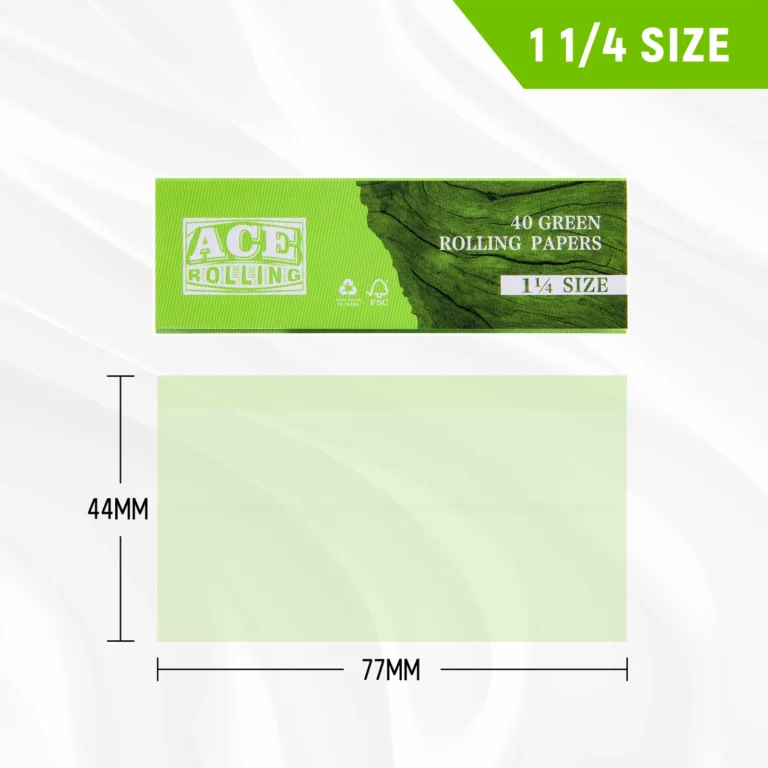

I’ve covered the full rolling paper length chart elsewhere. This piece narrows down to just these two formats specifically, because that’s usually the actual decision new brands are stuck on.
1 1/4 is the shorter, narrower everyday format most familiar to a broad legacy market; King Size Slim is longer and roughly the same width as 1 1/4 despite the “king” name, appealing to buyers who want more paper without the extra width of standard king size—lead with 1 1/4 for broad familiarity, or King Size Slim if your market skews toward that longer, narrower preference.
Read this and you’ll know the real difference between these two specific formats, not just where they sit on a general size chart.

I’ve published a general rolling paper length chart covering every standard size at https://ace-rolling.com/how-long-should-rolling-paper-be/. This piece goes deeper specifically on the choice between these two.
What Actually Separates 1 1/4 From King Size Slim as Formats?
I clarify the actual dimensional relationship first, since the naming causes real confusion.
1 1/4 is the shorter, narrower everyday size long used as the industry default; King Size Slim is meaningfully longer than 1 1/4 but shares a similar, narrower width to 1 1/4 rather than the wider width of standard King Size—it’s the length that changes most between these two, not the width.

I explain this to buyers specifically because “King Size Slim” sounds like it should be wider than 1 1/4 given the “king” name, when in practice the “slim” part is doing the real work—it keeps the narrower width while extending the length. Confirming exact dimensions with your manufacturer avoids surprises at sampling.
| 尺寸 | 1 1/4 | 王者尺寸細長 |
|---|---|---|
| 長度 | 較短 | 更長 |
| 寬度 | Narrow | Similarly narrow |
| Market role | Broad default | Longer-format preference |
Which Format Does the Broader Market Actually Lean Toward?
This affects your default choice if you don’t yet have strong data on your own customer base.
1 1/4 remains the more broadly familiar, higher-volume default across most established markets, while King Size Slim has grown as a preference among buyers wanting a longer roll without extra width—both have real demand, but 1 1/4 is the safer default absent specific data pointing elsewhere.

I recommend new brands without existing sales data default toward 1 1/4 for their core SKU, then evaluate King Size Slim as an expansion size once they have real customer feedback pointing toward that preference, rather than guessing on the less broadly familiar format first.
Does Rolling Technique Differ Enough to Matter for New Users?
I address this because it affects how forgiving each format is for less experienced rollers.
A longer format like King Size Slim gives more surface area to work with while rolling, which some experienced rollers prefer, but it can also feel less forgiving for a first-time roller compared to the shorter, more compact 1 1/4—this matters if your target customer skews toward less experienced users.

I ask brands about their target customer’s experience level for exactly this reason. A brand targeting newer users benefits from 1 1/4’s more compact, forgiving format, while a brand targeting experienced rollers can lean into King Size Slim’s larger canvas as a genuine feature, not a drawback.
Which Format Should a New Brand Lead With as Its Core SKU?
I’d rather give a direct recommendation than leave this ambiguous.
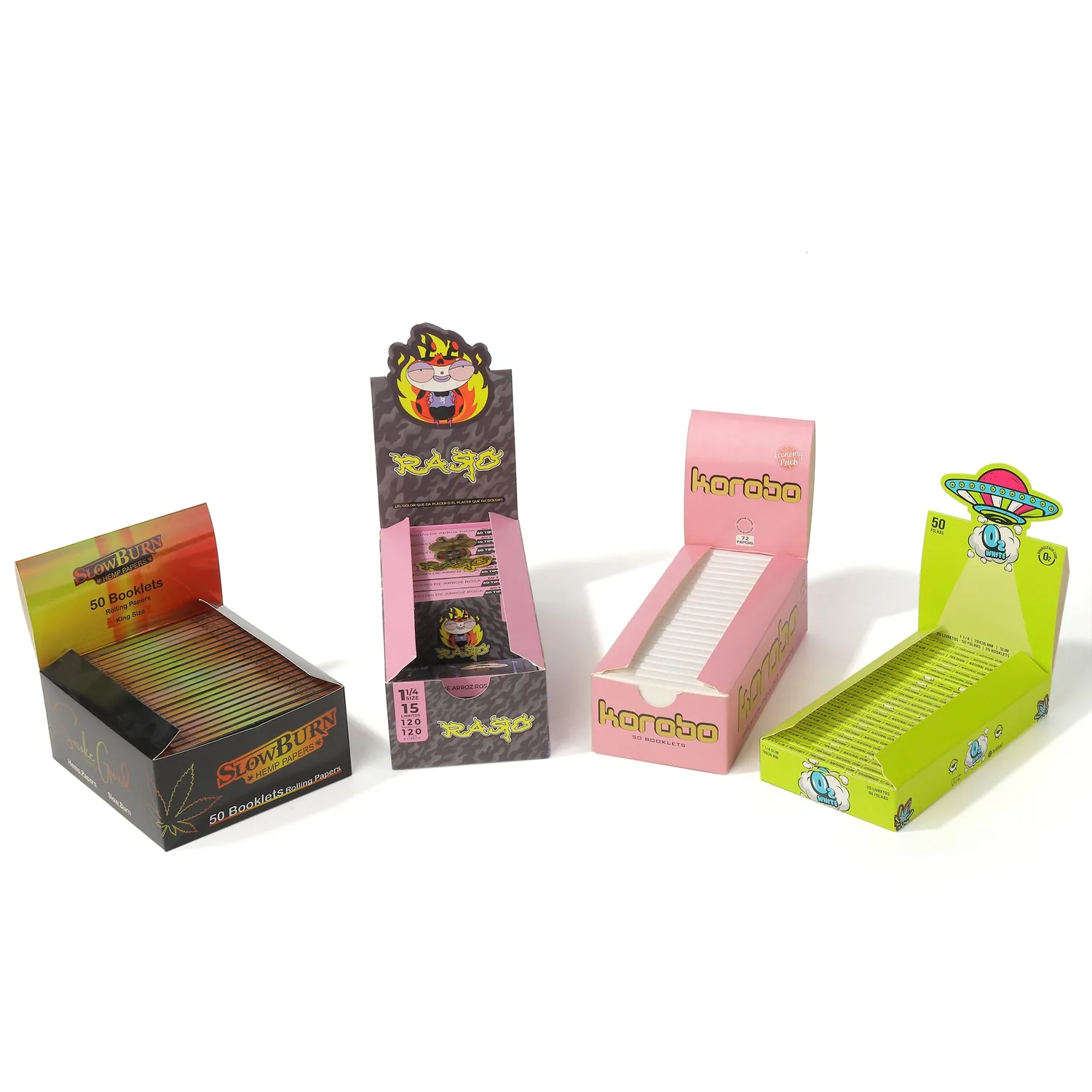
Lead with 1 1/4 as your core SKU for the broadest addressable market and safest default, then add King Size Slim as a second SKU once you have customer data supporting demand for the longer format—launching both simultaneously without data usually just splits your early marketing focus.
| 格式 | Best default use case |
|---|---|
| 1 1/4 | Core SKU, broadest market, first-time brand launch |
| 王者尺寸細長 | Second SKU, once data supports longer-format demand |
Does Printing and Crease Placement Actually Differ Between the Two?
This is a production detail buyers sometimes overlook until artwork is already finalized.
Yes—a longer sheet gives more usable printable area, which changes how your logo, crease lines, and gum strip placement are laid out compared to the shorter 1 1/4 sheet; confirm your artwork template matches your chosen format’s actual dimensions before finalizing your design.
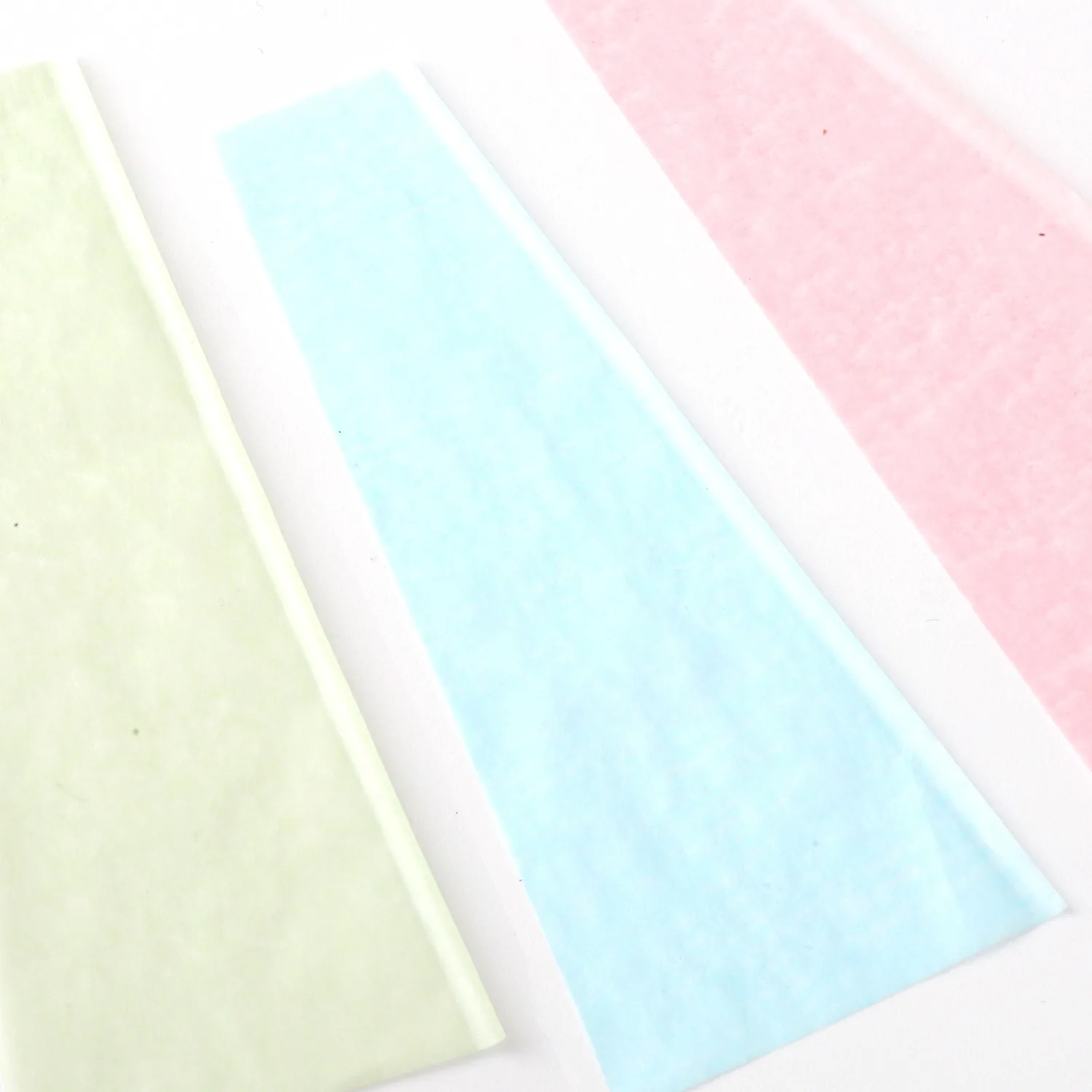
I always confirm artwork templates against the exact final format dimensions before a print run, because designing for one size and shifting formats later usually means redoing crease and print layout work, not just resizing an existing file.
Can You Launch Both Formats Under One Brand Without Overcomplicating Things?
I want brands to know this is possible without treating it as a default starting move.
Yes, once your core SKU is established—running both formats under one consistent brand design keeps your visual identity unified while covering both customer preferences, but I’d still validate demand for the second format with real sales data before adding the production and inventory complexity.

Ace’s custom paper programs quote from roughly USD $0.07–$0.30 per booklet wholesale across formats, with MOQ applying per size and design.
常見問題
Should I choose 1 1/4 or King Size Slim rolling paper for my brand?
Lead with 1 1/4 for the broadest addressable market and safest default launch SKU, since it remains the more broadly familiar, higher-volume format. Add King Size Slim as a second SKU once you have real customer data supporting demand for the longer format, rather than guessing on it for your first launch.
What’s the actual dimensional difference between 1 1/4 and King Size Slim?
1 1/4 is the shorter, narrower everyday size. King Size Slim is meaningfully longer than 1 1/4 but shares a similarly narrow width, rather than the wider width of standard King Size. Length is the dimension that changes most between these two formats, not width, despite what the “king” name might suggest.
Is King Size Slim harder to roll than 1 1/4 for a first-time user?
It can feel less forgiving for a first-time roller, since the longer format gives more surface area to manage during rolling. Experienced rollers often prefer that extra length as a feature, but if your target customer skews toward less experienced users, 1 1/4’s more compact format is generally the safer default.
Does my artwork design need to change between these two formats?
Yes. A longer King Size Slim sheet has more usable printable area, which changes how logo placement, crease lines, and gum strip positioning lay out compared to the shorter 1 1/4 sheet. Confirm your artwork template matches your chosen format’s exact dimensions before finalizing a design or print run.
Can I launch both 1 1/4 and King Size Slim under the same brand?
Yes, once your core SKU is established. Running both under one consistent brand design keeps your visual identity unified while covering both customer preferences, but validate demand for the second format with real sales data first, since launching both without data usually just splits early marketing focus.
What does Ace Rolling charge for custom paper across these two formats?
Ace’s custom rolling paper programs quote from roughly USD $0.07–$0.30 per booklet wholesale, with pricing and MOQ applying per specific size and design across formats including 1 1/4 and King Size Slim. Share your target format and print requirements for an accurate quote.
Ready to Confirm Which Format Fits Your Launch?
Tell me your target market and experience level, and I’ll confirm which format to lead with.
- 客製化捲菸紙:https://ace-rolling.com/custom-rolling-papers/
- OEM/ODM方案:https://ace-rolling.com/oem-odm-rolling-paper-manufacturer/
- 引用:https://ace-rolling.com/contact/