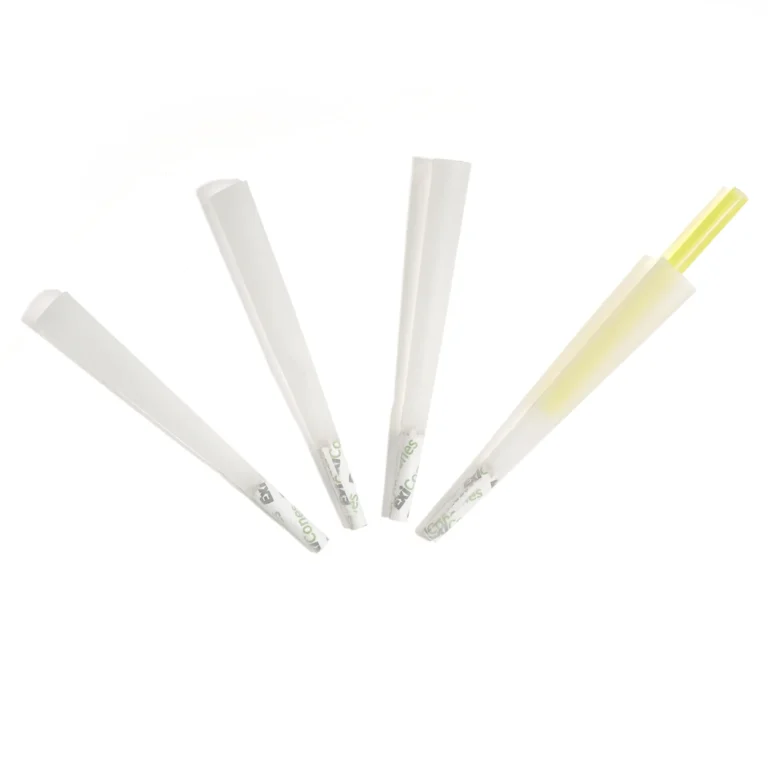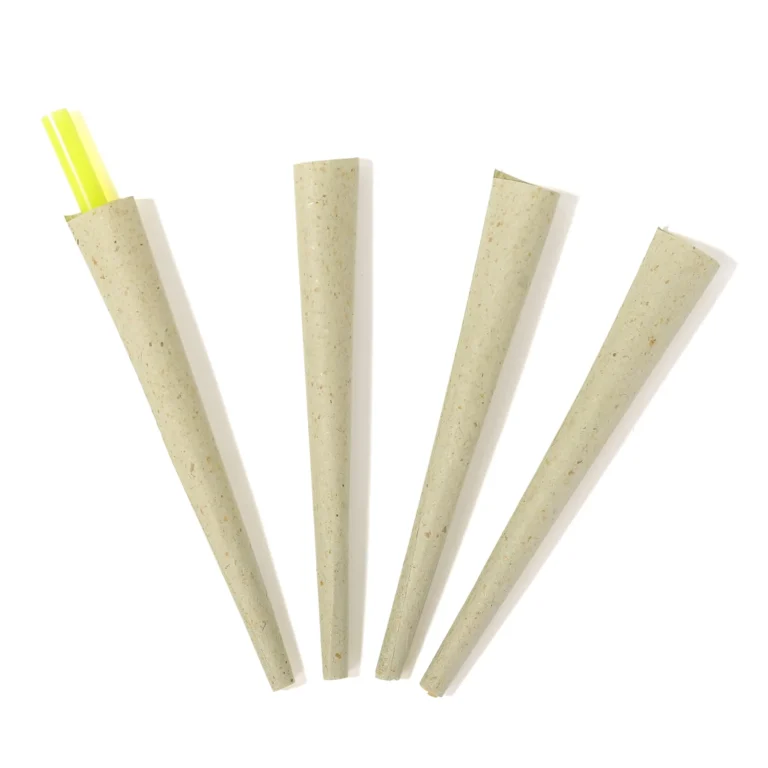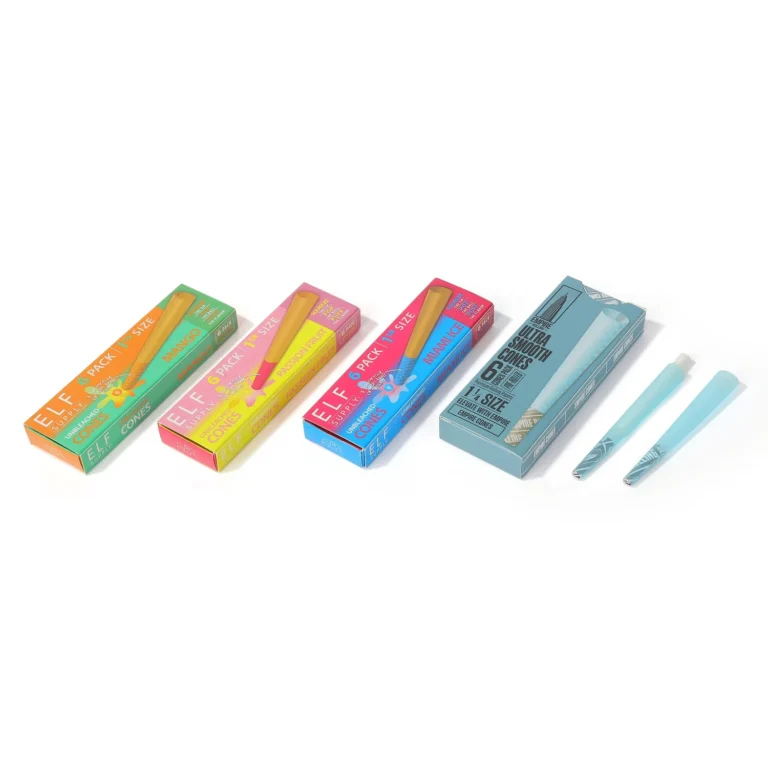

How are custom printed filter tips manufactured at Ace? Tip stock is fed and printed on a dedicated print station before it’s cut, formed, and seated into the cone during assembly—print happens before forming, not after, so artwork must be planned around how the flat stock will fold and roll into its final tip shape.
SERP peers such as Thecones Factory outline the manufacturing steps behind custom printed filter tips. This guide walks through the actual production process, distinct from a buyer-facing ordering/briefing guide covered elsewhere.
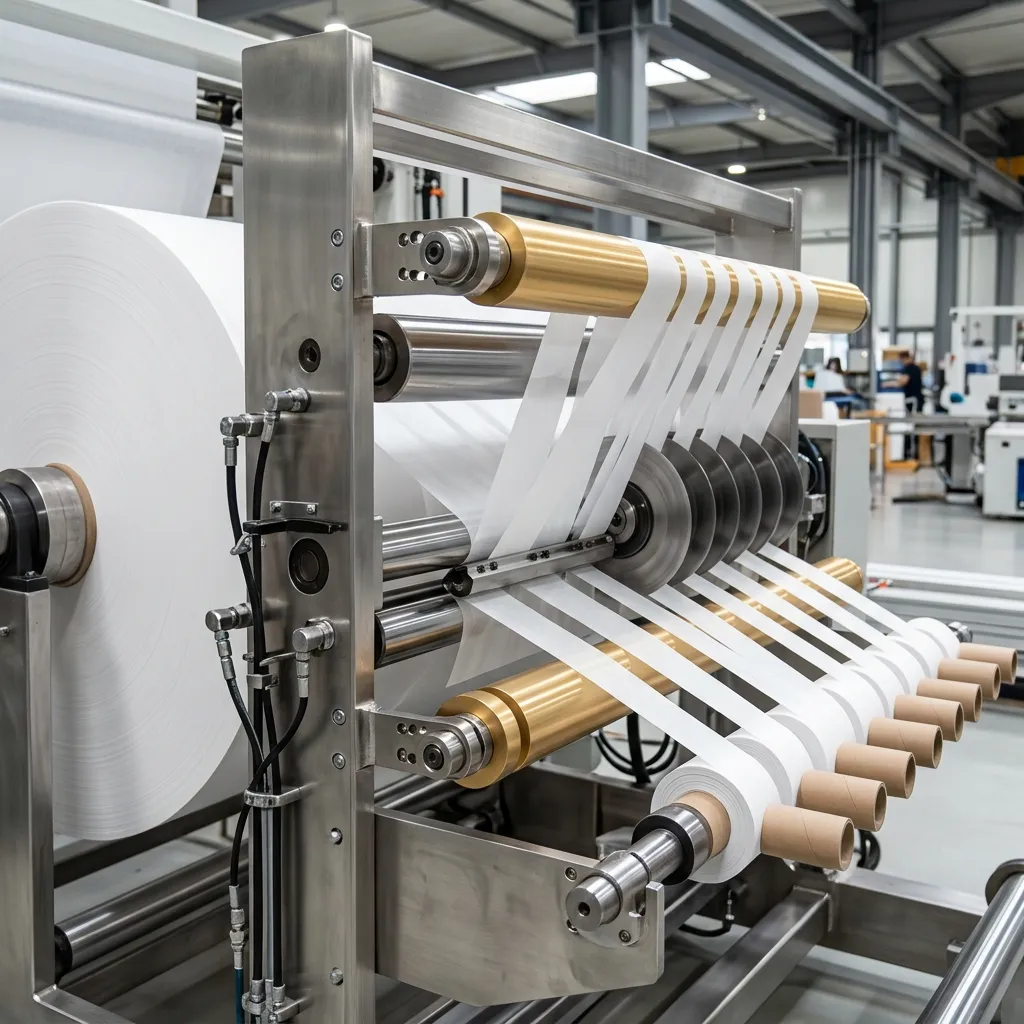
What Tip Stock Feeds Into the Print Station?
Lead-in: The base material starts as flat, unprinted stock before any converting steps.
Summary: Tip paper stock arrives on the converting line as a continuous roll or pre-cut flat sheet, unprinted. This flat stock is the substrate that will later be printed, cut to size, and formed into the rolled tip shape—understanding this starting state helps explain why print placement matters before forming happens.
| مرحلة | State |
|---|---|
| Incoming stock | Flat, unprinted roll or sheet |
| After print station | Flat, printed |
| After forming | Rolled, seated tip shape |
الخلاصة الرئيسية: Tip stock starts flat and unprinted—every print and cut decision happens before the final rolled shape exists.
أوراق مخصصة: https://ace-rolling.com/custom-rolling-papers/.
How Does the Print Station Apply Custom Artwork to Flat Stock?
Lead-in: Printing happens on the flat substrate, positioned to survive the forming step.
Summary: The print station applies logo, color, or pattern artwork to the flat tip stock using the converting line’s print process. Artwork placement must account for how the flat stock will later fold and roll, since a design that looks correct flat can shift, distort, or partially hide once the tip is formed.

| Print consideration | لماذا يهم |
|---|---|
| Flat artwork placement | Must anticipate final rolled shape |
| Color/pattern application | Applied before cutting/forming |
| Design distortion risk | Confirm with a formed sample, not a flat proof |
الخلاصة الرئيسية: Approve artwork on an actual formed tip sample, not just a flat printed proof—forming can shift how the design reads.
عملية العينة: https://ace-rolling.com/how-to-get-a-custom-rolling-paper-sample-kit/.
How Is Printed Stock Cut to the Correct Tip Dimensions?
Lead-in: Cutting shapes the flat printed sheet into the correct blank size for forming.
Summary: After printing, the stock is cut to the precise blank dimensions needed for the target tip diameter and length. Cutting precision here directly affects how consistently the tip forms and seats later in the process—inconsistent cutting can lead to variable fit even with correctly printed artwork.
| خطوة | الغرض |
|---|---|
| Cutting to blank size | Sets dimensions for forming |
| Precision required | Affects final fit consistency |
| Downstream impact | Inconsistent cuts cause variable seating |
الخلاصة الرئيسية: Cutting precision is as important as print quality—a well-printed but poorly cut blank still causes fit problems.
Quality documentation: https://ace-rolling.com/quality-certifications/.
How Is the Printed Blank Formed Into a Rolled Tip Shape?
Lead-in: Forming folds and rolls the flat, printed, cut blank into its final shape.
Summary: The cut blank is folded and rolled into the tip’s final cylindrical or accordion-fold shape, depending on the tip style specified. This forming step is where the flat printed design becomes a three-dimensional tip—any earlier print placement decisions now show their real-world result for the first time.

| Forming step | النتيجة |
|---|---|
| Folding | Creates accordion structure (if applicable) |
| Rolling | Creates cylindrical tip shape |
| First visual check | Confirms print placement in final form |
الخلاصة الرئيسية: Forming is the moment print placement decisions become visible in 3D—inspect formed samples carefully at this stage.
أوراق مخصصة: https://ace-rolling.com/custom-rolling-papers/.
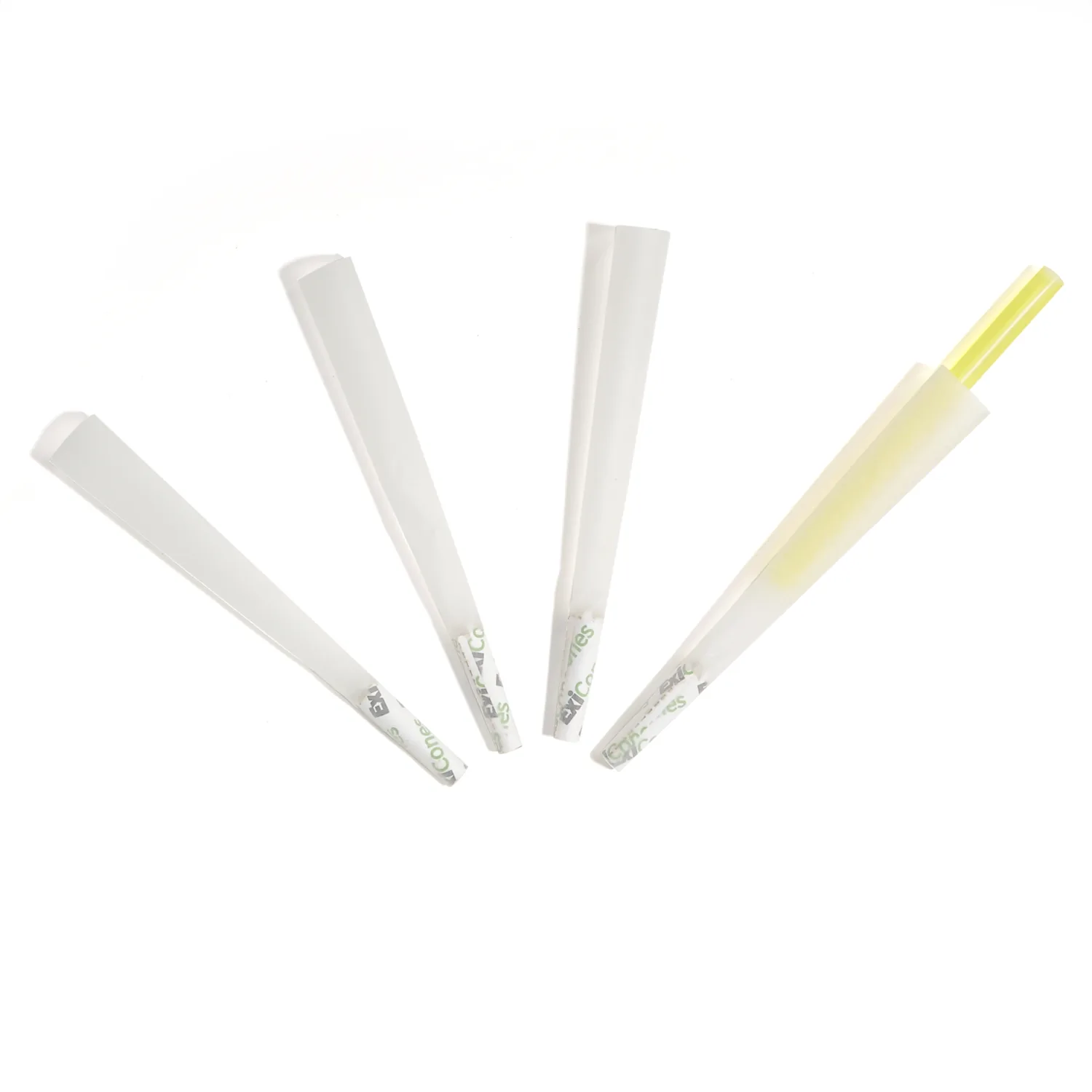
How Is the Formed Tip Seated Into the Cone or Booklet Assembly?
Lead-in: The finished tip integrates into the larger product during assembly.
Summary: Once formed, the printed tip is seated into the cone’s mouth end (for pre-rolled cones) or prepared as a standalone tip product, depending on the order type. This assembly step confirms fit and function together—a well-printed, well-formed tip still needs to seat correctly in its final product context.
| Assembly context | Integration point |
|---|---|
| Pre-rolled cone | Seated at mouth end during cone assembly |
| Standalone tip product | Packaged as its own SKU |
الخلاصة الرئيسية: Confirm the tip’s fit in its actual final product context, not just as a standalone formed piece.
خيارات المخاريط: https://ace-rolling.com/pre-rolled-cones/.
What Quality Checks Happen Across This Manufacturing Process?
Lead-in: Each stage has its own checkpoint before moving to the next.
Summary: In-process QC checks print registration and color accuracy after the print station, dimensional accuracy after cutting, and fit/seating consistency after forming and assembly. Ace’s ISO 9001:2015 quality management framework documents checkpoints across these stages rather than relying on a single final inspection alone.

| مرحلة | QC checkpoint |
|---|---|
| After printing | Registration, color accuracy |
| After cutting | Dimensional accuracy |
| After forming/assembly | Fit and seating consistency |
الخلاصة الرئيسية: Multi-stage QC catches issues earlier than a single final inspection—ask your supplier how their checkpoints are structured.
Quality & certifications: https://ace-rolling.com/quality-certifications/.
How Do You Brief a Custom Printed Tip Manufacturing Order?
Lead-in: Understanding the process helps you brief artwork and specs more precisely.
Summary: Send Ace your artwork (designed with forming in mind), tip stock material, target diameter and length, and quantity. Request a formed sample—not just a flat print proof—to confirm how the design reads once rolled, and confirm fit in the actual final product context before mass approval.
| خطوة | إجراء |
|---|---|
| 1 | Design artwork accounting for forming |
| 2 | Confirm tip stock and dimensions |
| 3 | Approve formed sample (not flat proof) |
| 4 | Confirm fit in final product context |
| 5 | Mass after approvals |
الخلاصة الرئيسية: Design and approve artwork with the forming step in mind from the start—it changes how the final design actually looks.
ابدأ: https://ace-rolling.com/contact/.
الأسئلة الشائعة
How are custom printed filter tips manufactured at Ace?
Tip stock is fed as flat, unprinted material onto a print station where custom artwork is applied, then cut to the correct blank dimensions, formed into the rolled tip shape, and seated into the cone or packaged as a standalone product. Print happens before forming, so artwork must be designed with the final rolled shape in mind.
Why does print placement need to account for the forming step?
Because printing happens on flat stock before the tip is folded and rolled into its final shape, a design that looks correct on a flat proof can shift, distort, or partially hide once formed. This is why approving artwork on an actual formed tip sample matters more than approving a flat printed proof alone.
Does cutting precision matter as much as print quality for custom tips?
Yes. After printing, the stock is cut to precise blank dimensions needed for the target tip diameter and length, and cutting precision directly affects how consistently the tip forms and seats later. A well-printed but poorly cut blank can still cause variable fit issues, so both print and cutting quality matter together.
What quality checks happen during custom printed tip manufacturing?
In-process QC typically checks print registration and color accuracy after the print station, dimensional accuracy after cutting, and fit or seating consistency after forming and assembly. Ace’s ISO 9001:2015 quality management framework documents checkpoints across these stages rather than relying on a single final inspection at the end of the process.
How is a formed printed tip integrated into a pre-rolled cone?
Once the printed blank is folded and rolled into its final tip shape, it’s seated into the cone’s mouth end during cone assembly, or prepared as a standalone tip product depending on the order type. This assembly step confirms both fit and function together, since a well-formed tip still needs to seat correctly in its final product context.
What should I provide when briefing a custom printed filter tip order?
Send your artwork designed with the forming step in mind, your target tip stock material, diameter, and length, and your target quantity. Request a formed sample rather than just a flat print proof so you can confirm how the design actually reads once rolled, and confirm fit in the final product context before approving mass production.
Ready to Brief a Custom Printed Tip Manufacturing Order?
Design artwork with forming in mind, then approve a formed sample before mass production.
- Custom papers: https://ace-rolling.com/custom-rolling-papers/
- Sample process: https://ace-rolling.com/how-to-get-a-custom-rolling-paper-sample-kit/
- طلب عرض الأسعار: https://ace-rolling.com/contact/