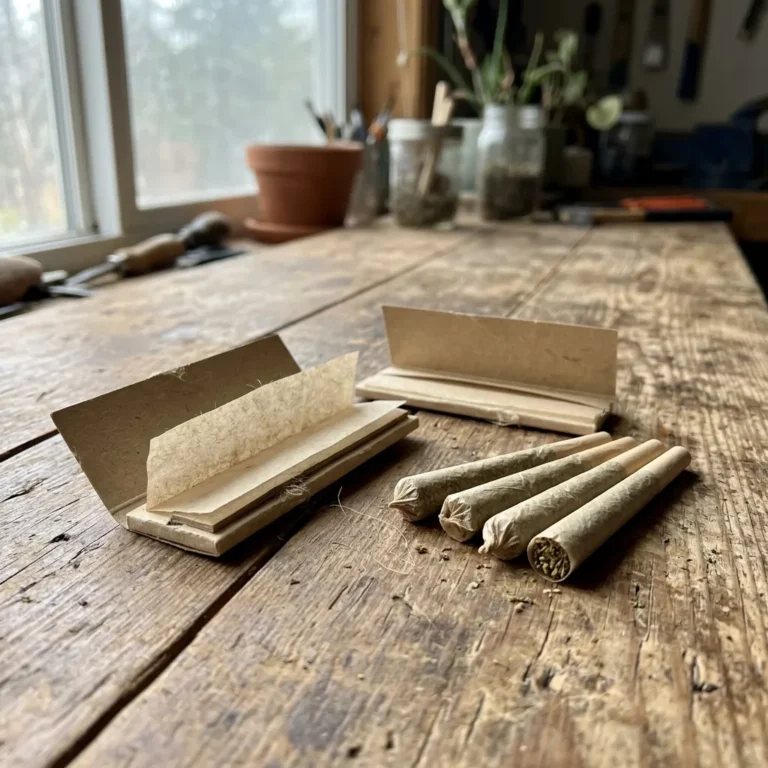

Are brown kraft rolling papers good for private label? Yes for a natural, value-forward shelf story—brown kraft (unbleached) paper reads honest and eco-adjacent, but it limits bright cover printing, so brands wanting bold graphics often pair kraft paper with a printed outer sleeve or box instead of printing directly on the paper.
SERP peers such as The Rolling Paper Company market brown kraft as a natural-positioning paper choice. Guangdong Ace Rolling is a Dongguan, China OEM/ODM for private-label booklets (~USD $0.07–$0.30) with MOQ, offering unbleached and natural paper routes alongside white, hemp, flax, bamboo, and printed options. This guide walks through where brown kraft fits and where it doesn’t.
What Is “Brown Kraft” Rolling Paper, Technically?
Lead-in: “Kraft” describes a look and a pulping process, not a single fixed recipe.
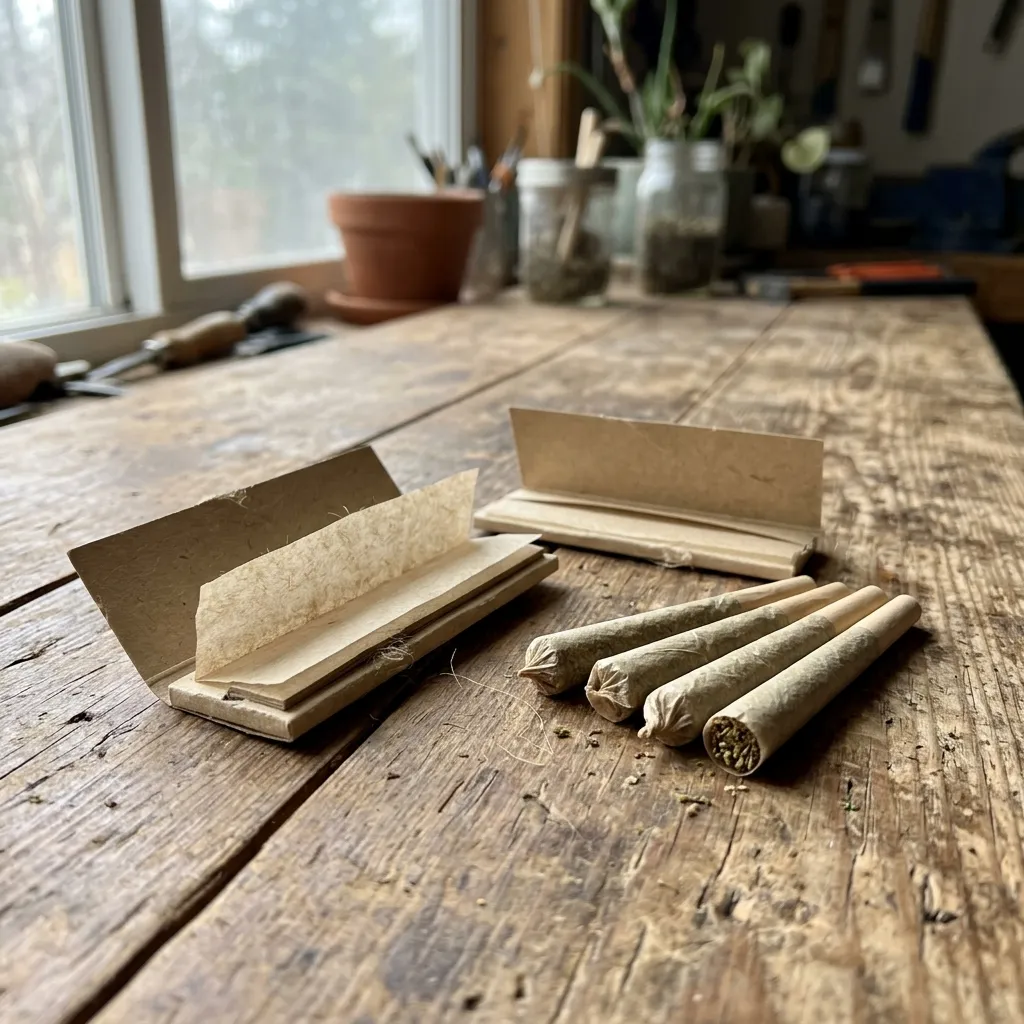
Summary: Brown kraft rolling paper is typically unbleached pulp—no chlorine bleaching step—left in its natural tan-brown color. It can be made from wood pulp, hemp, or blended fiber. The defining trait for buyers is the absence of a bleaching step, which shapes both the color and the marketing story.
| Term | Meaning |
|---|---|
| Kraft look | Natural tan-brown, unbleached |
| Fiber source | Wood pulp, hemp, or blend |
| Process | No chlorine bleaching |
| Not the same as | Bright white printed paper |
Key Takeaway: “Brown kraft” is an unbleached natural look, not a single proprietary fiber—confirm the actual fiber blend in your brief.
Paper routes: https://ace-rolling.com/custom-rolling-papers/.
Why Do Brands Choose Kraft for a Private-Label Shelf Story?
Lead-in: Kraft paper does marketing work before a single word of copy is printed.
Summary: Unbleached brown paper visually signals “natural,” “raw,” or “minimal processing” to shoppers scanning a shelf. It pairs well with earthy, eco-adjacent brand identities and often lowers perceived synthetic-ness compared to bright white bleached paper—without Ace making any explicit health or eco claim on the buyer’s behalf.
| Shelf signal | Kraft (unbleached) | White (bleached) |
|---|---|---|
| Perceived positioning | Natural / raw | Clean / bright |
| Common brand fit | Earthy, minimalist | Premium clinical |
| Marketing risk | Avoid unverified “eco” claims | Lower risk, less story |
Key Takeaway: Kraft paper tells a natural story visually—keep any accompanying copy factual and avoid unverified eco claims.
Custom papers: https://ace-rolling.com/custom-rolling-papers/.
What Print Limitations Come With Brown Kraft Paper?
Lead-in: The same tan tone that reads “natural” also limits ink vibrancy.
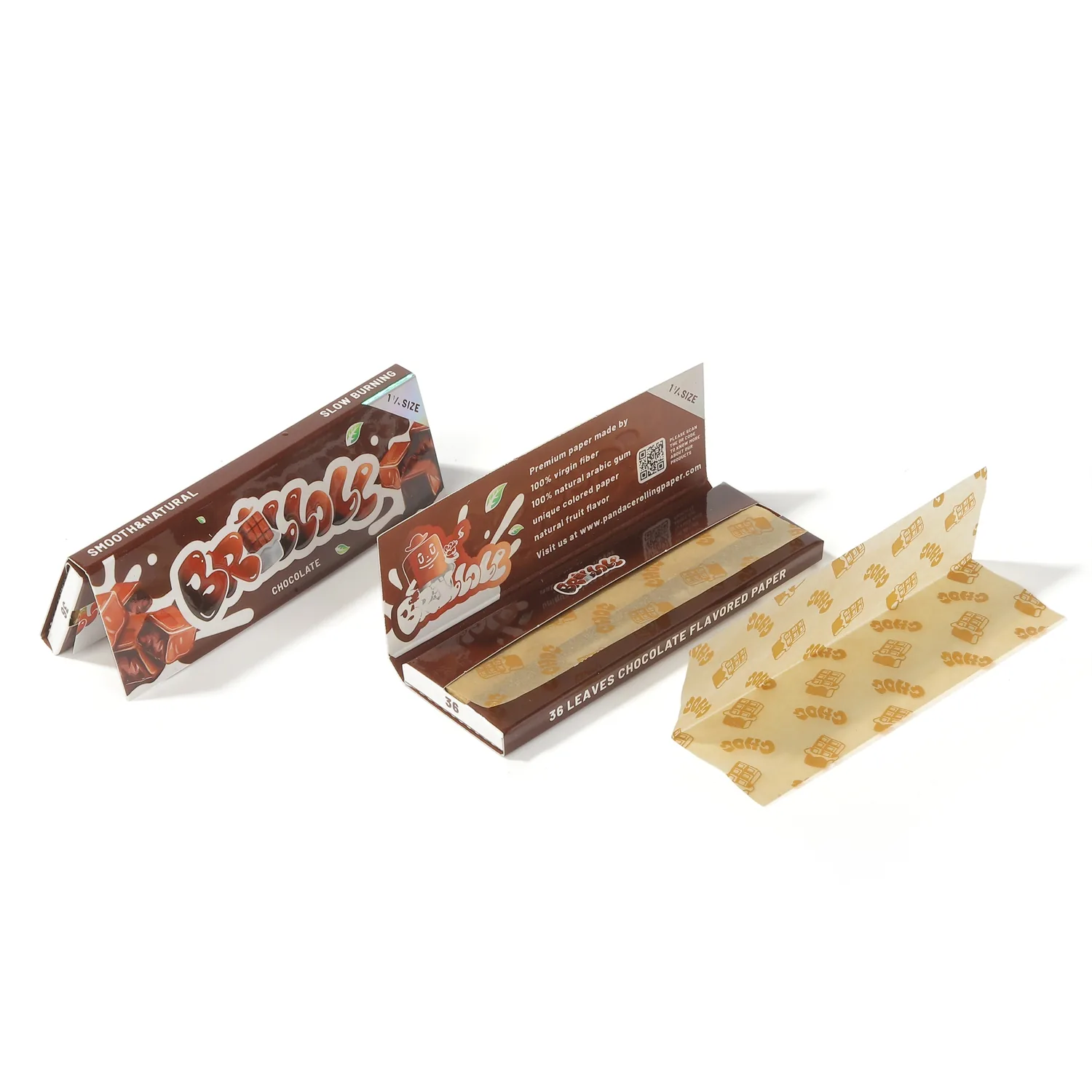
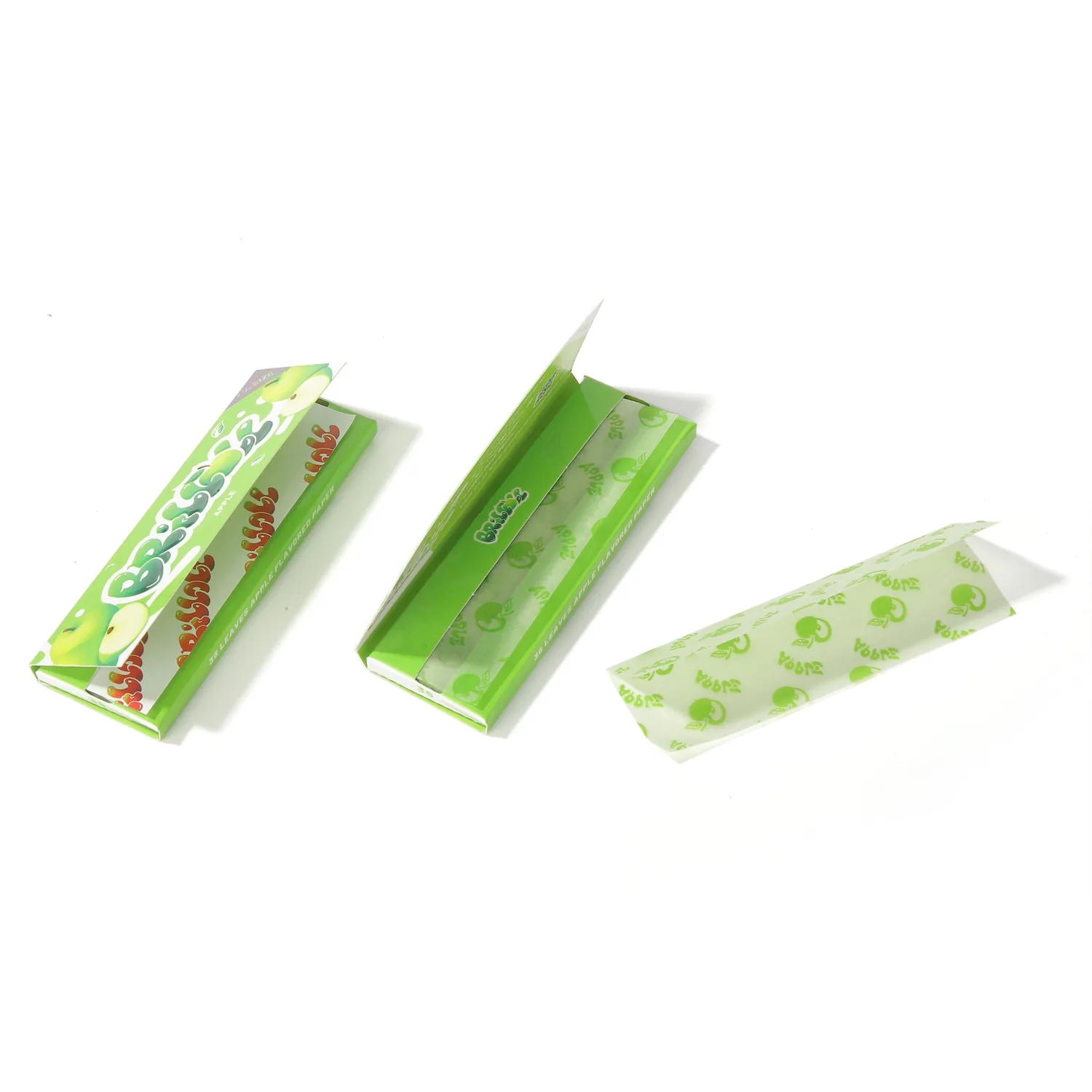
Summary: Bright colors and fine detail print less crisply on brown kraft than on bleached white paper because the base tone shifts every ink color. Brands wanting vivid graphics on the paper itself often move that artwork to the printed cover or a wraparound sleeve, keeping the paper itself minimally printed or unprinted.
| Element | Kraft base | White base |
|---|---|---|
| Bright color accuracy | Muted, shifted | True to ink |
| Fine detail | Softer | Sharper |
| Common workaround | Print on cover/sleeve | Print directly on paper |
Key Takeaway: Save bold graphics for the cover or sleeve; let kraft paper carry the natural tone on its own.
Print options via OEM: https://ace-rolling.com/oem-odm-rolling-paper-manufacturer/.
How Does Kraft Compare to Other Natural Paper Routes?
Lead-in: Kraft is one of several “natural” positioning choices—not the only one.
Summary: Hemp paper reads earthy and slightly textured; unbleached wood pulp (kraft-style) reads raw and utilitarian; bamboo reads differentiated and story-driven. Each has a different price and feel profile even within the same “natural” marketing lane. Brands should sample more than one before locking a fiber.
| Paper route | Shelf read | Feel |
|---|---|---|
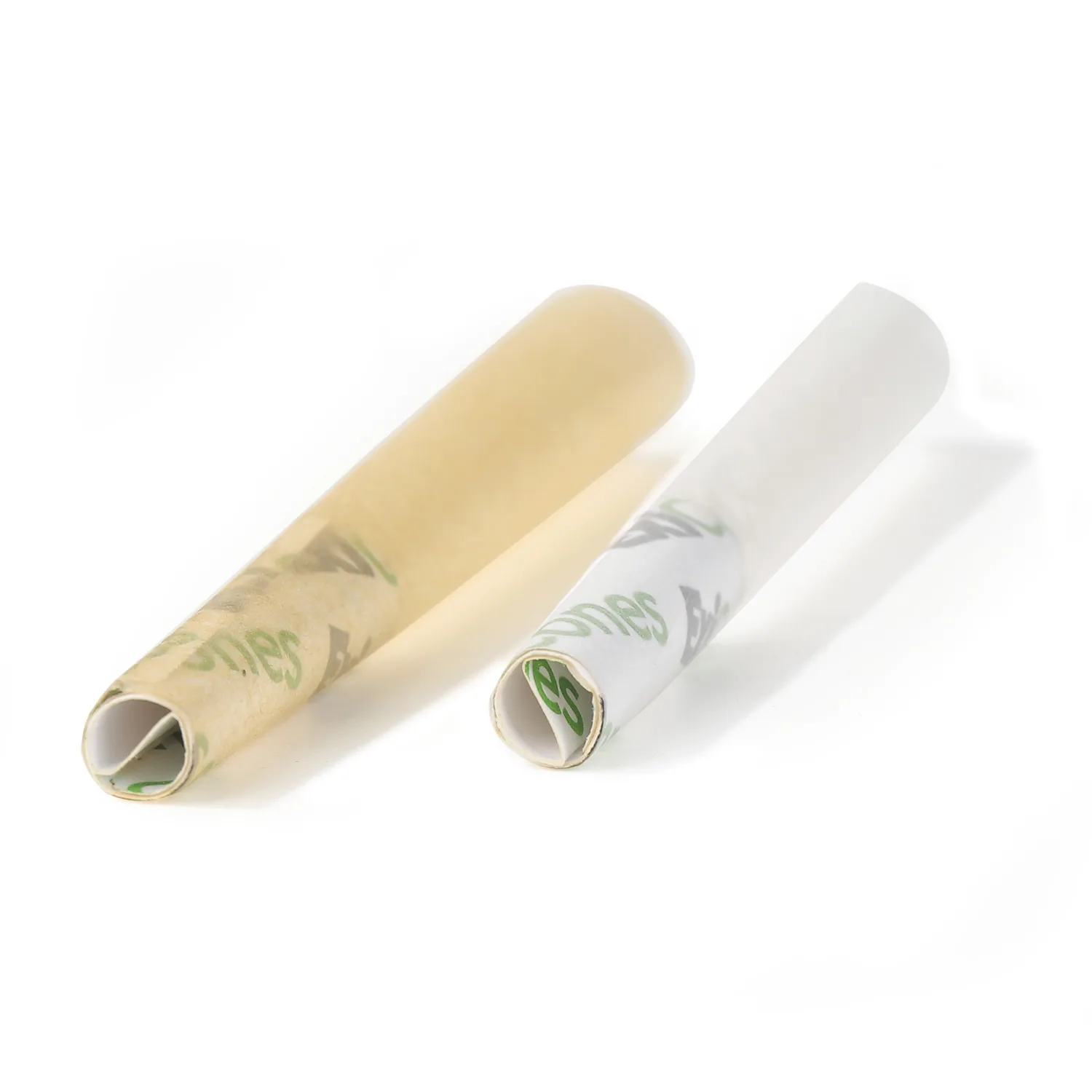
| Brown kraft (unbleached pulp) | Raw, utilitarian | Slightly coarser |
| Hemp | Earthy, textured | Fibrous |
| Bamboo | Differentiated | Smooth-ish, novel |
Key Takeaway: Kraft is the most utilitarian of the natural options—sample hemp and bamboo alongside it before choosing.
Comparison references: https://ace-rolling.com/quality-certifications/.
What Gum and Finish Options Pair Well With Kraft Paper?
Lead-in: The gum line and cover finish should match the kraft story, not fight it.
Summary: Food-grade natural Arabic gum on applicable papers pairs naturally with a kraft narrative. Cover finishes that suit kraft include matte lamination, uncoated stock, or minimal foil accents—high-gloss, bright-color covers can visually clash with a raw paper base unless the brand intentionally wants that contrast.

| Element | Kraft-aligned choice |
|---|---|
| Gum | Natural Arabic gum (applicable papers) |
| Cover finish | Matte, uncoated, minimal foil |
| Contrast option | Bright cover + kraft paper (intentional clash) |
Key Takeaway: Match gum and finish choices to the kraft story unless deliberate visual contrast is the brand strategy.
Gum and materials: https://ace-rolling.com/quality-certifications/.
What MOQ and Sample Steps Apply to a Kraft Booklet Program?
Lead-in: Kraft paper follows the same OEM process as any other paper route.
Summary: Ace generally quotes booklet MOQ from about 2,000 depending on size, print, filter, and packaging—kraft paper does not add a separate MOQ tier on its own. Sample retains should specifically confirm gum seal, tear strength, and burn behavior on the unbleached stock before mass approval.
| Step | Action |
|---|---|
| 1 | Confirm fiber blend under the kraft look |
| 2 | Approve sample retains for gum + burn |
| 3 | Lock cover finish and print plan |
| 4 | Quote inside Ace wholesale bands |
| 5 | Mass ~4–5 weeks after approvals |
Key Takeaway: Kraft paper runs through the same MOQ and sample process as any Ace booklet program—no special tier applies.
MOQ guide: https://ace-rolling.com/what-is-the-moq-for-custom-branded-rolling-papers/.
How Do You Order Brown Kraft Booklets From Ace Rolling?
Lead-in: One brief locks fiber, gum, finish, and pack-out together.
Summary: Send Ace your target fiber blend, size, cover finish plan, print scope (paper vs cover-only), target quantity, destination, and timeline. Ace quotes booklets inside the ~$0.07–$0.30 wholesale band with MOQ, plans concept-to-delivery near two months, and runs mass about four to five weeks after approvals.
| Step | Action |
|---|---|
| 1 | Specify unbleached/kraft fiber blend |
| 2 | Decide paper-print vs cover-print |
| 3 | Approve retains |
| 4 | Freeze artwork |
| 5 | Mass 4–5 weeks after approvals |
Key Takeaway: Brief the fiber and print plan together—kraft’s biggest decision is where the graphics live, not the fiber itself.
Start: https://ace-rolling.com/contact/.
FAQ
Are brown kraft rolling papers good for private label?
Yes, for brands wanting a natural, value-forward shelf story. Brown kraft (unbleached) paper reads honest and raw on shelf, pairing well with earthy or minimalist identities. The tradeoff is limited bright-color printing directly on the paper—most brands move bold graphics to a printed cover or sleeve and let the kraft paper carry the tone alone.
Is brown kraft the same as unbleached rolling paper?
Largely yes. “Brown kraft” describes the natural tan-brown look that results from skipping the chlorine bleaching step, and it can be made from wood pulp, hemp, or blended fiber. Confirm the actual fiber blend in your brief rather than assuming “kraft” means one specific material—Ace offers several unbleached and natural fiber routes under this general look.
Can you print bright graphics directly on brown kraft paper?
You can, but colors will look muted and shifted compared to printing on bright white paper, because the tan base tone affects every ink color. Fine detail also prints softer on kraft. Brands wanting vivid, high-contrast graphics typically place that artwork on the printed cover or a wraparound sleeve instead, keeping the interior paper minimally printed or unprinted.
Does Ace Rolling charge more for brown kraft paper booklets?
Kraft paper does not add a separate pricing tier alone. Ace quotes booklets inside the standard ~$0.07–$0.30 wholesale band with MOQ, and exact placement depends on print scope, filter tip, cover finish, and packaging—the same factors affecting any paper route. Request a quote with your specific kraft spec for an accurate number.
What gum works best with brown kraft rolling papers?
Ace uses food-grade natural Arabic gum on applicable papers, which pairs naturally with a kraft shelf story since both signal a plant-based, minimally processed positioning. Confirm gum type in your RFQ per SKU, since specialty paper programs can vary. Sample retains should specifically check gum seal performance on the unbleached stock before approving mass production.
What MOQ should I expect for a private-label kraft booklet program?
Ace generally discusses booklet MOQ from about 2,000 per SKU, depending on size, print scope, filter tip, and packaging—kraft fiber itself does not create a separate MOQ tier. Concept-to-delivery typically plans near two months, with mass production about four to five weeks after sample retains and artwork are approved. Confirm your exact spec before comparing quotes across suppliers.
Ready to Brief a Brown Kraft Booklet Program?
Specify your fiber blend, print plan, and cover finish, then send Ace one combined RFQ.
- Custom papers: https://ace-rolling.com/custom-rolling-papers/
- OEM programs: https://ace-rolling.com/oem-odm-rolling-paper-manufacturer/
- Quote: https://ace-rolling.com/contact/