
Sie haben eine Anzahlung für 10.000 maßgeschneiderte Broschüren geleistet. Die Probe sah perfekt aus. Die Massenlieferung kam mit ungleichmäßigen Klebelinien, dezentriertem Druck und Papier an, das schwarz verbrannte. Ihr Lieferant gab dem “Rohstofflieferanten” die Schuld, konnte es aber nicht beheben oder erklären, warum es passiert ist. Sie hatten es nicht mit einem Hersteller zu tun. Sie hatten es mit einem Makler zu tun.
Ein echter Hersteller von maßgeschneiderten Rollpapieren kontrolliert die Produktion vom Rohmaterial bis zum fertigen Heft. Ein Makler leitet Ihre Bestellung an eine anonyme Fabrik weiter, erhöht den Preis und verwaltet die Kommunikation. Der Unterschied entscheidet darüber, ob Ihre Marke pünktlich mit gleichbleibender Qualität startet oder bereits vor Ihrer ersten Nachbestellung scheitert.
Dieser Artikel erklärt, was echte Hersteller tun, was Sie anpassen können, was Sie vor einer Bestellung überprüfen sollten und wie Sie einen Makler erkennen, bevor Sie Geld senden.
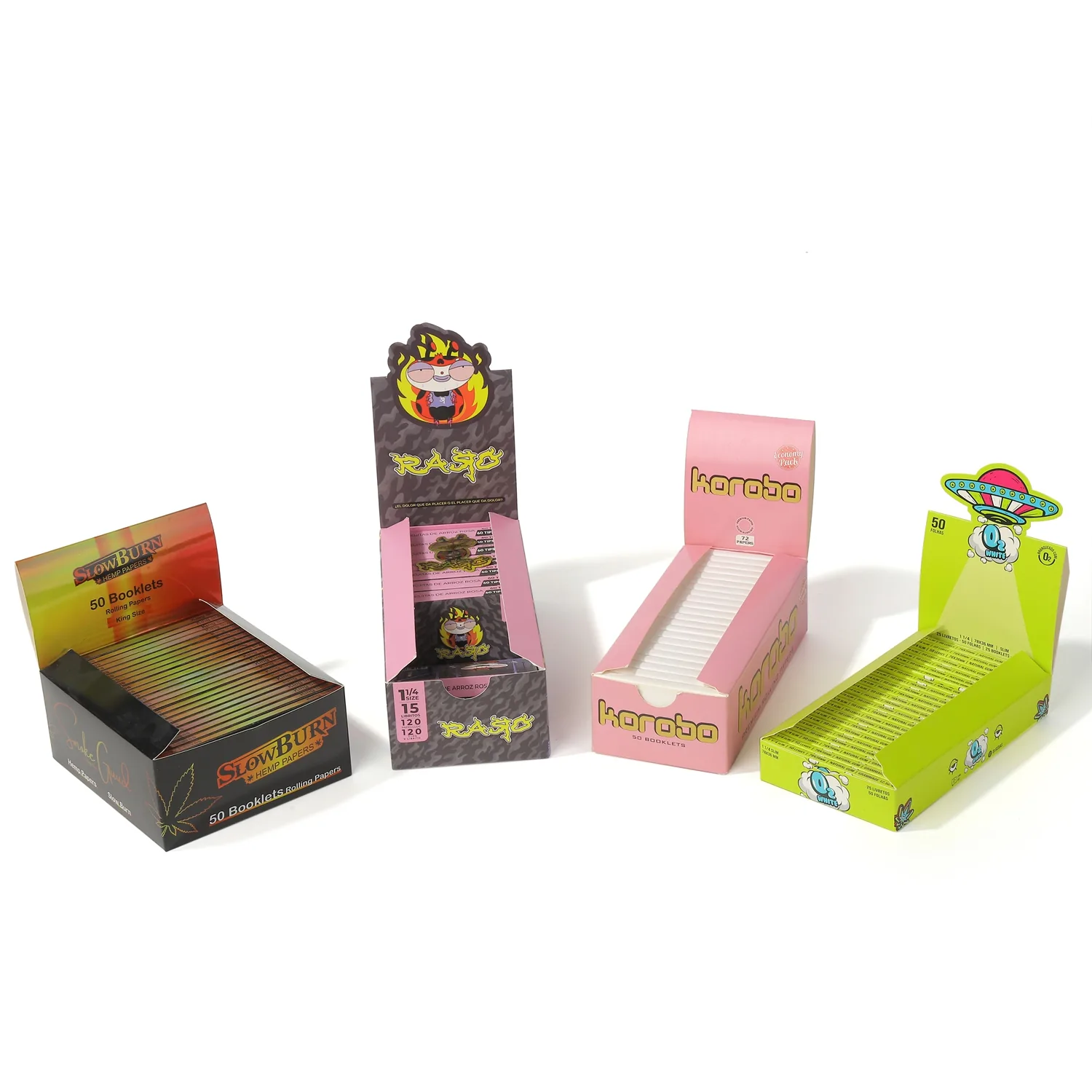
Was macht ein Hersteller für maßgeschneiderte Rollpapiere eigentlich?
Ein echter Hersteller kontrolliert die Produktion vom Rohmaterial bis zum fertigen Produkt. Der Prozess umfasst:
- Beschaffung und Testen von Basispapierfasern (Holzstoff, Hanf, Reis, Flachs oder Mischungen)
- Schneiden breiter Papierrollen in schmale Bänder, die der Breite Ihres Heftes entsprechen
- Präzise Ausrichtung der Gummilinie
- Drucken Ihres Designs mit lebensmittelechten Farben
- Falten und Einlegen von Blättern in Booklets
- Anbringen von Deckkarten und Fertigstellung der Verpackung
- Durchführung der Qualitätskontrolle in jeder Phase
Ein Wiederverkäufer oder Makler tut nichts davon. Sie nehmen Ihre Bestellung entgegen, leiten sie an eine Fabrik weiter (manchmal ohne zu offenbaren, welche), erhöhen den Preis und verwalten die Kommunikation. In einigen Fällen hat der Wiederverkäufer die Fabrik, die er angeblich vertritt, nie besucht.
Das Risiko, über einen Makler zu arbeiten, ist nicht nur der Preis. Es ist die Intransparenz. Wenn eine Charge die Qualitätsstandards nicht erfüllt, kann der Makler sie nicht beheben. Sie können nur Nachrichten weiterleiten. Wenn die Fabrik hinter dem Zeitplan zurückbleibt, kann der Makler die Produktion nicht beschleunigen. Sie können sich nur entschuldigen. Wenn Sie Spezifikationen während des Laufs ändern müssen, kann der Makler die Maschineneinstellungen nicht anpassen. Sie können nur eine Änderung anfordern und hoffen, dass die Fabrik sie umsetzt.
Was kann man tatsächlich an einem Rolling Paper anpassen?
Die meisten Käufer sind überrascht, wie viele Elemente angepasst werden können. Ein Full-Service-Hersteller kann modifizieren:
Papierspezifikationen
- Fasertyp: Holzstoff (gebleicht oder ungebleicht), Hanf, Reis, Flachs, Bambus oder maßgeschneiderte Mischungen
- Flächengewicht: Typischerweise 10–28 g/m². Dünnere Papiere brennen schneller und fühlen sich zarter an. Dickere Papiere brennen langsamer und fühlen sich substanzieller an.
- Porosität: Gemessen in Coresta-Einheiten (CU). Niedrigere Porosität bedeutet langsameren, kontrollierteren Abbrand. Höhere Porosität bedeutet schnelleren Abbrand und luftigere Zugkraft.
- Abmessungen: Blattlänge, -breite und die Breite der Gummilinie können alle innerhalb der Maschinengrenzen angepasst werden.
Druck und Branding
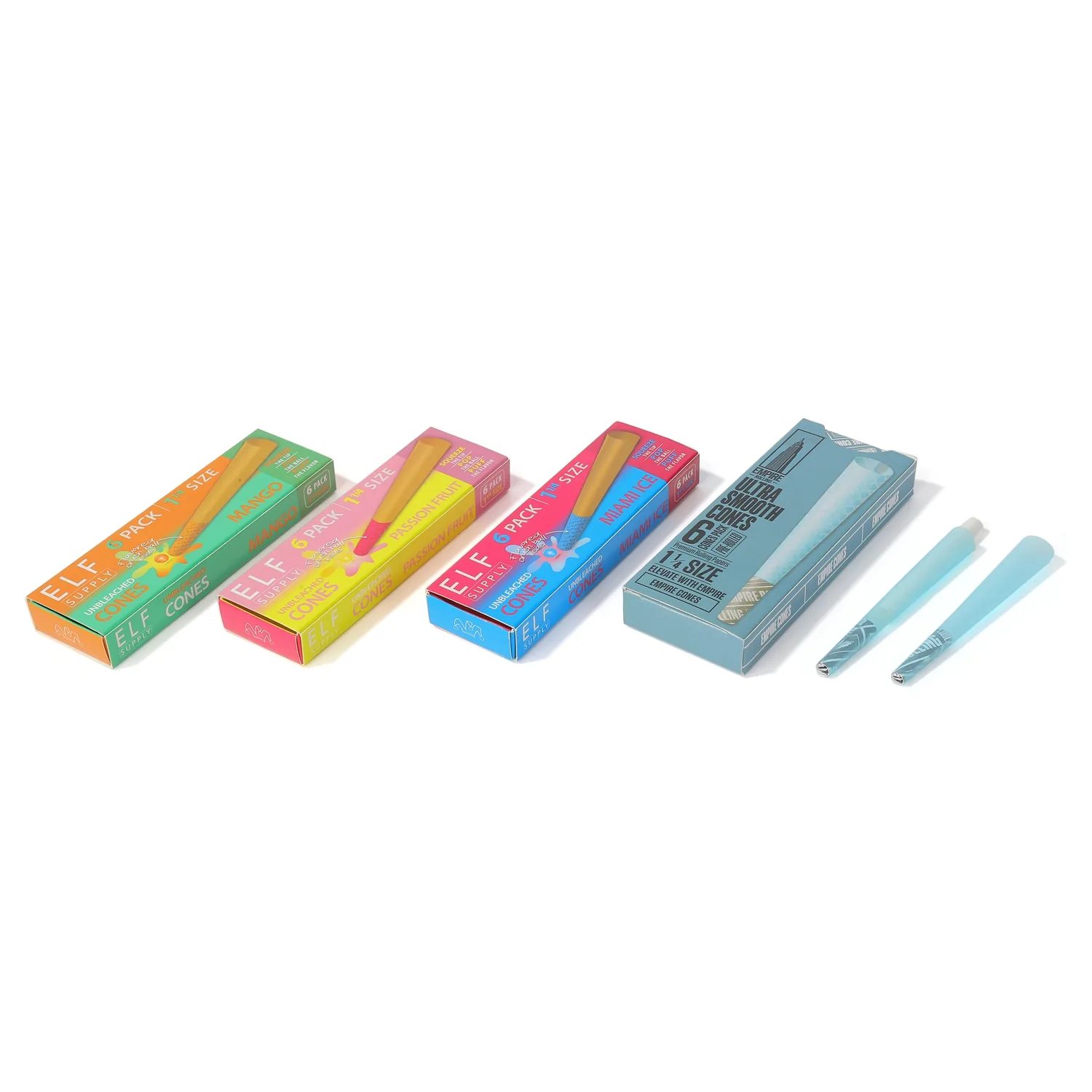
- Cover-Karten-Druck: Vollfarbiger Außen- und Innendruck auf dem Booklet-Umschlag
- Folienprägung: Metallisches Gold, Silber oder farbiges Folienprägung für Premium-Positionierung
- Prägung/Stanzung: Erhabene oder vertiefte Textur auf der Cover-Karte
- Spot-UV-Lack: Glänzende Hervorhebung auf bestimmten Designelementen
- Filtertip-Druck: Direktdruck auf Papiertips oder Lasergravur auf Holztips
- Wasserzeichen: Echte Wasserzeichen, die während der Papierherstellung eingebettet werden, um Authentizität zu gewährleisten
Broschürenformat
- Blattanzahl: Standard sind 32 oder 50 Blätter pro Heft. Einige Hersteller können dies innerhalb der Maschinengrenzen anpassen.
- Verschlusstyp: Standardfalte, Magnetverschluss oder Klebeversiegelung
- Filtereinbeziehung: Hefte können vorgeschnittene Filtertips enthalten oder nur aus Papier bestehen
- Deckmaterial: Standardkarton, Kraftkarton oder spezielles strukturiertes Papier
Verpackung
- Innere Booklets: Individuelles Heftdesign und -montage
- Verkaufsdisplayschachteln: Thekendisplayschachteln für 20–50 Hefte
- Außenkartons: Hauptversandkartons mit individuellem Branding
- Schrumpffolienverpackung: Manipulationssicherer Film für einzelne Booklets oder Multipacks
| Customization Element | Typical MOQ Impact | Lead Time Impact |
|---|---|---|
| Cover-Karten-Druck | Niedrig | +1–2 weeks |
| Folienprägung | Mittel | +1–2 weeks |
| Embossing/spot UV | Mittel | +1–2 weeks |
| Filtertip-Druck | Niedrig | +1 week |
| Wasserzeichen | Hoch | +2–4 weeks |
| Custom sheet count | Niedrig | Minimal |
| Magnetic closure | Mittel | +1–2 weeks |
| Custom porosity | Hoch | +2–3 weeks |
How Do You Evaluate a Custom Rolling Paper Manufacturer?
Before committing to a production partner, verify the following:
1. Do They Control Production In-House?
Ask directly: “Do you own the slitting, printing, and folding equipment, or do you outsource these steps?” A factory that controls the full process can adjust specifications faster, maintain tighter quality consistency, and offer lower minimum order quantities. A broker who outsources production adds cost, delay, and communication risk at every handoff.
Request video footage or schedule a virtual factory tour. If the supplier refuses to show production areas, that is a red flag.
2. What Is Their Material Sourcing?
Ask where their base paper comes from. A legitimate manufacturer will name a specific paper mill or supplier. Vague answers like “we source from various mills” often mean the broker is buying whatever is cheapest on the spot market that week, which leads to batch-to-batch inconsistency.
The best manufacturers have exclusive or long-term partnerships with established paper mills. This gives them pricing stability, material traceability, and input into new material development.
3. Can They Provide Certification Documentation?
Request copies of current certifications. Do not accept screenshots or verbal assurances. The key certifications are:
- ISO 9001:2015: Confirms documented quality management processes
- FSC or PEFC: Verifies responsible wood-pulp sourcing (for wood-pulp papers)
- Food-grade ink CoA: Certificate of Analysis from a third-party lab confirming heavy metals and toxic solvents are below detection limits
- Heavy metal / microbial testing: Required for regulated cannabis markets; recommended for all products
Verify that certificates are current and that the scope of certification covers the specific products you are ordering.
4. What Is Their Sample-to-Production Consistency?
Order samples from three different production batches. Compare them for color, texture, thickness, gum-line placement, and burn behavior. Significant variation between batches indicates poor process control. The sample you approve should be representative of what you receive in bulk.
5. What Customization Depth Do They Actually Offer?
Some suppliers advertise “full customization” but only offer standard paper with a printed cover. True customization includes control over basis weight, porosity, gum-line width, sheet count, filter type, and packaging dimensions. Ask for a list of every parameter they can modify, and which parameters would require additional tooling or development time.
6. What Are Their Realistic Lead Times?
Standard custom rolling paper production typically takes 4–8 weeks from artwork approval, depending on complexity and order size. Rush options of 2–3 weeks are sometimes possible but may limit customization options or incur surcharges. Be skeptical of quotes promising delivery in under two weeks for fully custom work — this usually means the supplier is shipping stock products with a printed label, not manufacturing to your specifications.
What Mistakes Do Buyers Make When Choosing a Manufacturer?
- Selecting based on lowest price: The cheapest quote often reflects non-food-grade inks, uncertified paper, outsourced production, or hidden fees for artwork setup, plate making, and shipping.
- Ignoring the material source: A beautiful printed cover means nothing if the paper inside burns unevenly or leaves chemical residue.
- Approving samples without batch verification: The sample may be perfect because it was carefully selected. Verify that bulk production matches the sample.
- Underestimating packaging complexity: Custom retail packaging often takes longer to produce than the booklets themselves. Coordinate timelines so both arrive together.
- Not clarifying intellectual property ownership: Ensure your contract specifies that artwork, designs, and any custom tooling (printing plates, embossing dies) belong to you, not the manufacturer.
- Overlooking compliance for your target market: If you plan to sell in California, Canada, or the EU, your products must meet specific testing and labeling requirements. Confirm that your manufacturer can provide the necessary documentation before production begins.
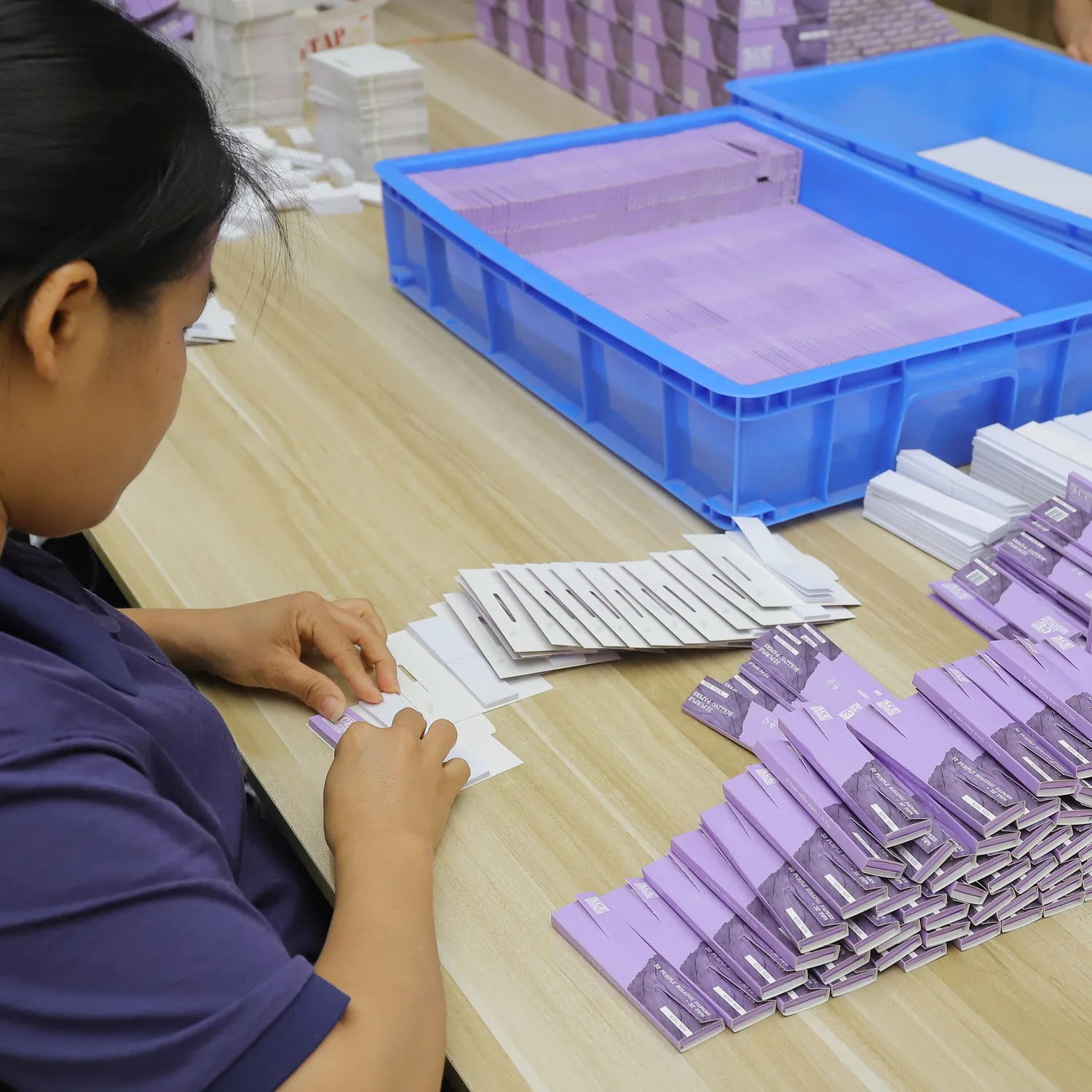
Über Ace Rolling
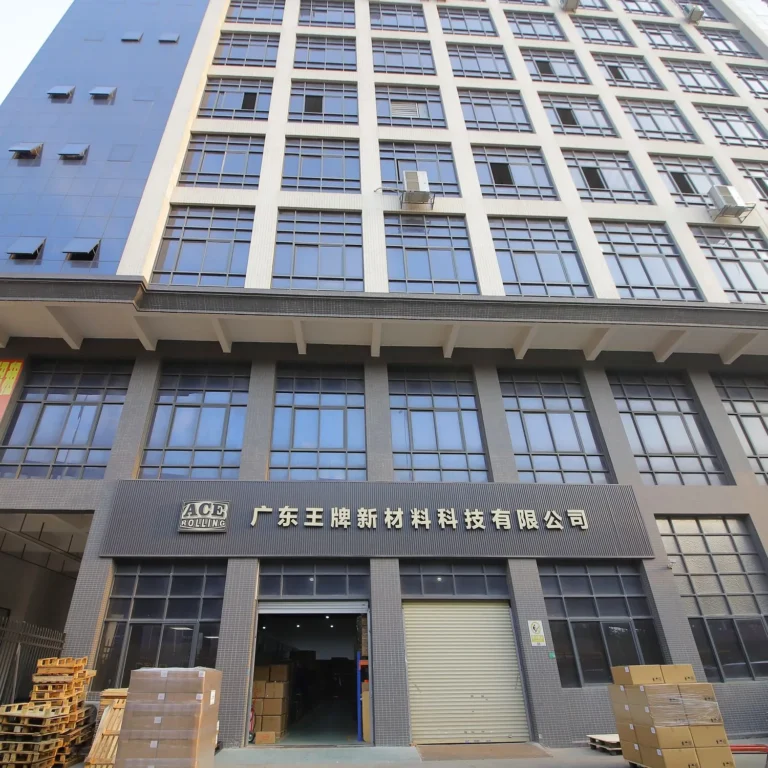
Ace Rolling is Guangdong Ace Rolling New Material Technology Co., Ltd. — one of only two RYO paper factories operating at this scale anywhere in the world. We manufacture custom rolling papers with full in-house control from fiber to finished booklet.
Manufacturing Infrastructure
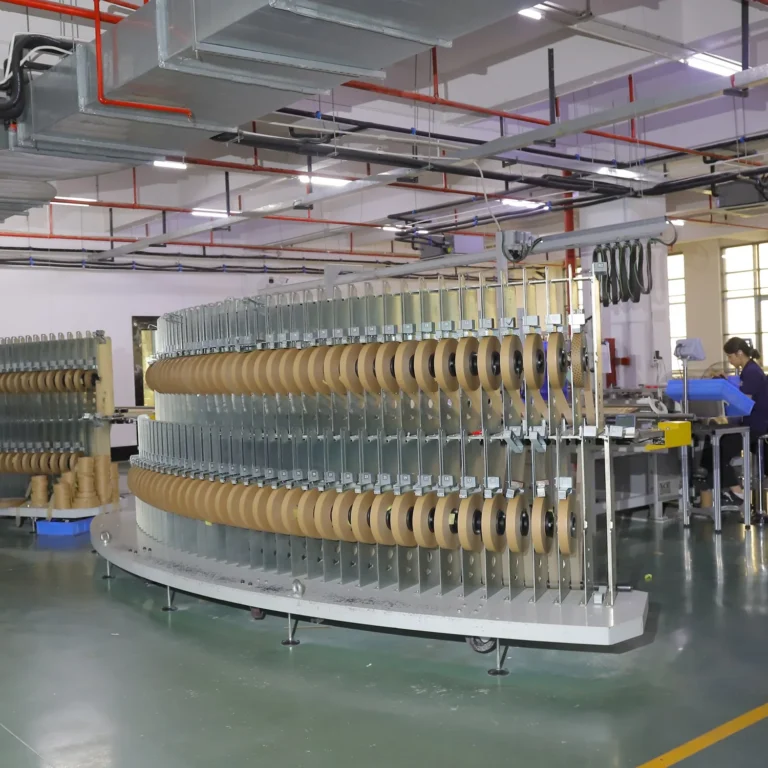
Our 2,000–4,000 sqm facility in Dongguan, China runs fully automated production across 5–7 international-standard high-speed lines and 17 core machines. Annual capacity reaches 500 million booklets and cones.
We are also the only manufacturer in the industry equipped with advanced high-speed precision slitting machines capable of customizing booklets up to 120 leaves per booklet.
Material Control
Every sheet we produce starts with base paper from Mudanjiang Hengfeng Paper Co., Ltd. (Hengfeng Group) — the world’s third-largest specialty and smoking paper enterprise, commanding one-third of global smoking paper market share. This exclusive supply relationship gives us material stability, full traceability, and pricing leverage.
Zertifizierungen
- ISO 9001:2015 — quality management systems
- FSC (Forest Stewardship Council) — responsible sourcing
- Alibaba Verified Supplier — audited on-site by TÜV Rheinland / SGS with full raw-material traceability
Customization Capabilities
We offer deep customization across every product parameter:
- Materials: Wood pulp (bleached/unbleached), hemp, rice, flax, bamboo, clear cellulose, and proprietary blends
- Größen: Single Wide, 1 1/4, King Size, King Slim, and custom dimensions
- Blattanzahl: 32 to 120 leaves per booklet (industry-unique maximum)
- Printing: Full-color cover printing, foil stamping, embossing, spot UV
- Filtertips: Paper, wood (laser-engravable), glass, ceramic
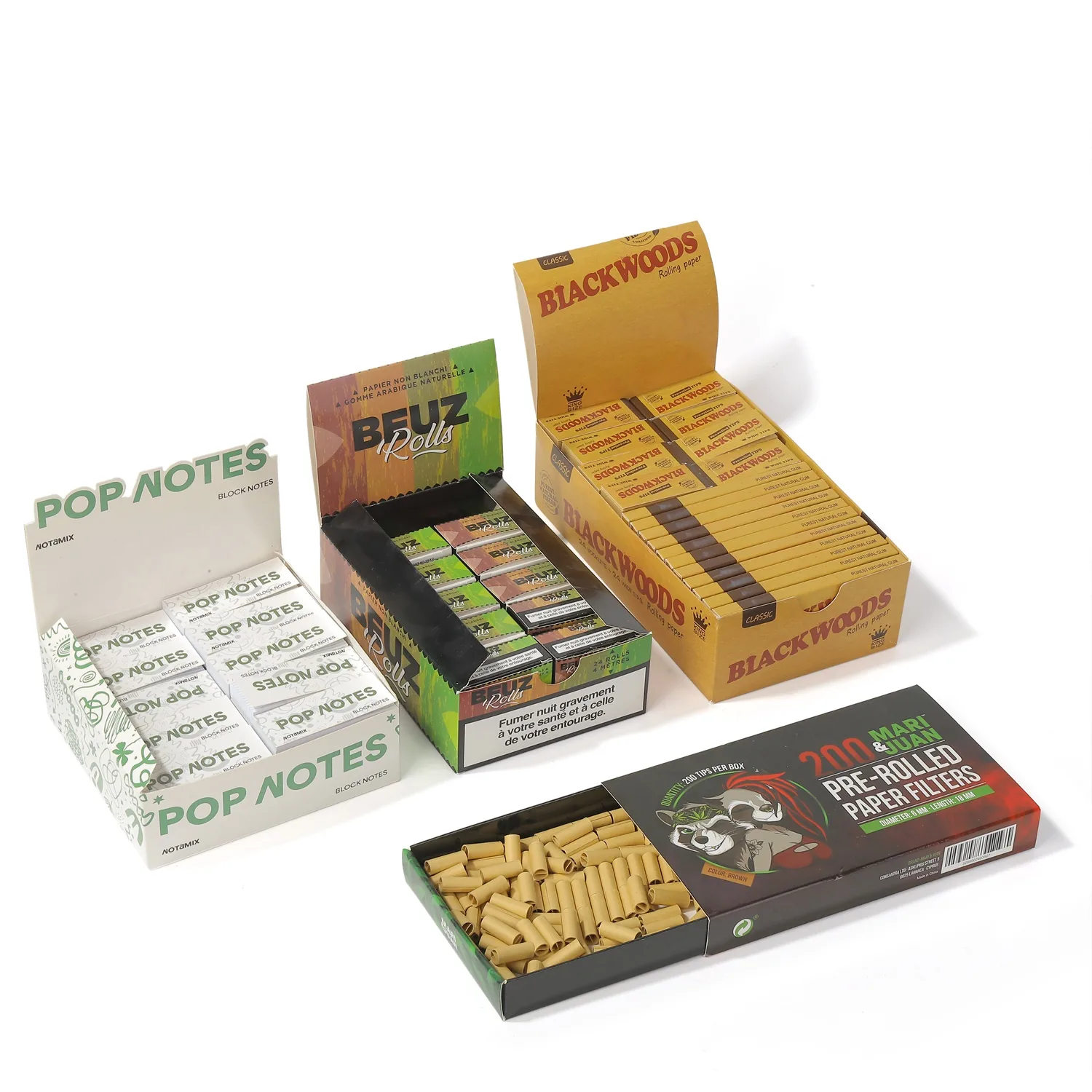
- Verpackung: Custom display boxes, shrink wrapping, branded master cartons
- Porosität: Custom-specified within machine limits for controlled burn rates
All papers use 100% natural organic Arabic gum with zero harmful chemical additives. Every batch is tested for dynamic porosity, slow burn rate, and ash purity.
Two Business Models
Whether you need fully finished retail products under our four registered brands, or deep OEM/ODM customization built from scratch — the same quality control applies.
Amazing Paper, Create, Enjoyable Life! — Ace Rolling
Frequently Asked Questions
What is the typical minimum order quantity for custom rolling papers?
MOQs vary significantly by manufacturer and customization depth. For standard printed cover cards on stock paper, some suppliers offer 500-booklet minimums. For deeper customization — custom basis weight, proprietary porosity, or true watermarks — MOQs typically start at 2,000–5,000 booklets. Manufacturers with in-house slitting and folding equipment can usually offer lower MOQs than those buying pre-made blanks.
How long does custom rolling paper production take?
Standard lead time is 4–8 weeks from artwork approval. Simple cover-printing projects on stock paper may take 3–4 weeks. Complex projects involving custom materials, foil stamping, embossing, or special packaging may take 6–8 weeks. Rush production is sometimes possible but may limit customization options.
What file format should artwork be submitted in?
Vector files (AI, EPS, or PDF with embedded vector graphics) are preferred for logos and text because they scale without quality loss. Raster images should be at least 300 DPI at final print size. Colors should be specified as Pantone spot colors for accuracy, or CMYK for full-color photographs.
Can I get samples before placing a bulk order?
Yes. Any legitimate manufacturer should provide samples, either from existing stock or as custom prototypes. Be sure to request samples from multiple production batches if possible, to verify consistency. Pay attention to paper texture, gum-line adhesion, print registration, and burn behavior.
What is the difference between a broker and a factory?
A broker takes your order and forwards it to a factory, adding markup and managing communication. They do not own production equipment and cannot directly control quality or timelines. A factory owns and operates the machinery. They can adjust specifications, troubleshoot defects, and expedite production directly. The price from a factory is typically lower, and the accountability is higher.
Final Thoughts
Choosing a custom rolling paper manufacturer is not just about finding someone who can print your logo on a booklet. It is about finding a partner who understands material science, maintains food-grade safety standards, and can scale with your brand as it grows.
The right manufacturer will ask detailed questions about your target market, your desired burn characteristics, your packaging requirements, and your compliance needs before quoting a price. The wrong manufacturer will give you a price immediately and ask questions later — if at all.
Ready to develop your custom rolling paper line? Ace Rolling offers end-to-end manufacturing with full customization — from material selection and porosity specification to printed booklets and retail packaging. Contact our team for samples, specifications, and production timelines tailored to your brand.