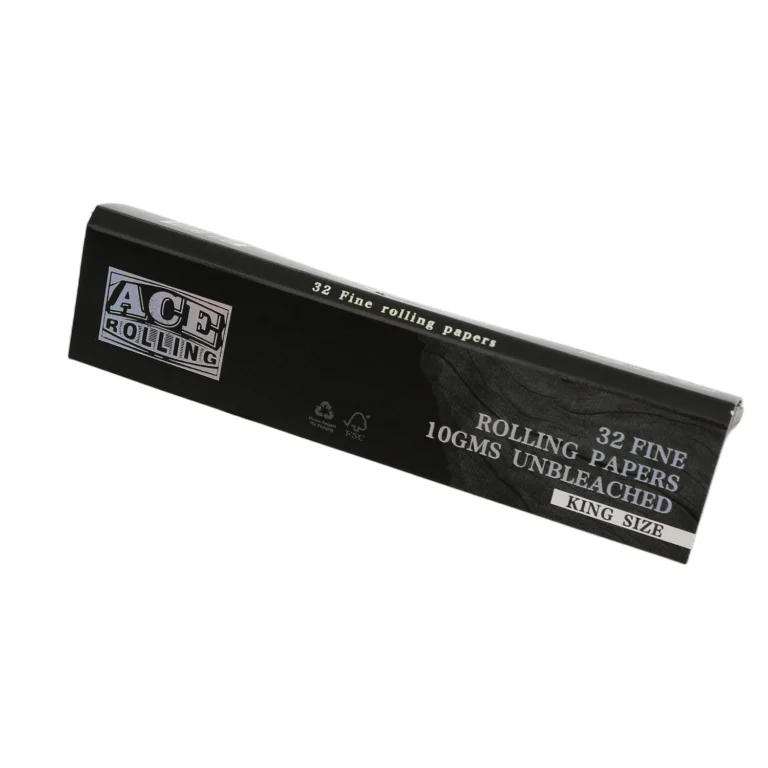

GSM significa gramas por metro quadrado: a massa de uma folha de papel normalizada para um metro quadrado. Para compradores, é uma especificação útil de espessura e peso, mas não uma promessa completa de desempenho. Especifique GSM junto com fibra, porosidade, goma, tamanho, marca d'água e uma amostra física aprovada.
O que o GSM Realmente Mede?
O GSM fornece às equipes de compras uma unidade comum para comparar construções de papel sem confundir tamanho da folha com peso do papel. A abreviatura significa gramas por metro quadrado (g/m²).
Um papel de 14 GSM e um de 22 GSM podem ser cortados em dimensões idênticas, mas a folha mais leve usa menos material por unidade de área. Em comparação, o papel comum A4 de escritório costuma ter cerca de 70–80 GSM, o que explica por que o papel de enrolar parece dramaticamente mais leve.

O GSM é medido em material condicionado sob um método de teste definido; não é obtido pesando um livreto acabado e dividindo casualmente. Goma, tinta, umidade e método de amostragem podem distorcer uma verificação informal. Pergunte ao fornecedor se o valor declarado se aplica ao papel base ou à folha gomada acabada, então preserve essa definição na especificação de compra. A Ace Rolling pode traduzir a meta em um briefing de produção através de seu programa personalizado de papel de enrolar.
| Referência de papel | Contexto típico de GSM | Interpretação do comprador | O que não prova |
|---|---|---|---|
| Papel de enrolar ultra-fino | 10–13 | Massa de papel muito baixa | Queima lenta ou uniforme garantida |
| Papel premium fino | 14–18 | Toque leve na mão | Composição de fibra |
| Papel médio | 19–22 | Mais corpo de manuseio | Qualidade da goma |
| Papel A4 de escritório | Cerca de 70–80 | Apenas comparação familiar | Adequação para enrolar |
Conclusão Principal: GSM é uma medida padronizada de peso do papel, não um veredito independente sobre qualidade, queima ou material.
Quais Faixas de GSM os Compradores de Papel de Enrolar Veem?
A terminologia de mercado varia, então um comprador deve transformar adjetivos como “ultrafino” em uma faixa numérica. O colega SERP RYO Papers agrupa a categoria em bandas úteis em vez de tratar cada rótulo de fornecedor como universal.
As faixas de pares são 10–13 GSM ultra-fino, 14–18 GSM fino premium, 19–22 GSM médio, 23–28 GSM padrão e 29–35 GSM pesado. O mesmo colega também resume os papéis premium como geralmente 10–18 GSM, padrão como 18–25 GSM e pesado como 26–35 GSM. Esses grupos mais amplos se sobrepõem porque a nomenclatura comercial não é um padrão global formal.
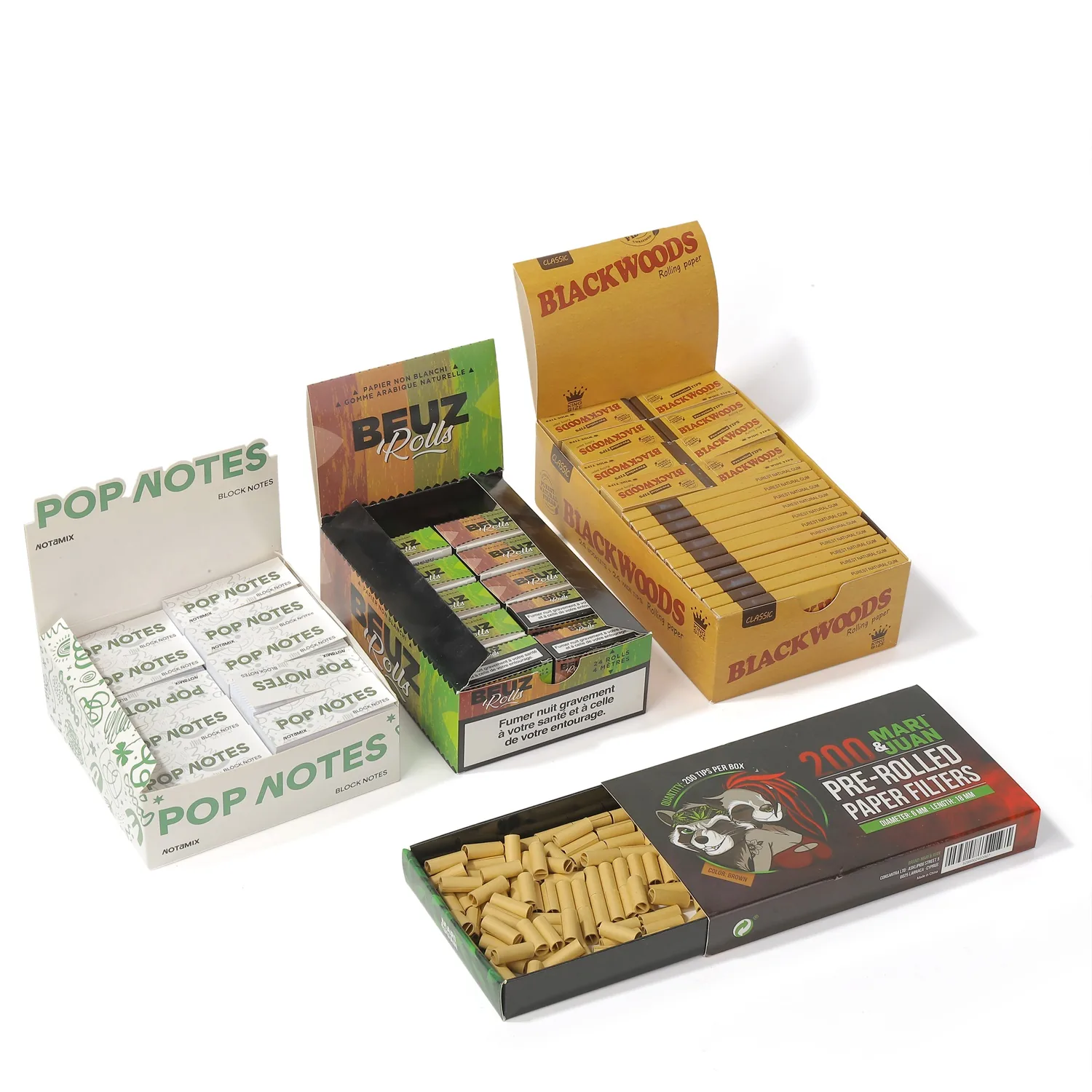
Use esses números como um vocabulário de solicitação de cotação, não como uma lista de preços da Ace ou um catálogo garantido. Um fornecedor pode usar nomes diferentes em torno de valores de limite. A RFQ mais segura diz “meta de 16 GSM, sujeita a tolerância aprovada e amostra” em vez de “fino premium”. Discuta as construções disponíveis através da Ace Rolling Serviço OEM e ODM.
| Faixa do mercado de pares | g/m² | Provável briefing de compra | Risco principal de aprovação |
|---|---|---|---|
| Ultra-fino | 10–13 | Presença mínima de papel | Danos no manuseio |
| Prêmio fino | 14–18 | Livro premium leve | Sensibilidade a mudanças no processo |
| Médio | 19–22 | Equilíbrio de sensação e manuseio | Rotulagem vaga de “fino” |
| Padrão | 23–28 | Folha familiar e mais forte | Mais presença de papel |
| Pesado | 29–35 | Formato robusto ou especializado | Expectativas de queima e sabor |
Conclusão Principal: Coloque uma meta numérica e uma faixa acordada no RFQ porque “premium”, “fino” e “padrão” se sobrepõem entre os vendedores.
Um GSM mais baixo significa uma queima mais lenta?
Um GSM mais baixo é frequentemente associado a papéis de enrolar de queima mais lenta nas explicações do mercado de pares, mas os compradores devem tratar isso como uma tendência, não como uma regra causal garantida.
O comportamento de queima também depende da mistura de fibras, porosidade, formação, marca d'água, linha de goma, umidade, dimensões da folha, umidade do recheio, moagem, densidade e técnica de enrolamento. Dois papéis de 14 GSM podem ter desempenhos diferentes porque o GSM mede massa, não fluxo de ar ou uniformidade de construção.
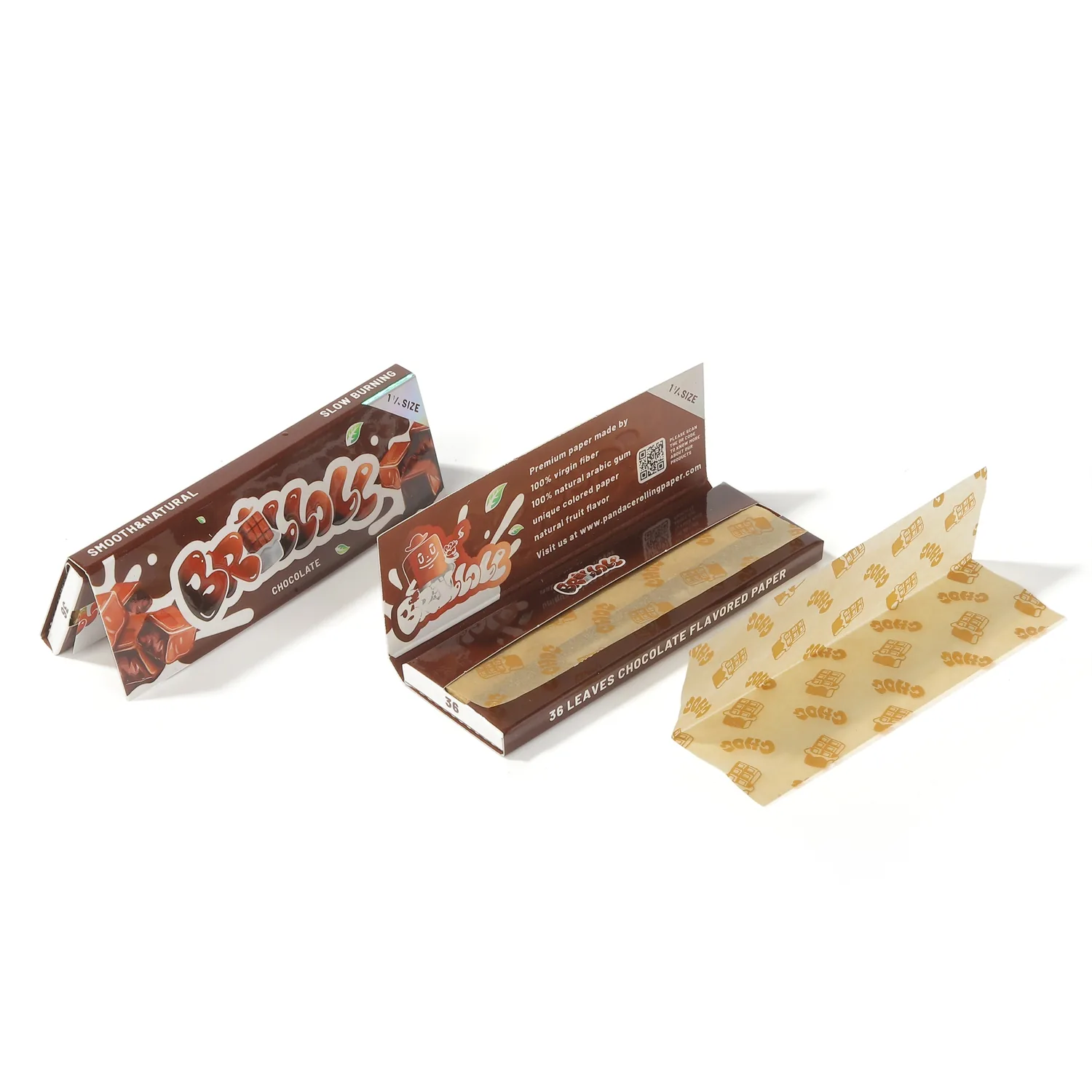
Run matched tests: same paper size, fill, weight, grind, humidity, rolling method, and lighting procedure. Record ignition, relights, side-burn tendency, ash, handling, and subjective paper presence. Never convert “often slower” into “always slowest.” Ace Rolling’s rolling paper products can be sampled as finished candidates before a construction is approved.
| Test variable | Hold constant? | Por que isso importa | Record |
|---|---|---|---|
| Fill type and moisture | Sim | Changes combustion | Batch and condition |
| Fill weight and density | Sim | Alters airflow | Grams and method |
| Paper GSM | Change deliberately | Target variable | Especificação do fornecedor |
| Fiber and porosity | Prefer constant | Can overwhelm GSM effect | Material data |
| Umidade | Sim | Affects paper and gum | Conditioning notes |
Conclusão Principal: Lower GSM may correlate with slower burn, but only a controlled test of the finished paper can approve performance.
Why Must Fiber and GSM Be Specified Together?
GSM tells buyers how much paper mass occupies an area; fiber tells them what that paper is made from. Neither specification replaces the other.
Hemp, rice-style, bamboo, flax, and wood-pulp constructions can differ in strength, formation, surface feel, opacity, and converting behavior at a similar GSM. A very light paper may need a fiber blend and process that can survive slitting, gumming, interleaving, packing, transit, and use.

Write the specification as a stack: declared fiber or blend, target GSM, tolerance, color, porosity or burn target, gum, watermark, printing status, sheet size, leaf count, and packaging. If FSC-certified sourcing is needed, request it as an applicable option and verify scope for the exact SKU; do not assume FSC is default. Ace Rolling’s quality and certifications page can anchor a product-specific document request.
| Specification layer | Example question | Why pair it with GSM | Evidência de aprovação |
|---|---|---|---|
| Fibra | Hemp, rice-style, bamboo, or pulp? | Changes structure and story | Material specification |
| g/m² | What numeric target? | Define peso por área | Test report or COA |
| Porosidade | What airflow behavior? | Affects burn | Agreed test method |
| Goma | Which gum and width? | Changes seal and sheet mass | Amostra física |
| Sourcing option | Is FSC required? | Claims need scope | Applicable documents |
Conclusão Principal: Buy a defined fiber-and-GSM construction, not an isolated number or an unsupported material label.
What Tolerance Should a Buyer Put in the Specification?
No converting process produces an infinitely exact number across every point and lot. A commercial specification therefore needs a target, tolerance, test method, sample plan, and escalation rule.
SERP peers often claim a ±5% GSM tolerance. Treat that as a market reference to negotiate, not as an automatic Ace standard or universal rule. At 16 GSM, ±5% would describe 15.2–16.8 GSM; whether that is workable depends on the material, measurement method, and intended performance.

Define where samples are taken, how they are conditioned, whether gum or print is included, how many measurements form a result, and what happens outside limits. Pair numerical acceptance with a retained physical standard so a technically compliant sheet that feels materially different still triggers review. Discuss production controls with Ace Rolling’s Dongguan factory team.
| Tolerance element | Weak wording | Better buying requirement | Buyer benefit |
|---|---|---|---|
| Target | “Thin paper” | “Target 16 GSM” | Numeric clarity |
| Gama | “About 16” | “Tolerance to be agreed” | Defined acceptance |
| Method | Nenhum | Named conditioning/test method | Comparable results |
| Amostragem | One unknown piece | Lot-based sample plan | Better lot visibility |
| Deviation | “Supplier decides” | Hold, notify, investigate | Change control |
Conclusão Principal: Use ±5% only as a peer benchmark until the supplier confirms a written, testable tolerance for the exact construction.
How Should GSM Samples Be Compared Before Bulk?
A useful GSM sample set changes one important variable at a time. Random branded booklets with unknown fibers cannot isolate what the buyer actually prefers.
Request labeled swatches or finished booklets across the shortlisted GSM range, then ask for matched fiber candidates wherever possible. Evaluate handling first, followed by gum activation, rollability, tear resistance, print visibility, paper presence, and controlled burn behavior.

Score each candidate, choose one production-intent sample, and sign the specification that created it. Both buyer and factory should retain the approved sample with date, version, artwork, material, and lot reference. Ace Rolling supports sampling before mass production through its sample and contact path.
| Sample stage | Contents | Decisão | Retain? |
|---|---|---|---|
| Orientation set | Several GSM/fiber swatches | Shortlist two or three | Optional |
| Format sample | Booklet or cone candidates | Confirm use format | Sim |
| Prova de impressão | Dieline and color output | Approve artwork | Sim |
| Amostra de intenção de produção | Exact proposed construction | Release mass production | Required |
| Production lot sample | Pulled from bulk | Confirm conformance | Required |
Conclusão Principal: Approve GSM through labeled, matched samples and retain the exact production-intent construction as the reorder standard.
How Do MOQ, Price, and Timing Affect a GSM Choice?
The lightest paper is not automatically the best commercial choice. Availability, converting yield, damage risk, print scope, packaging, MOQ, and destination all affect the finished economics.
Ace Rolling custom programs often start around 2.000 unidades, depending on the specification. Approved planning ranges are about $0,07–$0,30 por livreto personalizado e $0.04–$0.06 per pre-rolled cone, with MOQ and final quotation applying. These are not GSM-specific prices.
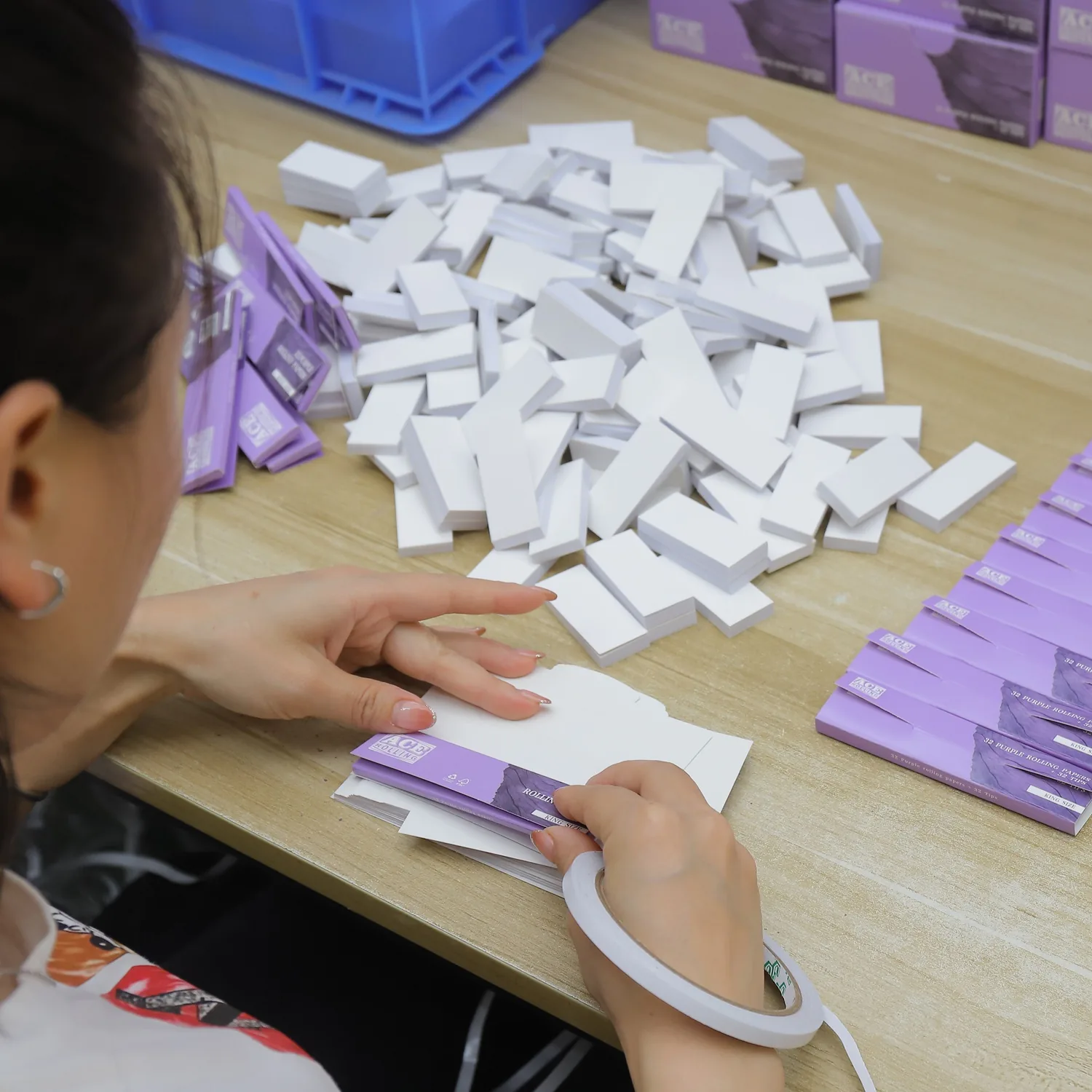
Quote two or three fully matched options and model landed cost, not only ex-factory unit price. Ace Rolling manufactures OEM programs in Dongguan, China; material approval must happen before mass scheduling. Ask the OEM team to identify availability, MOQ, sample cost, tooling, production time, freight terms, and the effect of any GSM change.
| Commercial input | Planning reference | GSM relationship | Ação do comprador |
|---|---|---|---|
| QMP | Often around 2,000 units | Construction dependent | Confirm per SKU |
| Booklet price | About $0.07–$0.30 | No fixed GSM price ladder | Request matched quotes |
| Cone price | About $0.04–$0.06 | Geometry also matters | Quote exact cone |
| Yield/damage | Project specific | Very thin paper may alter handling | Review sample and QC |
| Landed cost | Quote dependent | Includes freight and duty | Model destination total |
Conclusão Principal: Select GSM after sample approval and matched landed-cost quotes; never invent a price premium from paper weight alone.
Perguntas Frequentes
What does GSM mean in rolling papers?
GSM means grams per square meter, written g/m². It measures the mass of paper over a standardized area, allowing buyers to compare light and heavy constructions independently of sheet size. It does not identify the fiber or guarantee burn, taste, strength, porosity, gum quality, or converting consistency.
Is 14 GSM rolling paper considered thin?
Under peer market bands, 14 GSM sits at the beginning of the 14–18 GSM “thin premium” range, just above the 10–13 GSM ultra-thin band. Those labels are market conventions, not universal standards. Buyers should state 14 GSM numerically and approve the exact fiber, tolerance, gum, and finished sample.
Do lower-GSM rolling papers always burn slower?
No. Peer sources often associate lower GSM with slower burn, but GSM is only one variable. Fiber, porosity, watermark, gum, humidity, fill moisture, grind, density, and rolling method also affect combustion. Compare finished papers under controlled conditions and describe results as sample performance rather than a universal promise.
Is a ±5% GSM tolerance normal?
Some SERP peers claim ±5% as a common paper tolerance, but it is not an automatic Ace specification or universal rule. Buyers should negotiate the permitted range, conditioning method, sampling frequency, calculation basis, and response to deviations. The approved physical sample should remain part of acceptance alongside the measured number.
Why compare fiber and GSM at the same time?
Equal-GSM papers made from different fibers can vary in strength, opacity, feel, formation, porosity, and converting behavior. Conversely, one fiber can be produced across multiple GSM targets. A meaningful buying specification therefore combines declared fiber or blend, GSM, tolerance, gum, size, print, watermark, performance tests, and retained samples.
How can I request a GSM sample and quote?
Send the desired format, dimensions, leaf count, target fiber, GSM range, gum, print, packaging, quantity, destination, and test priorities. Ask for matched labeled samples before a production-intent proof. To start, entre em contato com a Ace Rolling and request current MOQ, availability, tolerance, sample, and landed-quote details.