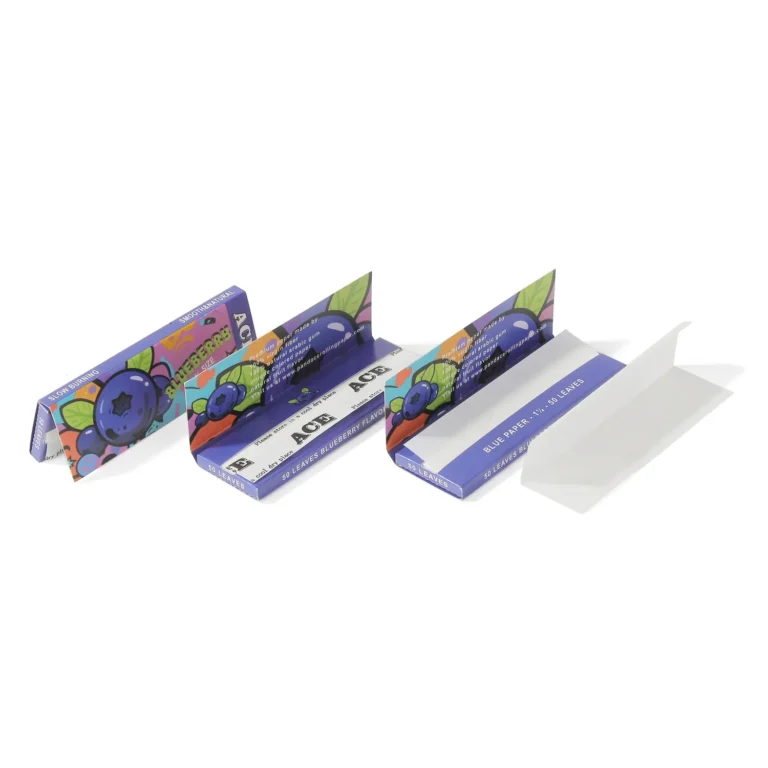

GSM means grams per square meter: the mass of a paper sheet normalized to one square meter. For buyers, it is a useful thickness-and-weight specification, but not a complete performance promise. Specify GSM together with fiber, porosity, gum, size, watermark, and an approved physical sample.
What Does GSM Actually Measure?
GSM gives procurement teams a common unit for comparing paper constructions without confusing sheet size with paper weight. The abbreviation means grams per square meter (g/m²).
A 14 GSM paper and a 22 GSM paper can be cut to identical dimensions, yet the lighter sheet uses less material per unit area. By comparison, ordinary A4 office paper is often around 70–80 GSM, which explains why rolling paper feels dramatically lighter.

GSM is measured on conditioned material under a defined test method; it is not obtained by weighing one finished booklet and dividing casually. Gum, ink, moisture, and sampling method can distort an informal check. Ask the supplier whether the stated figure applies to base paper or the finished gummed sheet, then preserve that definition in the purchase specification. Ace Rolling can translate the target into a production brief through its custom rolling paper program.
| Paper reference | Typical GSM context | Buyer interpretation | What it does not prove |
|---|---|---|---|
| Ultra-thin rolling paper | 10–13 | Very low paper mass | Guaranteed slow or even burn |
| Thin premium paper | 14–18 | Light hand-feel | Fiber composition |
| Medium paper | 19–22 | More handling body | Gum quality |
| Office A4 paper | About 70–80 | Familiar comparison only | Suitability for rolling |
Key Takeaway: GSM is a normalized paper-weight measurement, not a standalone verdict on quality, burn, or material.
Which GSM Bands Do Rolling Paper Buyers See?
Market terminology varies, so a buyer should turn adjectives such as “ultra-thin” into a numeric range. SERP peer RYO Papers groups the category into useful bands rather than treating every supplier label as universal.
The peer bands are 10–13 GSM ultra-thin, 14–18 GSM thin premium, 19–22 GSM medium, 23–28 GSM standard, and 29–35 GSM heavy. The same peer also summarizes premium papers as often 10–18 GSM, standard as 18–25 GSM, and heavy as 26–35 GSM. Those broader groups overlap because commercial naming is not a formal global standard.
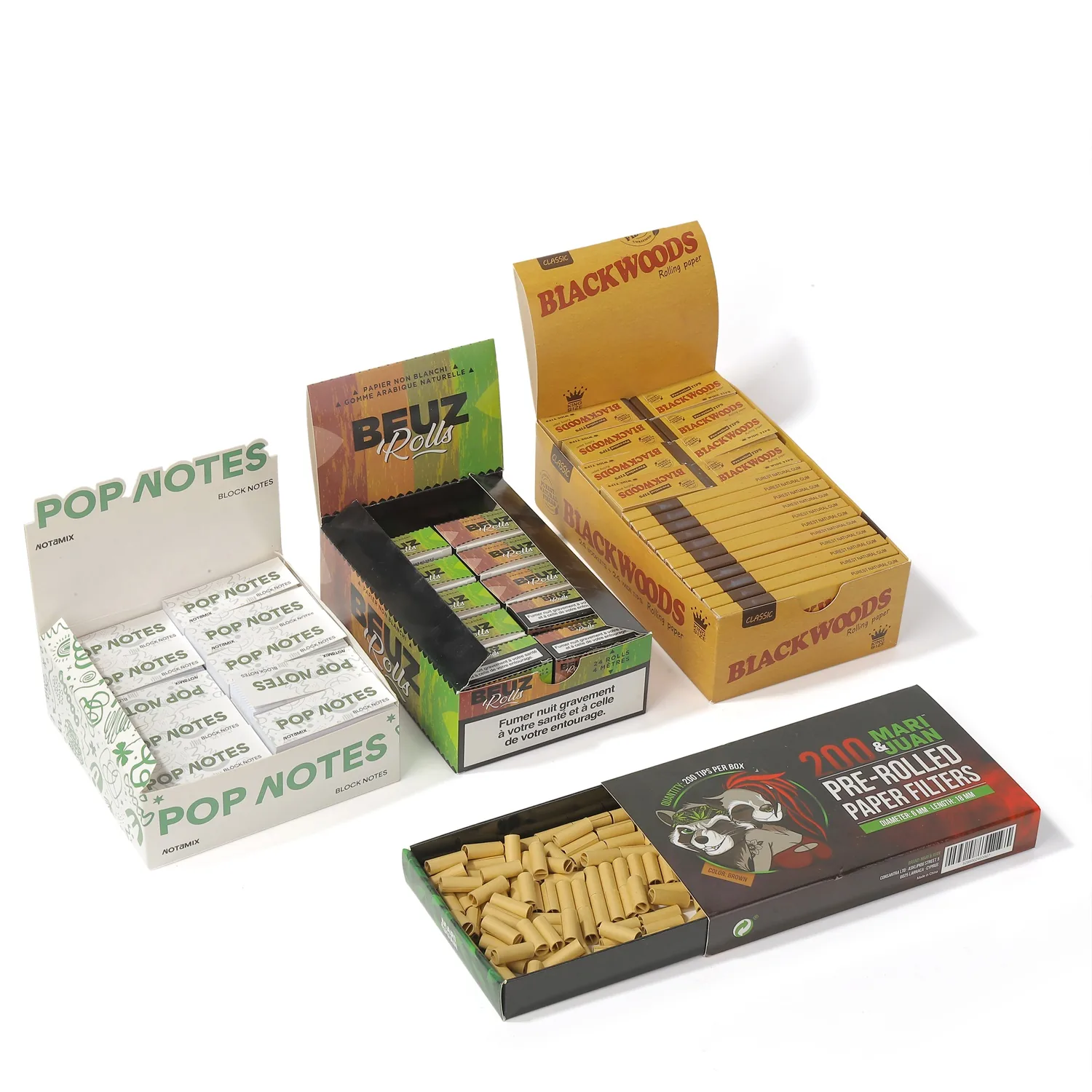
Use these numbers as a request-for-quotation vocabulary, not an Ace price sheet or guaranteed catalog. A supplier may use different names around boundary values. The safer RFQ says “target 16 GSM, subject to approved tolerance and sample” rather than “premium thin.” Discuss available constructions through Ace Rolling’s OEM and ODM service.
| Peer market band | GSM | Likely buying brief | Main approval risk |
|---|---|---|---|
| Ultra-thin | 10–13 | Minimal paper presence | Handling damage |
| Thin premium | 14–18 | Light premium booklet | Sensitivity to process changes |
| Medium | 19–22 | Balance of feel and handling | Vague “thin” labeling |
| Standard | 23–28 | Familiar, stronger sheet | More paper presence |
| Heavy | 29–35 | Robust or specialty format | Burn and taste expectations |
Key Takeaway: Put a numeric target and agreed band in the RFQ because “premium,” “thin,” and “standard” overlap across sellers.
Does Lower GSM Mean a Slower Burn?
Lower GSM is often associated with slower-burning rolling papers in peer market explanations, but buyers should treat that as a tendency, not a guaranteed causal rule.
Burn behavior also depends on fiber blend, porosity, formation, watermark, gum line, humidity, sheet dimensions, fill moisture, grind, density, and rolling technique. Two 14 GSM papers can perform differently because GSM measures mass, not airflow or construction uniformity.
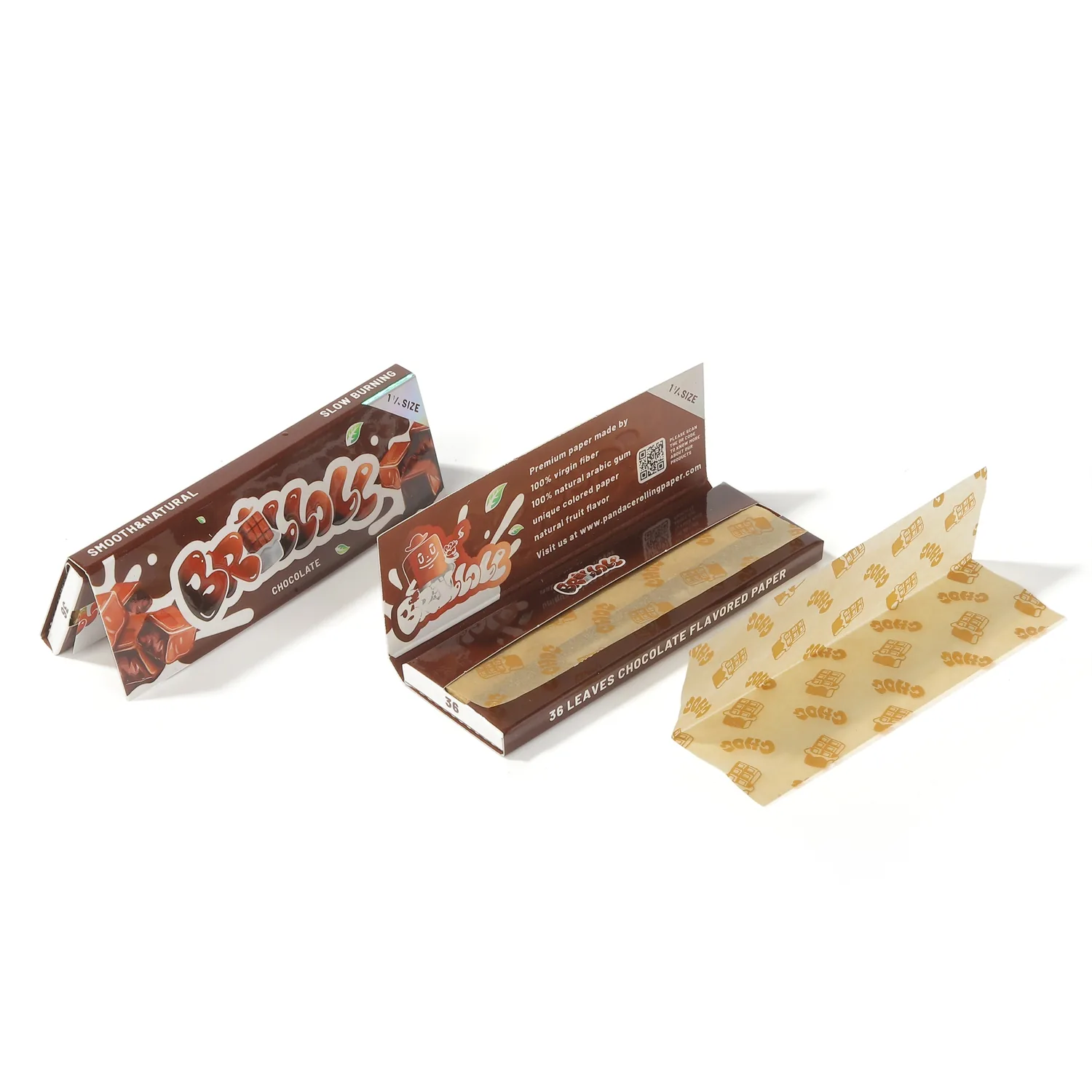
Run matched tests: same paper size, fill, weight, grind, humidity, rolling method, and lighting procedure. Record ignition, relights, side-burn tendency, ash, handling, and subjective paper presence. Never convert “often slower” into “always slowest.” Ace Rolling’s rolling paper products can be sampled as finished candidates before a construction is approved.
| Test variable | Hold constant? | Why it matters | Record |
|---|---|---|---|
| Fill type and moisture | Yes | Changes combustion | Batch and condition |
| Fill weight and density | Yes | Alters airflow | Grams and method |
| Paper GSM | Change deliberately | Target variable | Supplier specification |
| Fiber and porosity | Prefer constant | Can overwhelm GSM effect | Material data |
| Humidity | Yes | Affects paper and gum | Conditioning notes |
Key Takeaway: Lower GSM may correlate with slower burn, but only a controlled test of the finished paper can approve performance.
Why Must Fiber and GSM Be Specified Together?
GSM tells buyers how much paper mass occupies an area; fiber tells them what that paper is made from. Neither specification replaces the other.
Hemp, rice-style, bamboo, flax, and wood-pulp constructions can differ in strength, formation, surface feel, opacity, and converting behavior at a similar GSM. A very light paper may need a fiber blend and process that can survive slitting, gumming, interleaving, packing, transit, and use.

Write the specification as a stack: declared fiber or blend, target GSM, tolerance, color, porosity or burn target, gum, watermark, printing status, sheet size, leaf count, and packaging. If FSC-certified sourcing is needed, request it as an applicable option and verify scope for the exact SKU; do not assume FSC is default. Ace Rolling’s quality and certifications page can anchor a product-specific document request.
| Specification layer | Example question | Why pair it with GSM | Approval evidence |
|---|---|---|---|
| Fiber | Hemp, rice-style, bamboo, or pulp? | Changes structure and story | Material specification |
| GSM | What numeric target? | Defines area weight | Test report or COA |
| Porosity | What airflow behavior? | Affects burn | Agreed test method |
| Gum | Which gum and width? | Changes seal and sheet mass | Physical sample |
| Sourcing option | Is FSC required? | Claims need scope | Applicable documents |
Key Takeaway: Buy a defined fiber-and-GSM construction, not an isolated number or an unsupported material label.
What Tolerance Should a Buyer Put in the Specification?
No converting process produces an infinitely exact number across every point and lot. A commercial specification therefore needs a target, tolerance, test method, sample plan, and escalation rule.
SERP peers often claim a ±5% GSM tolerance. Treat that as a market reference to negotiate, not as an automatic Ace standard or universal rule. At 16 GSM, ±5% would describe 15.2–16.8 GSM; whether that is workable depends on the material, measurement method, and intended performance.

Define where samples are taken, how they are conditioned, whether gum or print is included, how many measurements form a result, and what happens outside limits. Pair numerical acceptance with a retained physical standard so a technically compliant sheet that feels materially different still triggers review. Discuss production controls with Ace Rolling’s Dongguan factory team.
| Tolerance element | Weak wording | Better buying requirement | Buyer benefit |
|---|---|---|---|
| Target | “Thin paper” | “Target 16 GSM” | Numeric clarity |
| Range | “About 16” | “Tolerance to be agreed” | Defined acceptance |
| Method | None | Named conditioning/test method | Comparable results |
| Sampling | One unknown piece | Lot-based sample plan | Better lot visibility |
| Deviation | “Supplier decides” | Hold, notify, investigate | Change control |
Key Takeaway: Use ±5% only as a peer benchmark until the supplier confirms a written, testable tolerance for the exact construction.
How Should GSM Samples Be Compared Before Bulk?
A useful GSM sample set changes one important variable at a time. Random branded booklets with unknown fibers cannot isolate what the buyer actually prefers.
Request labeled swatches or finished booklets across the shortlisted GSM range, then ask for matched fiber candidates wherever possible. Evaluate handling first, followed by gum activation, rollability, tear resistance, print visibility, paper presence, and controlled burn behavior.

Score each candidate, choose one production-intent sample, and sign the specification that created it. Both buyer and factory should retain the approved sample with date, version, artwork, material, and lot reference. Ace Rolling supports sampling before mass production through its sample and contact path.
| Sample stage | Contents | Decision | Retain? |
|---|---|---|---|
| Orientation set | Several GSM/fiber swatches | Shortlist two or three | Optional |
| Format sample | Booklet or cone candidates | Confirm use format | Yes |
| Print proof | Dieline and color output | Approve artwork | Yes |
| Production-intent sample | Exact proposed construction | Release mass production | Required |
| Production lot sample | Pulled from bulk | Confirm conformance | Required |
Key Takeaway: Approve GSM through labeled, matched samples and retain the exact production-intent construction as the reorder standard.
How Do MOQ, Price, and Timing Affect a GSM Choice?
The lightest paper is not automatically the best commercial choice. Availability, converting yield, damage risk, print scope, packaging, MOQ, and destination all affect the finished economics.
Ace Rolling custom programs often start around 2,000 units, depending on the specification. Approved planning ranges are about $0.07–$0.30 per custom booklet and $0.04–$0.06 per pre-rolled cone, with MOQ and final quotation applying. These are not GSM-specific prices.

Quote two or three fully matched options and model landed cost, not only ex-factory unit price. Ace Rolling manufactures OEM programs in Dongguan, China; material approval must happen before mass scheduling. Ask the OEM team to identify availability, MOQ, sample cost, tooling, production time, freight terms, and the effect of any GSM change.
| Commercial input | Planning reference | GSM relationship | Buyer action |
|---|---|---|---|
| MOQ | Often around 2,000 units | Construction dependent | Confirm per SKU |
| Booklet price | About $0.07–$0.30 | No fixed GSM price ladder | Request matched quotes |
| Cone price | About $0.04–$0.06 | Geometry also matters | Quote exact cone |
| Yield/damage | Project specific | Very thin paper may alter handling | Review sample and QC |
| Landed cost | Quote dependent | Includes freight and duty | Model destination total |
Key Takeaway: Select GSM after sample approval and matched landed-cost quotes; never invent a price premium from paper weight alone.
FAQ
What does GSM mean in rolling papers?
GSM means grams per square meter, written g/m². It measures the mass of paper over a standardized area, allowing buyers to compare light and heavy constructions independently of sheet size. It does not identify the fiber or guarantee burn, taste, strength, porosity, gum quality, or converting consistency.
Is 14 GSM rolling paper considered thin?
Under peer market bands, 14 GSM sits at the beginning of the 14–18 GSM “thin premium” range, just above the 10–13 GSM ultra-thin band. Those labels are market conventions, not universal standards. Buyers should state 14 GSM numerically and approve the exact fiber, tolerance, gum, and finished sample.
Do lower-GSM rolling papers always burn slower?
No. Peer sources often associate lower GSM with slower burn, but GSM is only one variable. Fiber, porosity, watermark, gum, humidity, fill moisture, grind, density, and rolling method also affect combustion. Compare finished papers under controlled conditions and describe results as sample performance rather than a universal promise.
Is a ±5% GSM tolerance normal?
Some SERP peers claim ±5% as a common paper tolerance, but it is not an automatic Ace specification or universal rule. Buyers should negotiate the permitted range, conditioning method, sampling frequency, calculation basis, and response to deviations. The approved physical sample should remain part of acceptance alongside the measured number.
Why compare fiber and GSM at the same time?
Equal-GSM papers made from different fibers can vary in strength, opacity, feel, formation, porosity, and converting behavior. Conversely, one fiber can be produced across multiple GSM targets. A meaningful buying specification therefore combines declared fiber or blend, GSM, tolerance, gum, size, print, watermark, performance tests, and retained samples.
How can I request a GSM sample and quote?
Send the desired format, dimensions, leaf count, target fiber, GSM range, gum, print, packaging, quantity, destination, and test priorities. Ask for matched labeled samples before a production-intent proof. To start, contact Ace Rolling and request current MOQ, availability, tolerance, sample, and landed-quote details.