
Finding a rolling paper manufacturer in China is not difficult. Finding a factory that actually makes rolling papers, controls paper conversion, develops retail packaging, and can support repeat export orders takes more checking.
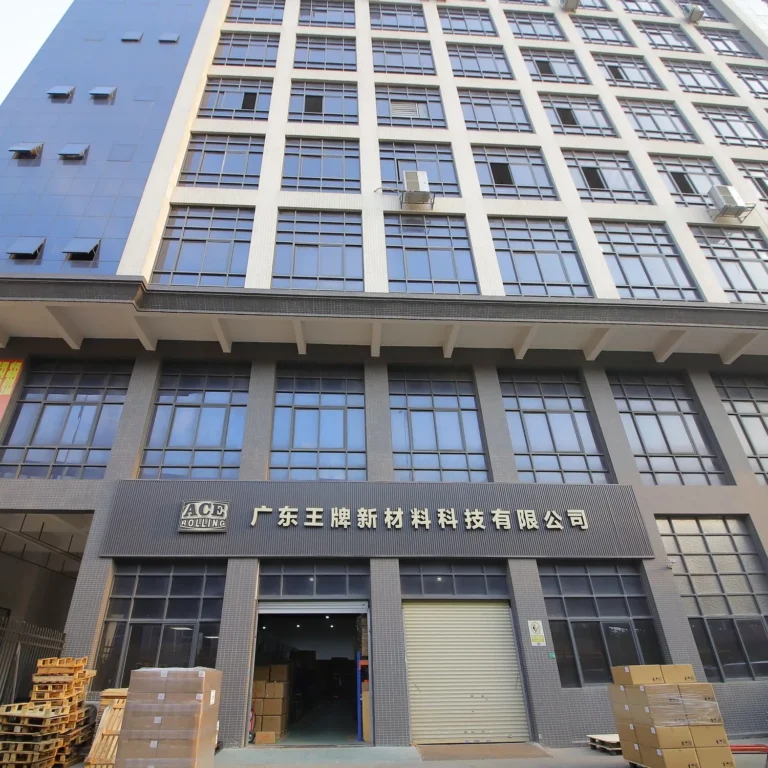
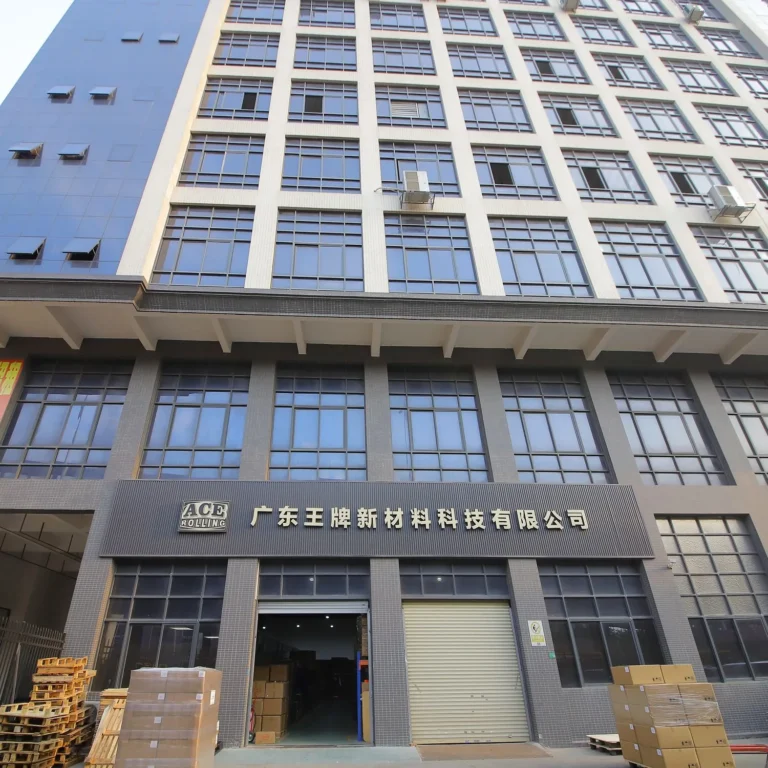
A qualified China rolling paper manufacturer should be able to show its factory, explain its base paper source, provide samples, define the MOQ for each product and packaging route, document quality checks, and confirm export requirements before production. Ace Rolling supports custom booklets, pre-rolled cones, filter tips, natural wraps, retail packaging, and industrial paper supply from its Dongguan production base.
After reading this guide, you should be able to separate a real rolling paper factory from a general packaging supplier or trading company and prepare a useful quotation request.
Why do supplier directories need a second check?
Supplier directories are useful for building a longlist, but a search result is not the same as a factory audit. The ensun China rolling paper manufacturer directory includes businesses connected with rolling papers, packaging, paper rolls, printing, smoking accessories, and related products. Some may be useful partners, but they do not all perform the same manufacturing work.
Before requesting prices, identify what each company actually produces. A packaging printer may make excellent boxes but outsource the paper. A smoking-accessory trader may offer many SKUs without controlling production. A true rolling paper manufacturer should explain its product scope, equipment, raw material route, sampling process, and quality checks without vague answers.
| Supplier type | Suitable use | What to verify |
|---|---|---|
| Rolling paper factory | Custom booklets, cones, bobbins, repeat OEM orders | Factory address, equipment, paper source, QC, samples |
| Packaging printer | Boxes, display cartons, tubes, outer packaging | Whether rolling paper production is in-house or outsourced |
| Trading company | Mixed accessories and small combined orders | Actual factory identity, responsibility for defects, reorder control |
| Industrial paper converter | Bobbins, slit rolls, machine supply | Width tolerance, roll length, tension, splice policy, machine testing |
Where Do Buyers Actually Find Rolling Paper Factories?
Forum threads and trade buyers use the same few discovery channels—always followed by verification.
Use expos, direct manufacturer sites, B2B directories with factory audits, and warm referrals. Custom brands also surface at hemp/cannabis trade fairs (Snail Papers–style show calendars), which is useful for brand programs—not always for deep OEM.
| Channel | How to use it | Watch-out |
|---|---|---|
| Industry expos | Collect cards, book sample kits | Expo brand ≠ factory |
| Manufacturer websites | Contact OEM/quote forms | Thin sites with stock photos |
| B2B marketplaces | Filter “manufacturer,” request video tour | Traders relabeling factories |
| Referrals from fillers / shops | Ask who ships reorders cleanly | Protect NDAs; still sample |
Discovery is easy; verification is the real work.
What should a China rolling paper factory make in-house?
The answer depends on your project. A private-label booklet buyer needs paper conversion, booklet assembly, tip integration, printing, and packaging coordination. A pre-rolled cone buyer needs cone forming, filter control, tray or display packing, and size consistency. An automated filling business may need industrial bobbins or jumbo rolls with tighter operating requirements.
Ace Rolling works across several connected product routes:
- Custom rolling paper booklets
- Custom pre-rolled cones
- Filter tips and retail-ready packaging
- Natural wraps and material-led product programs
- Industrial jumbo rolls and bobbins
- OEM and ODM development
This wider scope matters when one brand needs booklets, cones, display boxes, and industrial supply under a coordinated sample and reorder plan.
How do you verify that the manufacturer is real?
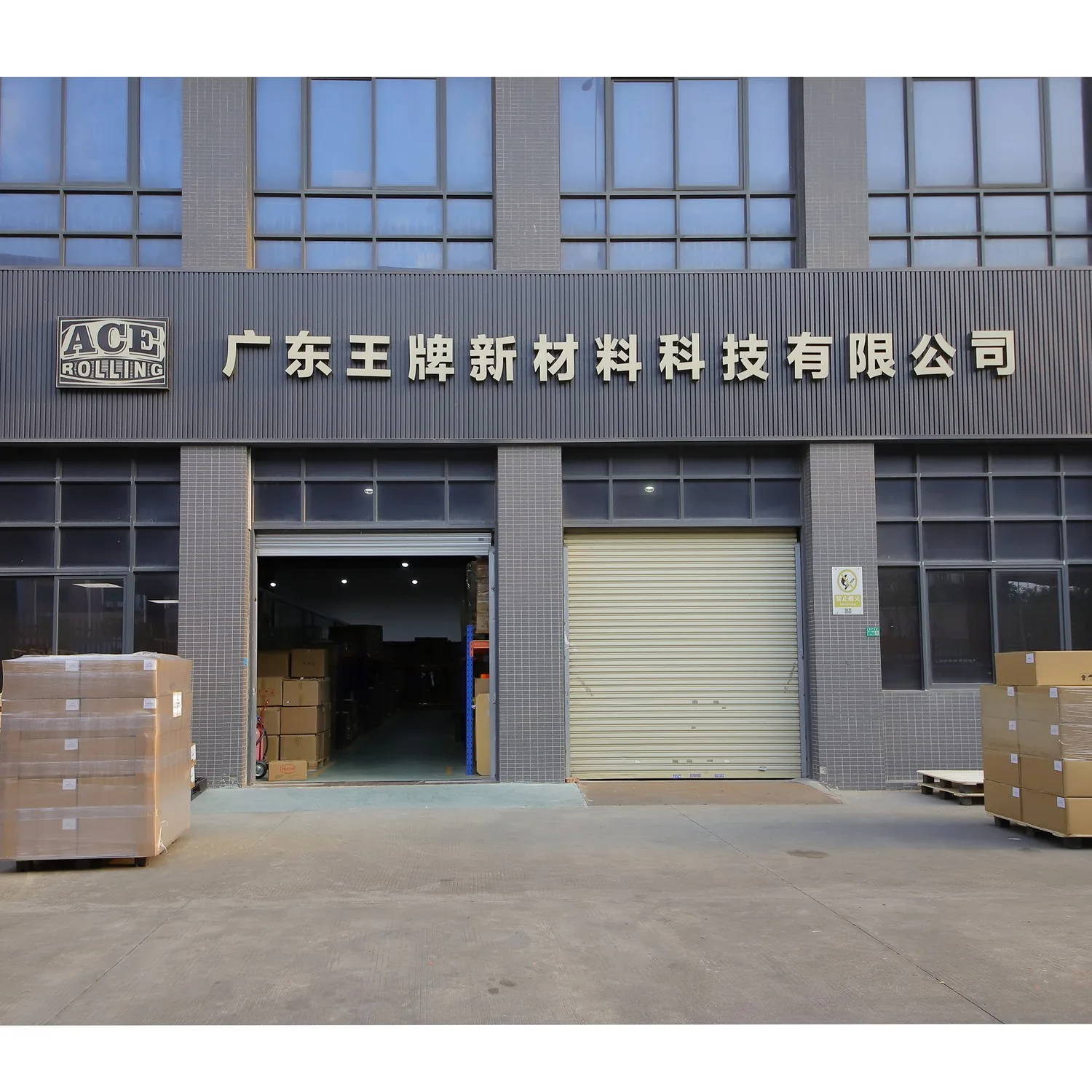
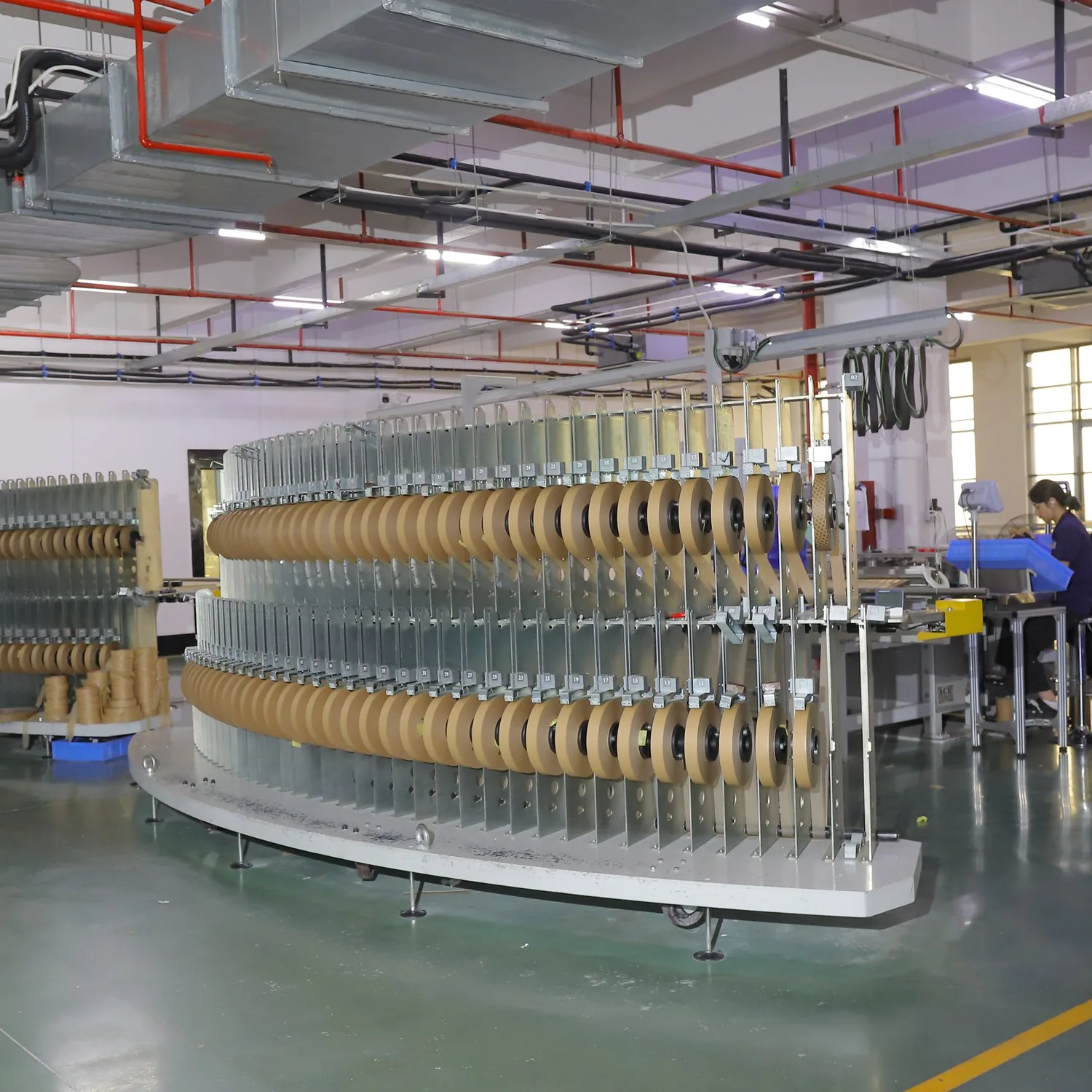
Start with evidence that connects the company name, address, people, machines, and products. Ask for a live video call from the workshop, recent production photos, business registration details, equipment views, sample-room footage, and a clear explanation of which operations are completed in-house.
Ace Rolling operates from a modernized 2,000 to 4,000 sqm facility in Dongguan with 35 specialists across production, QA/QC, R&D, and export coordination. Buyers can review the Ace Rolling factory overview and request current factory videos or a sample discussion for their project.
Use this factory check before comparing final quotations:
- Confirm the legal company name and factory address.
- Ask which product steps are completed in-house.
- Request a live workshop call or current production video.
- Match the machines shown to the product being quoted.
- Ask who handles QC, export documents, defects, and reorders.
- Order samples before approving bulk production.
What red flags should you watch for when vetting suppliers?
A bad manufacturer costs more than a good one — in recalls, reputation damage, and lost distribution.
Watch for brokers posing as factories, missing certifications, vague specs, and pressure to skip sampling.
Broker detection is the first skill. Real factories show production floor videos with their company signage visible. They answer technical questions about slitting width, gum viscosity, and drying curves. Brokers send generic catalogues and dodge specifics. Ask for a video call from the production floor — not the sales office. If they refuse, you are likely talking to a middleman.
Vague specifications are the second red flag. A legitimate manufacturer quotes exact ranges: “13.5 gsm ± 0.5, porosity 22 CU ± 5.” A risky supplier says “about standard thickness” or “similar to RAW.” Precision in specs reflects precision in production. Ambiguity reflects either ignorance or deliberate opacity.
Pressure to skip sampling is the third danger sign. Any factory confident in its quality will send free or low-cost samples. If a supplier demands 50% deposit before you touch the product, walk away. In the EU and UK, distributors routinely evaluate 3-5 suppliers via sample before placing trial orders. This is standard practice, not an insult.
The final red flag is inconsistent communication. Factory-direct sales teams know their machines, their capacity, and their current backlog. If answers change between emails — “lead time is 20 days” then “actually 45 days” — the supplier is either disorganized or subcontracting your order without telling you.
| Red Flag | What It Means | Your Response |
|---|---|---|
| No factory video / refused visit | Likely broker | Demand proof or move on |
| Vague specs (“standard quality”) | Poor quality control | Request exact parameter ranges |
| Pressure to skip samples | Quality risk | Insist on sample-trial-order sequence |
| Inconsistent answers | Subcontracting or disorganization | Document everything, set penalties |
| Missing certification scope | Paper-only trading company | Verify certificate numbers |
| No quality agreement | No recourse for defects | Draft and sign before deposit |
Trust is earned through transparency, not promised through email.
Factory or Trading Company: Which Should You Use?
| Factor | Direct factory (e.g. Ace Rolling OEM) | Trading desk |
|---|---|---|
| Spec control | Engineering talk with converting team | Filtered through sales broker |
| Sample retention | Easier to bind same line | May switch subcontractor |
| Price | Transparent MOQ tiers | Margin stacked opaque |
| Reorder risk | Lower when same line runs bulk | Higher if lot routed elsewhere |
| Best for | Custom booklets, cones, branded packs | One-off commodity pick from catalog |
Many legitimate projects use traders; custom OEM with retained samples favors direct factory relationships.
When is a trader still acceptable—and when should you switch?
Not every buyer needs plant-direct on day one.
Traders can help tiny exploratory buys. Switch to a manufacturer when you need stable reorders, custom fiber/print, cones + booklets under one brand calendar, or accountable QC.
| Need | Better first path |
|---|---|
| Tiny exploratory buy | Trader or cover program may suffice |
| Stable private-label reorders | Real manufacturer |
| Unique fiber / size / print | Manufacturer |
| Papers + cones one launch | Manufacturer running both |
Escalate when specs and accountability—not just a logo—must be yours.
Where does the base paper come from?
Base paper affects appearance, conversion behavior, burn characteristics, and batch consistency. A buyer should ask the manufacturer to identify the paper source, available material directions, sourcing documents, and how repeat orders are controlled when raw material batches change.
Ace Rolling sources base paper through Hengfeng Group supply backing. Depending on the product route, buyers can discuss white paper, natural brown paper, hemp-led options, printed paper, and FSC-certified paper. Final material, paper shade, thickness, gum, and documentation should be confirmed against an approved sample before bulk production.
Do not choose material from a marketing name alone. Compare physical samples for paper feel, opacity, odor, gum performance, printing result, and suitability for the target market.
Which Material Lane Should You Choose (Hemp, Bamboo, Wood Pulp)?
Most China OEM programs cluster into plant-fiber and wood-pulp lanes:
Hemp — balanced grip, natural merchandising, common private-label default. Bamboo — related plant-fiber story; confirm blend ratios on COA/spec sheet. Wood pulp — refined white or natural brown; often easiest for beginners’ feel. Rice-style ultra-thin — not every factory runs the same recipe; confirm on samples.
Ace Rolling actively manufactures hemp, bamboo, and wood pulp programs. Treat rice-style as sample-verified, not assumed from a brochure photo.
What Makes Hemp Paper Different from Wood Pulp?
Hemp paper is not a marketing label. It is a material category with measurable properties that differentiate it from wood-pulp and rice-paper alternatives.
Faster renewability. Hemp reaches maturity in approximately four months. Trees require 20 years or more to produce comparable fiber volume. One acre of hemp can yield the equivalent of four to ten acres of timber over a two-decade cycle.
Fiber strength and burn characteristics. Hemp fibers are longer and more durable than wood fibers. In rolling paper applications, this translates to sheets that resist tearing during handling, hold their shape when rolled, and burn at a steady, even rate — provided the manufacturing process preserves those fiber properties.
These material advantages matter only when the manufacturer understands how to process hemp fibers without degrading them. Not every factory that claims hemp capability actually controls the production stack.
What gram weight and porosity specs matter most?
Paper thickness is not just about feel — it controls burn behavior and customer satisfaction.
Grammage between 10 and 28 gsm covers the full rolling paper spectrum, with 12-14 gsm being the sweet spot for most booklets.
Ultra-light papers at 10-11 gsm create an almost transparent sheet. They appeal to purists who want minimal paper taste. The downside? They are harder to roll, harder to machine-assemble, and more fragile in shipping. In the UK market, 12-13 gsm represents the practical minimum that balances user experience with production yield.
Standard booklets at 13-15 gsm dominate retail. This range accepts printing, holds gum lines reliably, and feeds through automated booklet machines without jamming. And that’s not all: porosity — measured in Coresta Units (CU) — determines airflow and burn speed. Low porosity (5-20 CU) slows the burn. High porosity (80-120 CU) increases airflow for a lighter draw. Most successful brands spec 15-30 CU for a balanced experience.
The reality is that spec sheets from manufacturers like PDL (10-28 gsm, 5-120 CU) and SWM (11-25 gsm) overlap heavily. Your job is not to chase the widest range. Your job is to lock a spec that your target market prefers, then demand consistent batch-to-batch control.
| Spec | Light Range | Standard Range | Heavy Range |
|---|---|---|---|
| Grammage | 10-12 gsm | 13-15 gsm | 16-28 gsm |
| Porosity (CU) | 80-120 | 15-30 | 5-15 |
| Burn speed | Fast | Medium | Slow |
| Best use case | Ultra-thin purist | Mainstream retail | Specialty/slow-burn |
| Production yield | Lower (fragile) | High | Medium |
Lock 13-15 gsm / 15-30 CU for mainstream; go lighter or tighter only with purpose.
What does the 50,000-booklet-per-design MOQ actually cover?
Ace Rolling booklets start at MOQ 50,000 booklets per design; for other items, the exact MOQ depends on the product, material, printing, packaging structure, and production setup. A plain booklet, custom printed booklet, display box, pre-rolled cone, and industrial bobbin do not share one universal MOQ.
Ask the factory to separate the quotation into product and packaging decisions. This prevents a low headline MOQ from hiding a higher requirement for printed paper, filter tips, display cartons, or special finishes.
| Order item | What changes the MOQ | Practical decision |
|---|---|---|
| Rolling paper booklet | Leaf count, size, tips, print, paper material | Start with a standard structure when testing a new market |
| Pre-rolled cone | Cone size, paper, filter, print, tray or box | Test filling and packaging fit before the repeat order |
| Retail display box | Board, print colors, finish, insert, quantity per display | Approve the dieline with the physical product inside |
| Industrial bobbin | Width, length, core, tension and machine requirements | Provide equipment specifications and run a trial |
What samples should you request before ordering?
A useful sample is not only a visual reference. It should answer whether the product can be produced, packed, sold, and reordered under your requirements.
Request samples that match the intended material, size, leaf count, filter, packaging structure, and market. For booklets, check paper alignment, gum line, tip fit, opening, print registration, and pack dimensions. For cones, check shape, seam, filter fit, tray compatibility, and filling performance. For industrial rolls, confirm width, roll construction, tension, and machine behavior.
Keep one signed or clearly labeled approval sample. The bulk order, QC checks, and future reorders should refer back to that sample and the final specification sheet.
How should custom packaging be developed?
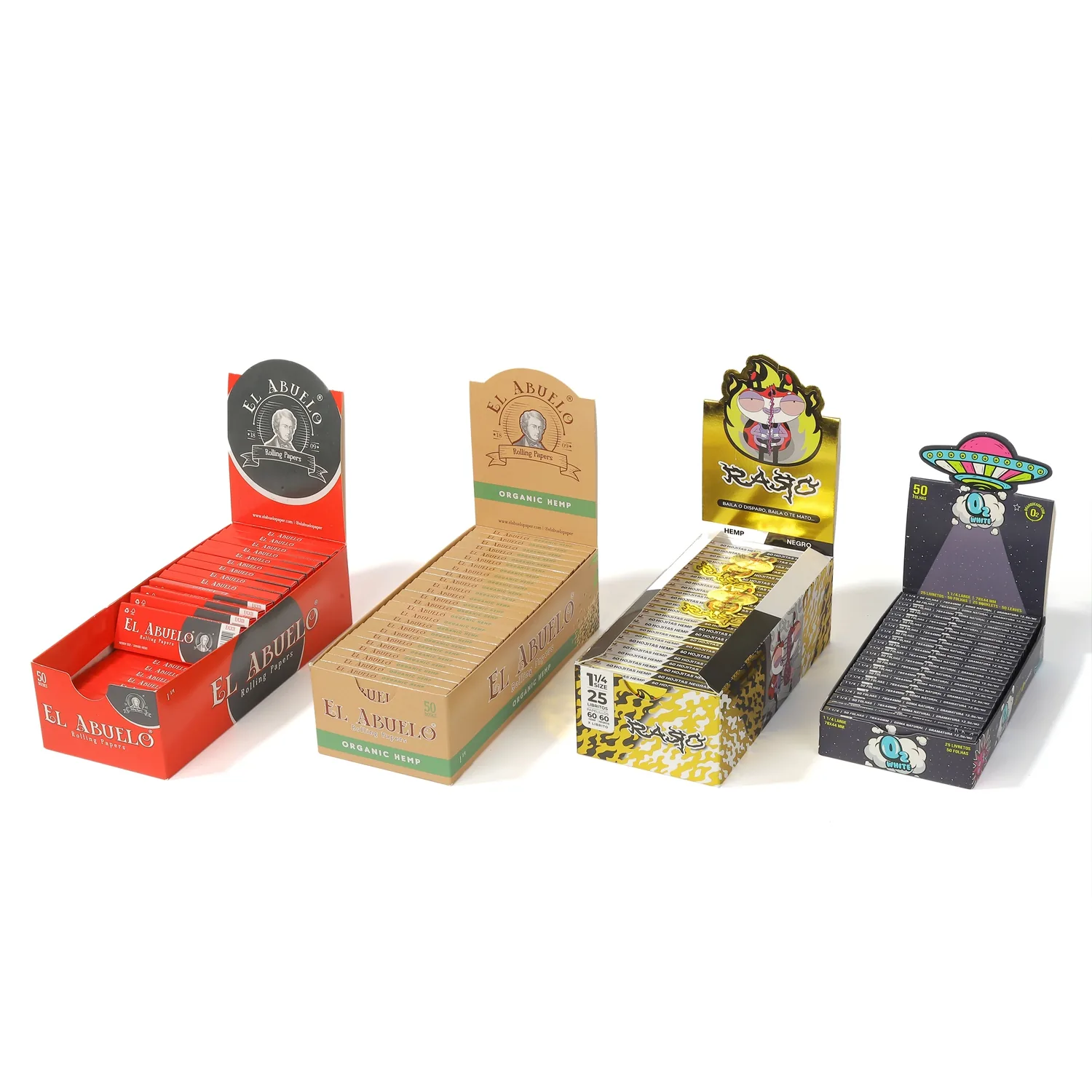
Packaging development should begin after the product dimensions and pack contents are known. The supplier needs the booklet, cone, filter, tray, or tube dimensions before locking a dieline. Buyers should provide editable artwork, brand colors, required warnings, barcode information, target-market text, and finish preferences.
Ace Rolling can coordinate rolling paper products with retail packaging through its OEM/ODM route. Buyers should approve the dieline, artwork proof, color reference, material sample, and assembled package before mass production.

What Can You Actually Customize on a Rolling Paper?
Most buyers are surprised by how many elements can be customized. A full-service manufacturer can modify:
Paper Specifications
- Fiber type: Wood pulp (bleached or unbleached), hemp, rice, flax, bamboo, or custom blends
- Basis weight: Typically 10–28 g/m². Thinner papers burn faster and feel more delicate. Thicker papers burn slower and feel more substantial.
- Porosity: Measured in Coresta units (CU). Lower porosity means slower, more controlled burn. Higher porosity means faster burn and airier draw.
- Dimensions: Sheet length, width, and the width of the gum line can all be adjusted within machine limits.
Printing and Branding
- Cover card printing: Full-color exterior and interior printing on the booklet cover
- Foil stamping: Metallic gold, silver, or colored foil for premium positioning
- Embossing/debossing: Raised or recessed texture on the cover card
- Spot UV: Glossy highlight on specific design elements
- Filter tip printing: Direct printing on paper tips or laser engraving on wood tips
- Watermarks: True watermarks embedded during papermaking for authenticity
Booklet Format
- Sheet count: Standard is 32 or 50 sheets per booklet. Some manufacturers can customize this within machine limits.
- Closure type: Standard fold, magnetic closure, or adhesive seal
- Filter inclusion: Booklets can include pre-cut filter tips or be paper-only
- Cover material: Standard card, kraft card, or specialty textured stock
Packaging
- Inner booklets: Individual booklet design and assembly
- Retail display boxes: Counter display cartons holding 20–50 booklets
- Outer cartons: Master shipping cartons with custom branding
- Shrink wrapping: Tamper-evident film for individual booklets or multi-packs
| Customization Element | Typical MOQ Impact | Lead Time Impact |
|---|---|---|
| Cover card printing | Low | +1–2 weeks |
| Foil stamping | Medium | +1–2 weeks |
| Embossing/spot UV | Medium | +1–2 weeks |
| Filter tip printing | Low | +1 week |
| Watermark | High | +2–4 weeks |
| Custom sheet count | Low | Minimal |
| Magnetic closure | Medium | +1–2 weeks |
| Custom porosity | High | +2–3 weeks |
What packaging formats work best for different sales channels?
The same paper in the wrong package will not sell.
Booklets, combo packs, pre-rolled cones, and display boxes each serve distinct retail and wholesale channels.
Classic booklets remain the volume driver. Single-wide, 1¼, and king-size slim formats cover 90% of the market. In the UK and Germany, king-size slim dominates. In France, 1¼ retains strong demand. Your manufacturer should offer all three with matching tip booklets.
Combo packs (papers + perforated tips) command 15-25% higher shelf price with minimal material cost increase. They also reduce the buyer’s decision friction. Any serious supplier should assemble these in-house.
Pre-rolled cones are the fastest-growing segment. They target convenience buyers and command premium pricing. The manufacturing is more complex — cone forming, filter insertion, and individual packing require dedicated equipment. But here’s the thing: cones open dispensary and head-shop channels that flat papers cannot reach. In Italy and Spain, pre-roll demand is accelerating.
Retail display packaging completes the picture. Kraft boxes, PDQ trays, and counter cartons determine whether a shop owner gives you shelf space. PDL and SWM both produce retail cartons. Your supplier should offer structural design support, not just printing.
| Format | Target Channel | Margin Profile | Manufacturing Complexity |
|---|---|---|---|
| Classic booklets | Smoke shops, convenience | Standard | Low |
| Combo packs (paper + tips) | Retail, online | Higher (+15-25%) | Low-Medium |
| Pre-rolled cones | Dispensaries, premium retail | Premium (+40-60%) | High |
| Bulk rolls (for filling machines) | Industrial pre-roll brands | Volume, lower per-unit | Medium |
| Display boxes / PDQ | Retail placement | Marketing investment | Medium |
Choose formats by channel, not by manufacturing convenience.
Which quality checks matter for rolling papers?
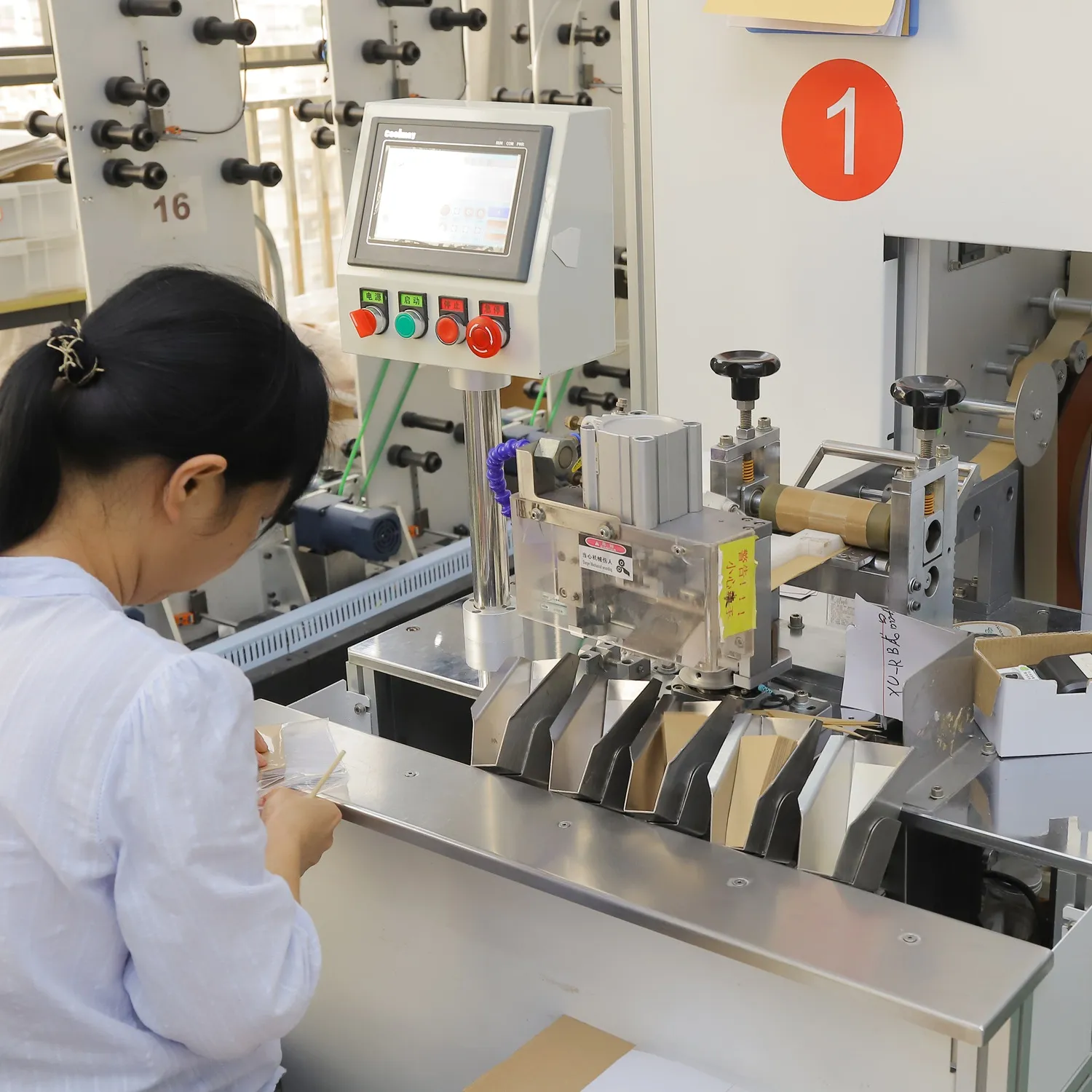
Quality control should match the product rather than rely on a generic inspection statement. Booklets need checks for paper dimensions, sheet count, gum placement, tip assembly, print alignment, and packaging. Cones need checks for size, seam, filter position, shape, and packing. Industrial rolls need checks tied to width, roll construction, winding, tension, and the buyer’s equipment.
Ace Rolling uses an ISO 9001:2015 management framework and holds ISO, FSC and FDA certification. Buyers should request the exact documents required for their market and product rather than assuming that one certificate covers every material, SKU, or destination.
Review the Ace Rolling quality and certification page and list any distributor, customs, labeling, or sourcing documents in the purchase specification before production.
How should you compare quotations from China?
Compare the same specification, Incoterm, packaging, and quantity. A lower unit price may exclude printing plates, samples, display boxes, cartons, inspection, freight, duties, or destination charges. Ask each supplier to state what is included and how long the quotation remains valid.
Use one comparison sheet with these fields:
- Product size and material
- Leaf count, filter, gum, and print requirements
- Unit packaging and master-carton quantity
- MOQ and quantity price breaks
- Sample cost and sample lead time
- Production lead time after approval
- Incoterm and shipping destination
- Certificate and test-document requirements
- Defect handling and reorder terms
- Payment schedule
The cheapest quotation is not useful if the sample does not match, the factory cannot support the packaging, or the second order changes without explanation.
How Do Shipping Choices Change China Landed Cost?
Smoke Branding’s guide separates sea, air, and courier for a reason.
Sea fits MOQ wholesale; air/courier fit samples and launches. Ace quotes should name Incoterms so freight is not an invisible second invoice.
| Mode | Best for | Trade-off |
|---|---|---|
| Sea | MOQ cartons | Longer transit |
| Air | Launch urgency | Higher $/kg |
| Courier | Samples / small | Expensive per unit |
Pick freight mode when you pick MOQ—not after production finishes.
What should you send Ace Rolling for a quotation?
Send enough information for the factory to quote the right product route. If some details are unknown, describe the target market and use case so the team can recommend samples.
Include:
- Product type: booklet, cone, filter tip, wrap, bobbin, or mixed program
- Size, leaf count, cone format, or roll specification
- Preferred paper material and color
- Printing and packaging requirements
- Estimated first order and annual demand
- Target market and required documents
- Artwork or a reference package
- Delivery country, postcode, and preferred Incoterm
Use the Ace Rolling contact and sample page to request samples, pricing, and production guidance.
How do you build a long-term partnership with your manufacturer?
The best supplier relationships outlast product lines.
Clear specs, regular audits, shared forecasts, and joint problem-solving turn vendors into strategic partners.
Start with a written quality agreement. Define acceptance criteria for grammage, porosity, print registration, gum adhesion, and packaging integrity. Include defect rates — AQL 1.0 or 2.5 is standard for consumer goods. Without this document, every dispute becomes a negotiation.
Share forecasts quarterly, not just when you place orders. Manufacturers plan pulp purchases and machine scheduling months ahead. If they know your Q4 volume in July, they can reserve capacity and avoid rush premiums. In return, ask for capacity guarantees and price lock periods. This is how partnerships in Germany and France operate — and it works.
Visit at least once per year, even if you source from Asia. The cost of a 3-day trip is recovered in one prevented quality issue. And that’s not all: face-to-face meetings surface improvement ideas that emails never capture. A production manager might mention a new flavoring technique. A packaging engineer might suggest a carton redesign that cuts shipping volume by 15%.
Finally, treat your manufacturer as a product development partner, not just a production vendor. Jointly develop exclusive formulations — a proprietary blend, a unique flavor, a custom watermark. These exclusives become competitive moats. PDL and SWM both co-develop with major clients. Your manufacturer should welcome the same approach.
| Partnership Element | Year 1 | Year 2+ |
|---|---|---|
| Quality agreement | Signed before first order | Reviewed annually |
| Forecast sharing | Monthly | Quarterly rolling |
| On-site visits | Once (initial audit) | Annual or bi-annual |
| Joint development | Sampling only | Exclusive formulations |
| Price terms | Spot pricing | Annual frame contracts |
| Communication | Email + video | Dedicated account manager |
Invest in the relationship early — the returns compound over years.
Is Ace Rolling the right rolling paper manufacturer in China for you?
Ace Rolling is suitable for buyers who need a China factory for custom rolling paper booklets, pre-rolled cones, filter tips, natural wraps, retail packaging, or industrial paper supply. The factory route is designed for private-label brands, distributors, wholesalers, and automated filling businesses that need samples, specification control, and repeat-order support.
Ace Rolling may not be the right route if you only need a few unbranded packs for immediate local delivery. For OEM/ODM and repeat wholesale programs, start with the product specification, request samples, confirm the documents, and compare the full delivered order rather than only the unit price.
The same Dongguan factory also makes cones: ACE Rolling’s custom pre-roll cone production runs on 7 automated lines in a 4,000 m² workshop, at US$0.04–0.06 per cone.
FAQ
How do I find a real rolling paper manufacturer in China?
A real rolling paper manufacturer in China should provide a verifiable factory address, current workshop evidence, product-specific equipment, material information, samples, QC steps, and export support. Ace Rolling operates from a 2,000 to 4,000 sqm Dongguan facility with teams covering production, QA/QC, R&D, and export coordination.
What products can Ace Rolling manufacture in China?
Ace Rolling manufactures custom rolling paper booklets, pre-rolled cones, filter tips, natural wraps, retail packaging programs, and industrial paper rolls for business buyers. Ace Rolling can coordinate product, material, artwork, packaging, samples, and repeat-order requirements through one OEM/ODM route from its Dongguan production base.
What is the MOQ for Ace Rolling custom rolling papers?
Ace Rolling custom rolling paper booklet programs start at MOQ 50,000 booklets per design. The exact MOQ depends on booklet size, leaf count, paper material, printing, filter tips, display packaging, and finishing requirements. Buyers should request a project-specific quotation instead of applying one MOQ to every configuration.
Does Ace Rolling offer FSC-certified rolling paper options?
Yes. Ace Rolling holds ISO, FSC and FDA certification. Buyers should identify the exact FSC, quality, labeling, customs, or distributor documents required for the target market before production because documentation can vary by material, product, and destination.
Can Ace Rolling supply rolling paper for automated machines?
Ace Rolling can discuss industrial jumbo rolls and bobbins for automated filling or converting requirements. Buyers should provide machine model, paper width, roll length, core specification, tension requirements, and current material problems. Ace Rolling should confirm suitability through specifications and a production trial before a large repeat order.
What should I send for a China rolling paper factory quote?
For an Ace Rolling China rolling paper factory quote, send the product type, dimensions, material, printing, packaging, quantity, annual demand, target market, required documents, delivery destination, and preferred Incoterm. Artwork or a reference package also allows Ace Rolling to assess dieline, printing, sampling, and packing requirements accurately.