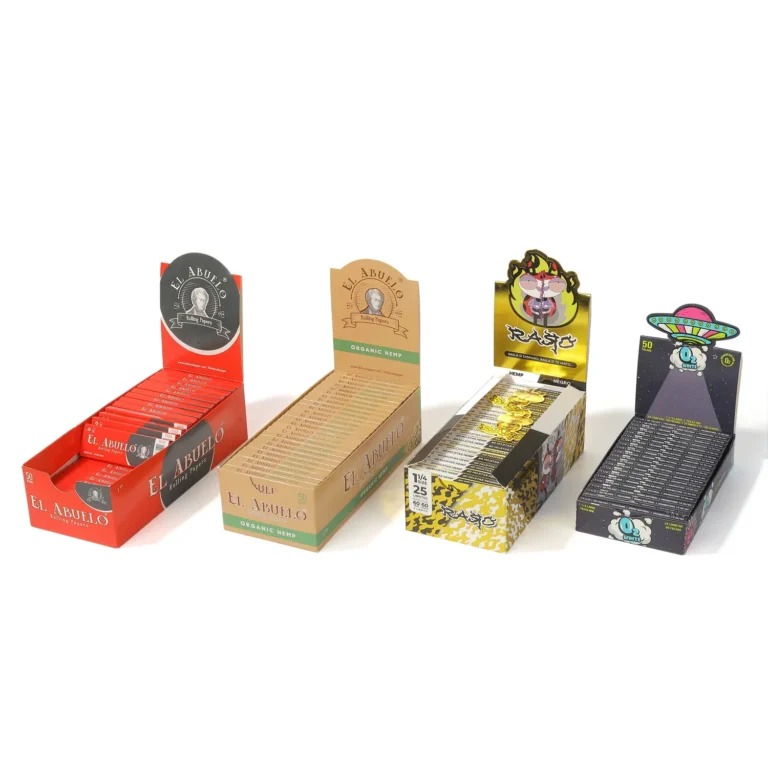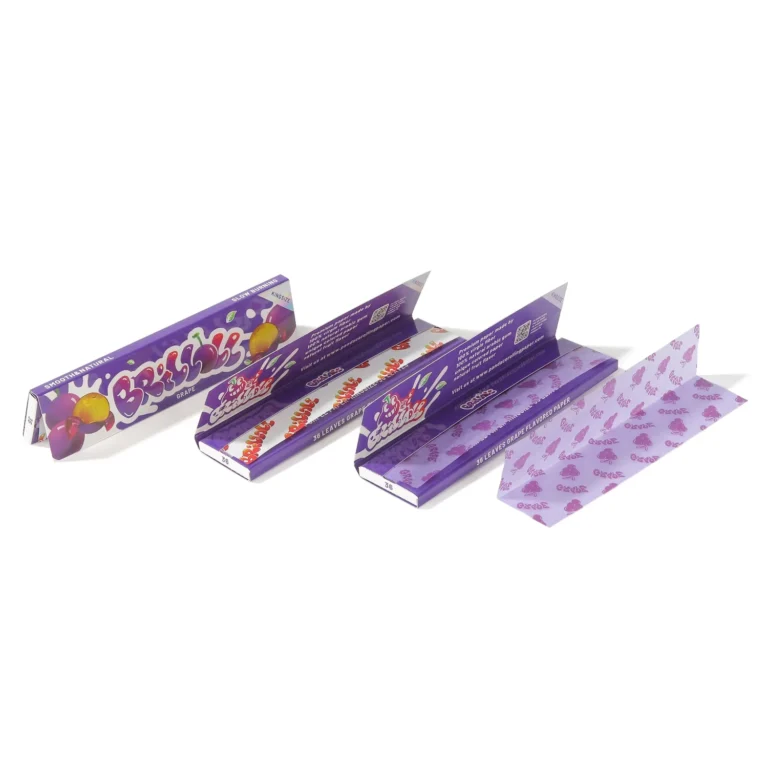

局部UV为选定的印刷区域添加透明光泽;压凹凸通过模具压制纸板形成物理凸起。两者结合使用,可以使标识闪耀并凸起——但定制卷烟纸买家在生产前必须对齐设计稿、材料、折痕、套准、样品和报价范围。.
对于小册子封面和零售纸盒,“局部UV压纹”实际上是两种后道加工工序,而非单一通用工艺。美国定制锥形卷纸将局部UV和压纹作为定制卷烟纸包装的市场升级选项;Ace Rolling采购方应将可用性、工序顺序、公差和定价视为项目特定且取决于报价的因素。.
局部UV与压纹如何逐步实现?
表面处理始于印前阶段,而非上光或压花机。印刷商需要结构模切线、基础图稿以及分别显示光泽和凹凸位置的独立蒙版。.
在典型的工作流程中,包装先印刷,然后涂布任何指定的表层,压凹凸模具塑造选定区域,透明UV光油根据已批准的局部遮罩套准并固化。具体的后加工顺序可能因材料、涂布系统、设计稿和加工商而异,因此买家应书面批准建议的工序顺序。.
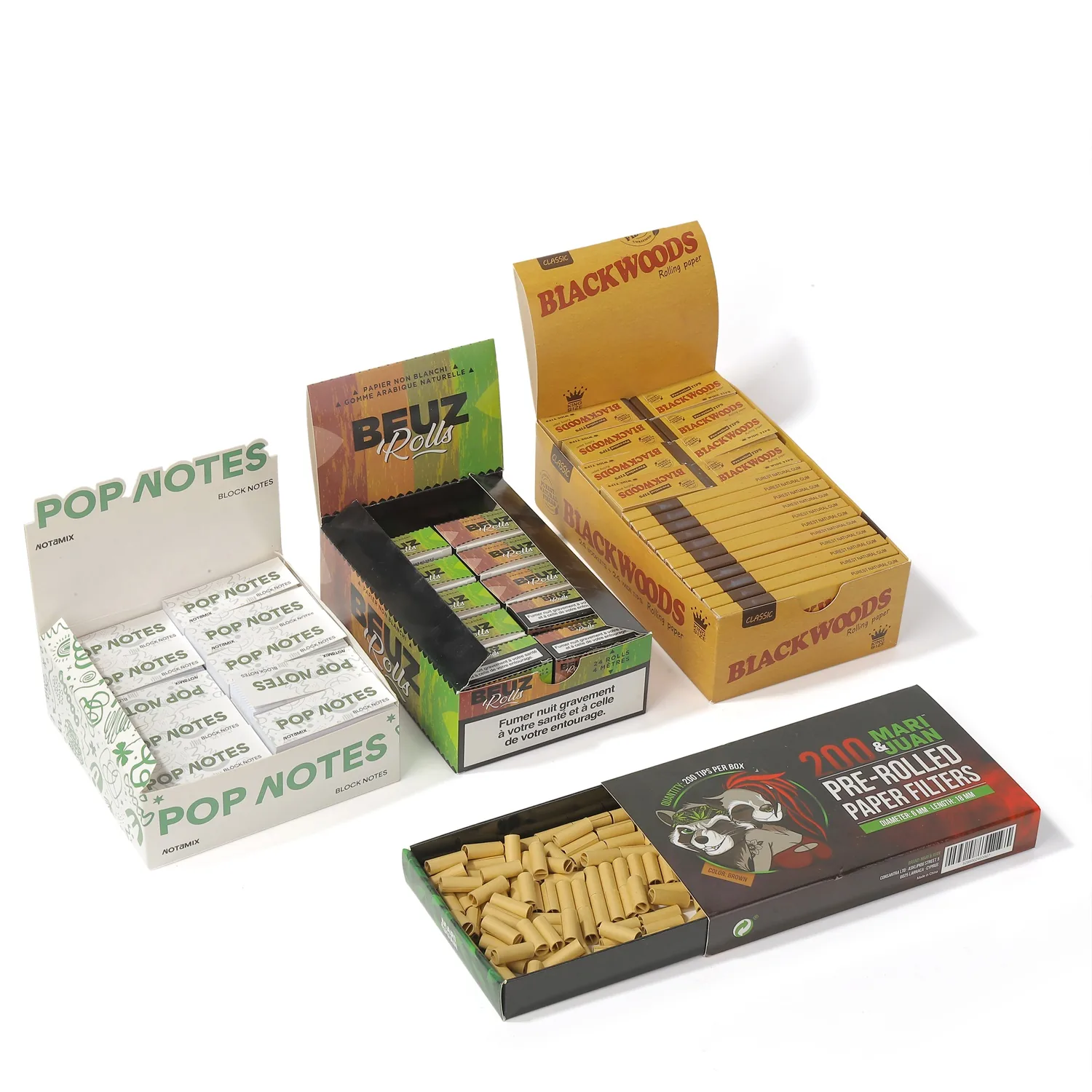
| 阶段 | 会发生什么 | 买家确认 |
|---|---|---|
| 结构 | 小册子封面或纸盒模切线已锁定 | 尺寸、折痕、胶合区域 |
| 基础印刷 | CMYK及经认可的专色将被印刷 | 色彩与复制 |
| Embossing | 匹配的模具将凹凸压入纸板 | 高度、边缘清晰度、背面效果 |
| 局部UV | 透明光油涂布于选定区域 | 光泽位置与套准 |
| UV固化 | 紫外线能量使光油硬化 | 表面一致性 |
| 转化 | 纸张经模切、折叠、组装和包装 | 无开裂或表面损伤 |
重要的控制点是套准:光油遮罩、压凹凸遮罩、印刷标识和物理裁切都必须参考同一份已批准的模切线。包装指南,例如 此问题的首个有机搜索结果 描述相同的选择性上光原理。对于Ace项目,请通过https://ace-rolling.com/oem-odm-rolling-paper-manufacturer/确认实际路径。.
关键要点: 在要求工厂结合光泽和凹凸效果之前,先锁定一份模切线和两份独立的后加工遮罩。.
局部UV与压凹凸或凸起UV是相同的吗?
这些术语在销售语言中常被捆绑使用,但它们的作用不同。标准局部UV改变反射光;压凹凸改变纸板的形状。.
凸起UV通过合适的数字装饰工艺在表面上方堆积光油,而真正的压凹凸则通过模具机械变形材料。在直接印刷的纸包装上,买家不应假设普通局部UV会有压凹凸的触感。应索取带有标签的实物样品,而非根据渲染的高光效果判断。.
| 表面处理 | 主要效果 | 模具制作 | 最佳买家问题 |
|---|---|---|---|
| 局部UV | 选择性亮光光油 | 丝印或数码涂布设置 | 光泽将出现在何处? |
| Embossing | 纸板从其平面凸起 | 匹配的金属模具 | 浮雕效果如何影响折叠和背面? |
| 压凹 | 纸板向内压印 | 金属模具 | 凹陷深度是否与包装兼容? |
| 凸起UV | 光油堆积形成触感高度 | 数字装饰能力 | 所选纸张是否支持此工艺? |
市场供应商,包括 美国定制锥形卷纸, ,将局部UV和压纹作为可选的小册子升级项目进行宣传。这将其定位为市场选项,而非Ace品牌的自动功能或规格。请与https://ace-rolling.com/custom-rolling-papers/讨论期望的视觉效果,并通过报价来确定具体的生产方式。.
关键要点: 请指定所需效果——光泽、物理凸起、凹陷或光油高度——而不要仅写“局部UV压凹凸”。”
是否应在手册或纸盒上结合使用局部上光工艺?
当某个重要元素需要视觉和触觉焦点时,结合两种局部上光工艺最为合理。通常,一个标志、简短的产品名称或克制的图案能为印刷机提供比满版细小上光细节更清晰的套准目标。.
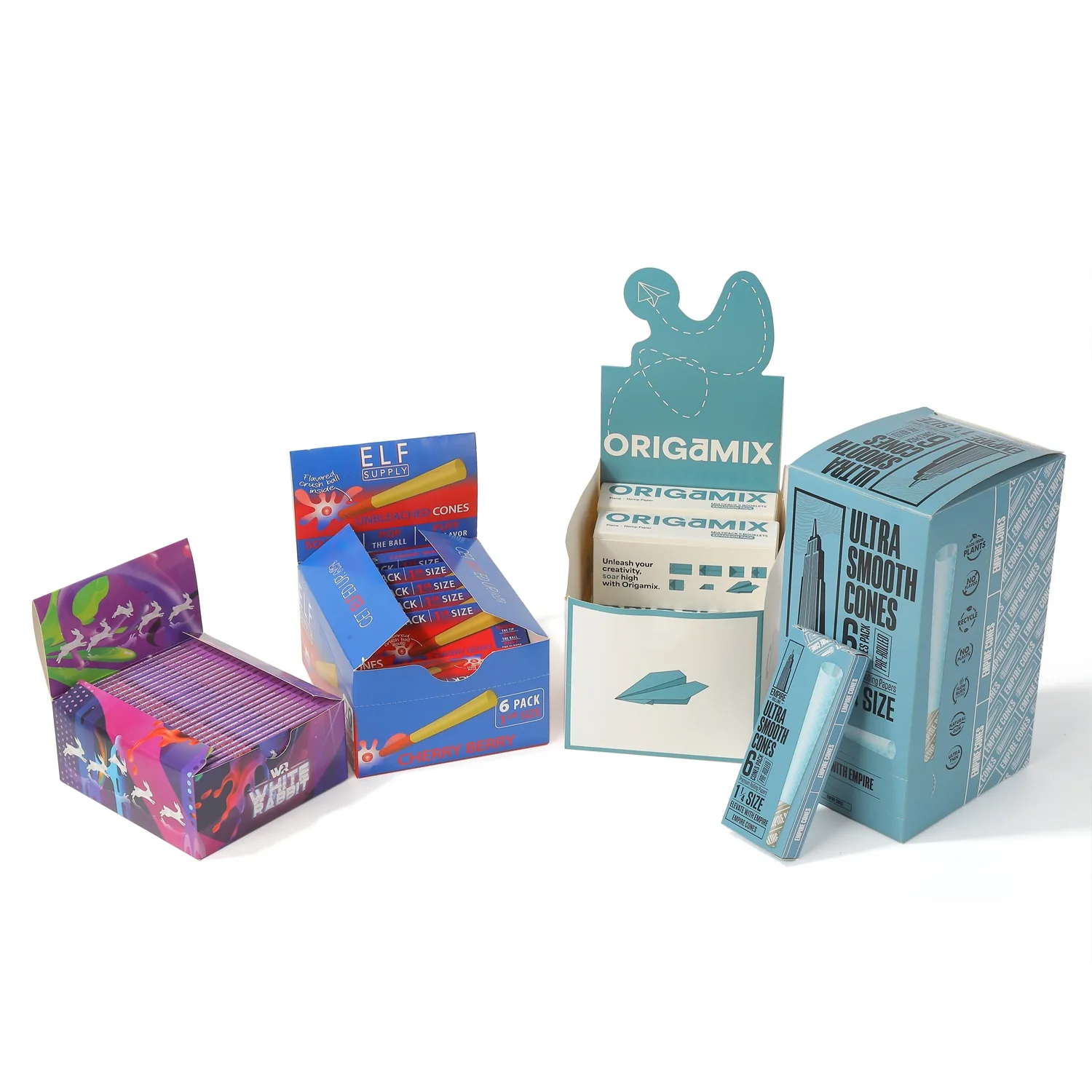
手册封套有折痕、活动插页和频繁的触摸翻动;纸盒提供更大展示面,但存在压痕、粘合缝和组装压力。除非实体打样证实设计能承受折叠与包装过程,否则关键装饰应避开结构应力区域。.
| 包装表面 | 强用例 | 主要风险 | 实用选择 |
|---|---|---|---|
| 小册子封面 | 徽标或简短品牌名称 | 折叠开裂与套准过紧 | 小型、聚焦的局部上光区域 |
| 小册子折页 | 闭合提示或紧凑标记 | 反复弯折 | 反复开启后的打样 |
| 零售纸盒正面 | 核心标志或产品线 | 包装和运输过程中的摩擦 | 保护关键区域避开接缝 |
| 纸盒侧面板 | 变体或纹理图案 | 裁切线干扰 | 保持覆膜区域远离折痕 |
| 展示面板 | 面向货架的品牌提示 | 灯光眩光 | 零售风格灯光下测试 |
Ace Rolling 提供来自中国东莞的定制卷烟纸手册与零售包装服务。正确的工艺分布图取决于实际结构,讨论时请同时提供手册与纸盒的结构线稿:https://ace-rolling.com/custom-rolling-papers/。.
关键要点: 在最重要处使用组合效果一次,随后保护折痕、压痕线、涂胶区域和高摩擦边缘。.
OEM工厂需要哪些设计文件?
光鲜的效果图并非生产文件。印前需要基础印刷文件及每个特殊工艺对应的清晰矢量信息。.
保持CMYK设计稿完整,随后创建与页面尺寸和位置完全相同的局部UV模版和击凸模版。在表面处理模版文件中,纯黑色通常表示加工区域,但工厂的实际规范控制命名、叠印设置、留白尺寸和最小特征尺寸。请将字体转为轮廓,并清除模版中的意外透明度。.

| 文件或图层 | 必须显示 | 不得包含 |
|---|---|---|
| 结构模切线 | 裁切、折叠、压痕、粘合、安全区域 | 未经批准的尺寸变更 |
| 基础印刷 | 最终CMYK图稿和已批准的专色 | 隐藏的草稿文案 |
| 局部UV蒙版 | 仅限上光油区域 | 渐变(除非特别批准) |
| 压凹凸版 | 预期做凹凸效果的确切区域 | 无关的印刷对象 |
| 参考PDF | 预期效果的标注图示 | Effects used as production geometry |
Ask Ace Rolling for the current template before your designer separates masks. The OEM workflow at https://ace-rolling.com/oem-odm-rolling-paper-manufacturer/ is best treated as brief → sample → sign-off → scale, with the finishing files locked during sign-off.
关键要点: Submit editable vector geometry for each finish; do not make the printer reverse-engineer masks from a visual mockup.
Which Paperboard and Surface Choices Matter Most?
Spot UV and embossing depend on the substrate beneath them. A finish that looks sharp on one coated board can register, fold, or reflect differently on another.
The buyer should approve the actual board, printed color, surface treatment, and assembled pack together. Matte backgrounds often create stronger contrast with gloss, while emboss depth depends on board behavior and structure. FSC-certified sourcing can be discussed as an option for appropriate Ace programs, but it is not automatic for every component or order.
| 决策 | Spot UV impact | Embossing impact | What to sample |
|---|---|---|---|
| Matte surface | Can increase gloss contrast | May show pressure marks clearly | Finished front panel |
| Gloss surface | Lower contrast with clear gloss | Relief remains tactile | Angled-light comparison |
| Board stiffness | Influences coating handling | Influences relief definition | Folded, assembled pack |
| Dark ink coverage | Can reveal dust or coating defects | Can emphasize edge shadows | Production-color proof |
| Recycled/FSC option | Confirm coating compatibility | Confirm fiber response | Exact sourced board |
Ace Rolling operates within an ISO 9001:2015 management framework and can discuss FSC-certified sourcing options for suitable projects. Request documentation and material scope through https://ace-rolling.com/quality-certifications/ rather than placing unsupported certification claims on the artwork.
关键要点: Approve embellishment on the exact board and surface treatment that will enter mass production.
How Should Buyers Proof Registration and Durability?
Digital proofs can catch spelling, placement, and missing masks, but they cannot prove gloss, relief, fold behavior, or the feel of an assembled booklet.
Use a physical finishing sample whenever spot UV and embossing are decision-critical. Inspect the sample in direct and angled light, touch the relief, open the booklet repeatedly, fold the carton, and compare the finished item with the approved reference. Retain a signed sample for mass-production comparison.

| 质量检查 | 通过条件 | Common failure signal |
|---|---|---|
| Print-to-UV registration | Gloss follows approved art | Halo or shifted edge |
| Print-to-emboss registration | Relief centers on intended element | Doubled-looking logo |
| Varnish surface | Even cure and gloss | Pinholes, bubbles, dull patches |
| Emboss definition | Clean edge and consistent relief | Crushed or soft detail |
| Fold test | No unacceptable cracking or lifting | Damage along score |
| Pack-out test | Finish survives assembly and handling | Scuffing at contact points |
Ace buyers can use https://ace-rolling.com/about-factory/ to frame production and QC questions, then put finish acceptance criteria directly on the specification and approved sample.
关键要点: A screen proves layout; only the finished physical pack proves gloss, relief, registration, and fold performance.
How Do Spot UV and Embossing Affect OEM Cost and Timing?
Both finishes add setup, process steps, proofing, and inspection. Embossing may require dedicated dies; spot UV requires a coating mask and registered application. Combining them can increase risk and handling even when the treated area is small.
Ace does not publish a fixed spot UV or embossing surcharge, so the finish price is quote-dependent. Approved factory wholesale planning ranges are about USD $0.07–$0.30 per custom booklet and about $0.04–$0.06 per cone, with MOQ applying. A special-finish retail pack may quote differently depending on structure, material, print, finish area, quantity, and pack-out.

| Cost or schedule driver | Why it changes the quote | What to send |
|---|---|---|
| Separate finish masks | Adds prepress review | Final vector files |
| Embossing dies | Adds tooling and setup | Approved relief geometry |
| Finish coverage | Changes coating and inspection scope | Marked treatment area |
| Booklet plus carton | Creates multiple structures | Both dielines |
| Physical proof rounds | Adds approval gates | One decision owner |
| Quantity and pack-out | Changes unit economics and handling | Forecast and carton plan |
Ace OEM programs often start around 2,000 units, depending on size, material, printing, packaging, and quantity. Planning is commonly about two months from concept to delivery, with mass production often around four to five weeks after specs and proofs are approved. Confirm finish-specific dates and prices through https://ace-rolling.com/custom-rolling-papers/.
关键要点: Never estimate the finish surcharge yourself—quote the exact masks, board, structures, quantity, proof scope, and destination.
What Should You Send Ace Rolling for a Finish Quote?
A useful RFQ describes the product and the embellishment as one manufacturing system. “Premium cover with spot UV embossing” is too vague for reliable costing.
Send the booklet size, leaf count, paper route, cover and carton structures, dielines, base artwork, separate finish masks, estimated quantity, destination, and target timing. State whether you want selective shine, physical relief, or both, and identify every panel receiving treatment.
| 询价字段 | Example of a useful instruction | Why Ace needs it |
|---|---|---|
| 产品 | Custom booklet and matching retail carton | Defines structures |
| Finish intent | Gloss logo plus embossed brand name | Separates effects |
| 艺术品 | Base PDF plus labeled vector masks | Enables prepress review |
| 材质 | Requested board and FSC sourcing option | Enables material check |
| 数量 | Launch quantity and reorder estimate | Frames MOQ and costing |
| 物流 | Destination country or port | Frames delivery planning |
| Approval | Physical finish sample required | Defines proof gate |
Review Ace Rolling’s https://ace-rolling.com/custom-rolling-papers/ options, then request a project-specific quotation at https://ace-rolling.com/contact/. Include packaging size, artwork status, finish map, quantity, destination, required documents, and target launch window.
关键要点: The fastest quote comes from a complete structural and finish brief—not a screenshot of a shiny logo.
常见问题
What is spot UV on paper packaging?
Spot UV is a clear varnish applied only to selected areas of printed paper packaging and cured with ultraviolet energy. On a rolling paper booklet, it can make a logo or pattern reflect more light than the surrounding surface. Standard spot UV should not automatically be described as physically embossed.
How does embossing work on a rolling paper booklet?
Embossing presses the booklet cover stock between matched dies so a selected logo, word, or pattern rises from the surrounding surface. The stock, design detail, folds, and reverse-side appearance affect the result. Buyers should approve an assembled physical booklet before authorizing the OEM mass-production run.
Can spot UV and embossing be used together?
Spot UV and embossing can be combined when the printer can register the printed art, relief, and clear varnish on the chosen paperboard. The result can add shine and physical depth to the same element. Availability, process order, tolerances, tooling, and price must be confirmed for the specific Ace quotation.
Is raised spot UV the same as embossing?
Raised spot UV and embossing are not the same process. Raised UV builds tactile height with cured varnish, while embossing mechanically reshapes the paperboard with dies. Standard spot UV may mainly add shine on direct-printed packaging. Ask the supplier to label physical samples so the requested effect is unambiguous.
How much does spot UV embossing cost at Ace Rolling?
Ace Rolling does not publish a fixed spot UV or embossing surcharge; special-finishing cost is quote-dependent. Custom booklet factory pricing generally plans around USD $0.07–$0.30 with MOQ, while exact packaging cost depends on board, structure, finish area, tooling, proofing, quantity, pack-out, and delivery terms.
What files should I send for an OEM packaging quote?
Send the current booklet or carton dieline, final base artwork, a separate vector spot UV mask, a separate vector embossing mask, material preference, quantity, and destination. Also identify treated panels and whether a physical finish sample is required. Ace Rolling can then confirm feasibility, MOQ, timing, and quote-dependent cost.