
What additives are in rolling papers and are they safe? The main additive categories are the gum/adhesive strip, any bleaching or whitening process, and occasionally processing aids used during converting—buyers should request specific composition disclosure and lab documentation for their exact SKU rather than relying on general safety assumptions about the category.
SERP peers such as Marijuana Packaging discuss additive transparency as a buyer expectation. This guide covers the main additive categories buyers should ask about and how to verify composition disclosure as part of a wholesale sourcing process.
What Is the Gum/Adhesive Strip Made Of?
Lead-in: The gum strip is the most universal additive across nearly all rolling paper formats.
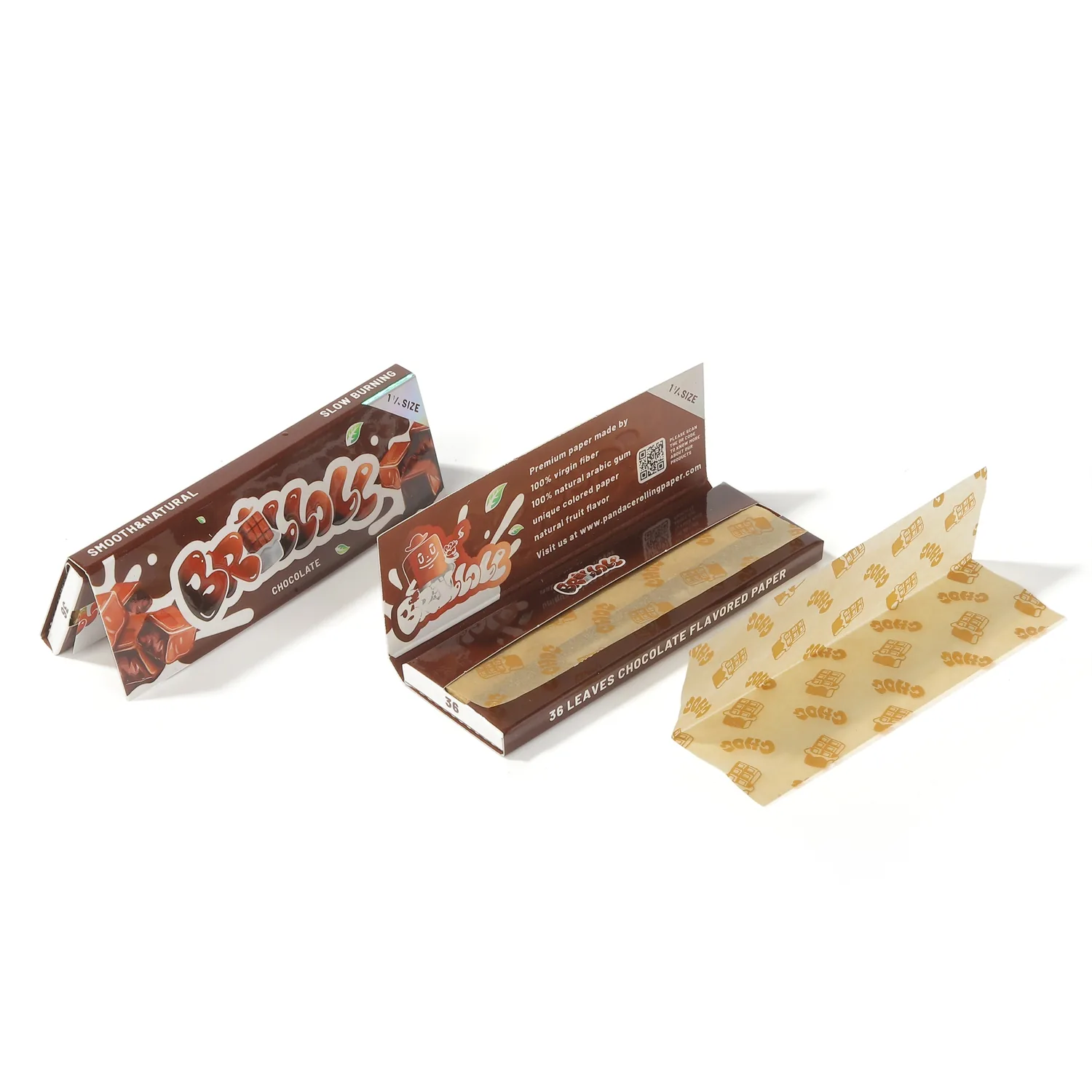
Summary: Most rolling papers use a natural gum adhesive (commonly a natural Arabic gum route) along the sealing edge. Composition can vary by supplier, so buyers should confirm the specific gum type and any food-grade sourcing claims with documentation, rather than assuming all “natural gum” claims are equivalent.
| Elemento | Detalle |
|---|---|
| Common route | Natural gum (e.g., Arabic gum) adhesive |
| Verification needed | Confirm specific type and sourcing per supplier |
| Ubicación | Sealing edge of the leaf |
Conclusión clave: Confirm your specific supplier’s gum composition and sourcing claim with documentation—don’t assume all “natural gum” claims are identical.
Documentación de calidad: https://ace-rolling.com/quality-certifications/.
What Does the Bleaching or Whitening Process Involve?
Lead-in: White paper generally goes through a processing step that unbleached paper skips.
Summary: Achieving a bright white paper color typically involves a bleaching step during pulp processing. Unbleached or “natural” paper routes skip this step, retaining a more tan/brown natural tone. Buyers wanting to avoid bleaching specifically should choose an unbleached fiber route rather than assuming all white paper uses the same bleaching method.
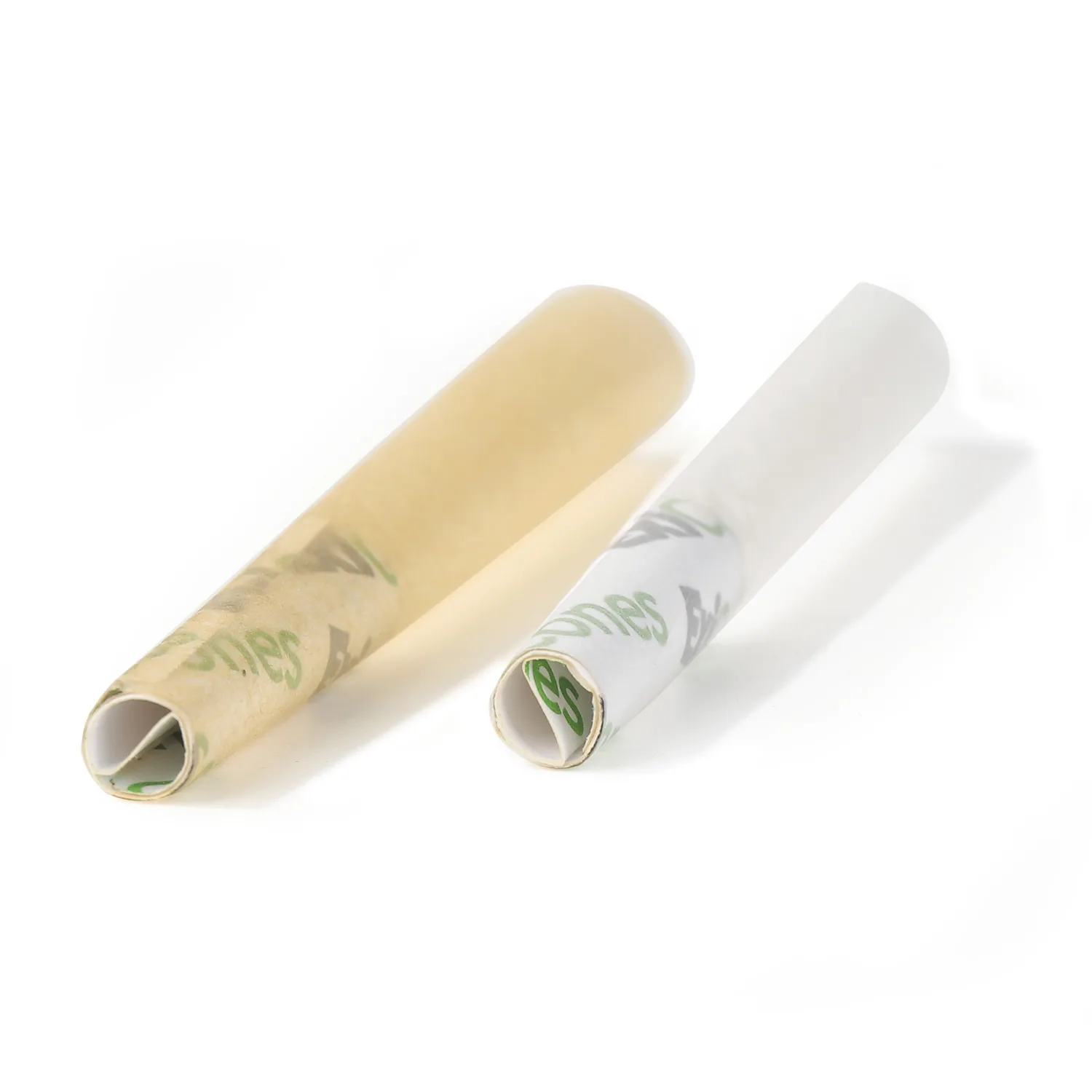
| Ruta del papel | Bleaching involvement |
|---|---|
| White/bright paper | Typically bleached |
| Unbleached/natural | Skips bleaching step |
Conclusión clave: If avoiding bleaching matters to your brand, specify an unbleached fiber route rather than assuming a specific bleaching method by default.
Rutas de materiales: https://ace-rolling.com/custom-rolling-papers/.
Are There Processing Aids Used During Converting?
Lead-in: Some processing chemicals may be used during manufacturing without ending up in the finished product.
Summary: Certain processing aids can be used during pulp processing or converting that are designed to be removed or largely eliminated by the finished stage. Buyers concerned about residual traces should request residue testing data specifically, rather than assuming “processing aid” language means no trace remains without lab verification.
| Pregunta | Por qué es importante |
|---|---|
| What processing aids are used | Confirms scope of chemical inputs |
| Residual trace testing | Verifies removal claim with data |
| Route-specific disclosure | Varies by fiber and bleaching route |
Conclusión clave: Request residue testing data rather than accepting a general “removed during processing” claim without verification.
Proceso de muestra: https://ace-rolling.com/how-to-get-a-custom-rolling-paper-sample-kit/.
What Composition Disclosure Should Buyers Request?
Lead-in: A written disclosure document is more useful than a general safety assurance.
Summary: Request a written composition disclosure listing the fiber type, gum/adhesive type, and any bleaching or processing steps used for your specific SKU. This should be tied to your actual production route, not a generic category-wide statement, since composition can vary between different fiber and finishing choices within the same supplier’s catalog.
| Disclosure element | Should specify |
|---|---|
| Tipo de fibra | Exact route (wood pulp, hemp, etc.) |
| Gum/adhesive type | Specific composition |
| Bleaching/processing steps | Route-specific, not generic |
Conclusión clave: Request SKU-specific written disclosure, not a general category statement—composition varies across a supplier’s own catalog.
Quality & certifications: https://ace-rolling.com/quality-certifications/.
How Does Lab Testing Support Additive Safety Verification?
Lead-in: Documentation claims are more credible when backed by lab data.
Summary: A material safety COA (as distinct from cannabinoid testing) can verify heavy metal levels, residue levels, and composition against a stated standard, giving buyers independently checkable data rather than relying on a supplier’s written disclosure alone. Request this alongside composition disclosure for a more complete picture.
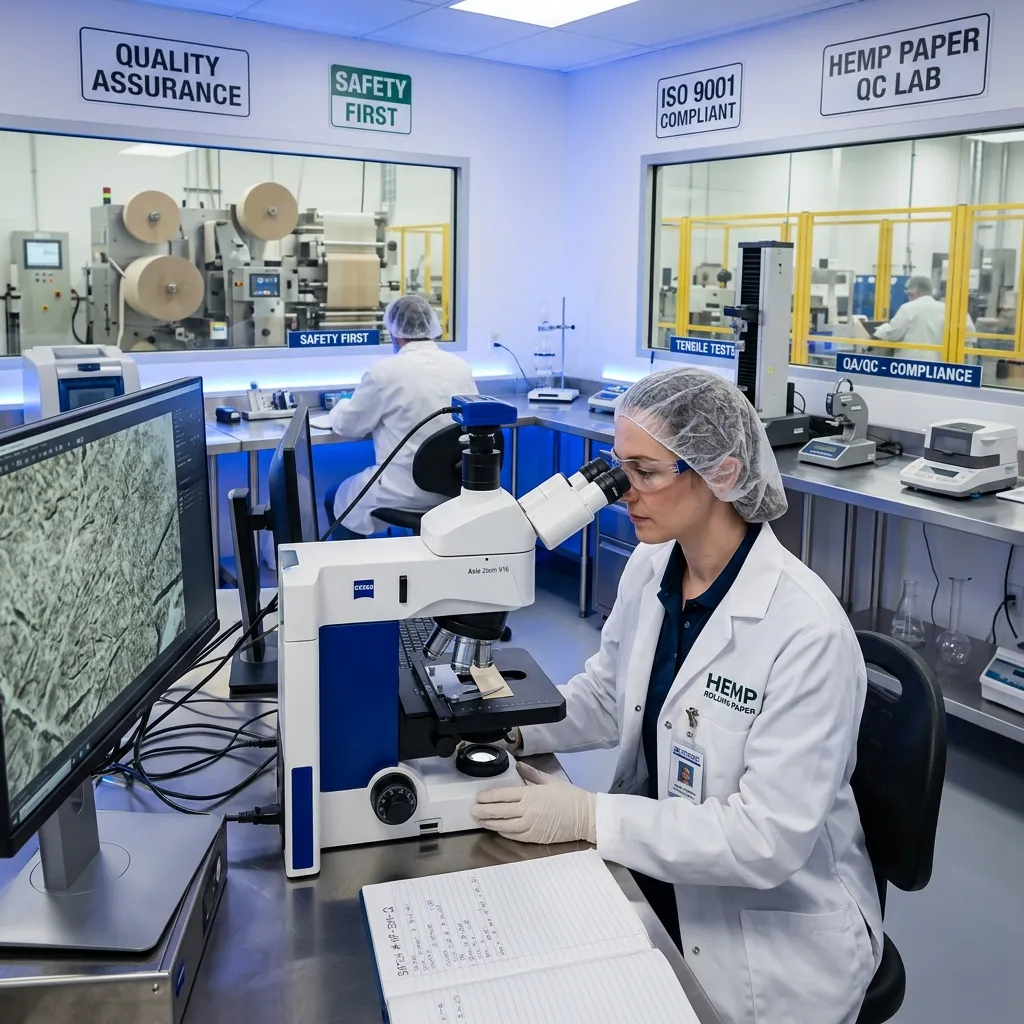
| Verification layer | What it adds |
|---|---|
| Written disclosure | States what’s used |
| Lab testing (COA) | Verifies levels independently |
| Combined | Stronger safety verification |
Conclusión clave: Combine written disclosure with lab testing data for a more complete additive safety picture than either alone.
COA guide: https://ace-rolling.com/what-should-a-rolling-paper-material-safety-coa-include/.
What Claims Should Buyers Be Cautious About?
Lead-in: Some marketing language overstates what’s actually verifiable.
Summary: Be cautious of unqualified “chemical-free,” “totally natural,” or “100% safe” claims without supporting documentation, since rolling paper by definition involves some processing (even minimal processing routes involve some steps). Request the specific, checkable claim instead of accepting broad marketing language as a safety guarantee.
| Tipo de reclamación | Caution level |
|---|---|
| “Chemical-free” (unqualified) | High—verify specifics |
| “100% safe” (unqualified) | High—not independently verifiable |
| Specific, documented composition claim | Lower—checkable |
Conclusión clave: Ask for the specific, checkable claim behind broad marketing language—unqualified “chemical-free” or “100% safe” statements aren’t independently verifiable on their own.
Documentación de calidad: https://ace-rolling.com/quality-certifications/.
How Do You Request Additive Composition Documentation From Ace?
Lead-in: One request specifies your SKU and the documentation you need.
Summary: Send Ace your target product spec (fiber, gum, bleaching route) and request written composition disclosure plus relevant lab documentation for that specific SKU. Build this into your standard sourcing process for every new product line, not as a one-time check.

| Paso | Acción |
|---|---|
| 1 | Specify your target SKU/spec |
| 2 | Request written composition disclosure |
| 3 | Request relevant lab documentation |
| 4 | Repeat for each new product line |
Conclusión clave: Make composition and lab documentation requests standard for every new SKU—not a one-time historical check.
Inicio: https://ace-rolling.com/contact/.
Preguntas frecuentes
What additives are in rolling papers and are they safe?
The main additive categories are the gum/adhesive strip, any bleaching or whitening processing, and occasionally processing aids used during converting. Rather than relying on general safety assumptions, buyers should request written composition disclosure and lab documentation for their specific SKU to verify what’s actually used and at what levels.
What is the gum strip on rolling papers typically made of?
Most rolling papers use a natural gum adhesive, commonly a natural Arabic gum route, along the sealing edge. Composition can vary by supplier, so buyers should confirm the specific gum type and any food-grade sourcing claims with documentation rather than assuming all “natural gum” claims across different suppliers are identical in composition or sourcing.
Does white rolling paper always involve a bleaching process?
Typically yes. Achieving a bright white paper color generally involves a bleaching step during pulp processing, while unbleached or “natural” paper routes skip this step and retain a more tan or brown natural tone. If avoiding bleaching matters to your brand, specify an unbleached fiber route rather than assuming a particular bleaching method by default.
How can I verify that processing aids don’t remain in the finished paper?
Request residue testing data specifically rather than accepting a general “removed during processing” claim without lab verification. Some processing aids used during pulp processing or converting are designed to be eliminated by the finished stage, but the only way to confirm this for your specific product is through documented residue testing, not marketing language alone.
What should I be cautious about when a supplier claims their paper is “chemical-free”?
Be cautious of unqualified “chemical-free,” “totally natural,” or “100% safe” claims without supporting documentation, since rolling paper by definition involves some processing, even in minimal-processing routes. Ask for the specific, checkable claim behind the marketing language—composition disclosure and lab data are more useful than broad, unqualified safety statements.
How is a material safety COA different from a written composition disclosure?
A written composition disclosure states what fiber, gum, and processing steps are used for a specific SKU. A material safety COA (certificate of analysis) independently verifies heavy metal levels, residue levels, and composition against a stated standard through lab testing. Combining both gives buyers a more complete additive safety picture than either alone.
Ready to Verify Additive Composition for Your Order?
Request written composition disclosure and lab documentation for your specific SKU before committing.
- COA guide: https://ace-rolling.com/what-should-a-rolling-paper-material-safety-coa-include/
- Calidad y certificaciones: https://ace-rolling.com/quality-certifications/
- Cotización: https://ace-rolling.com/contact/