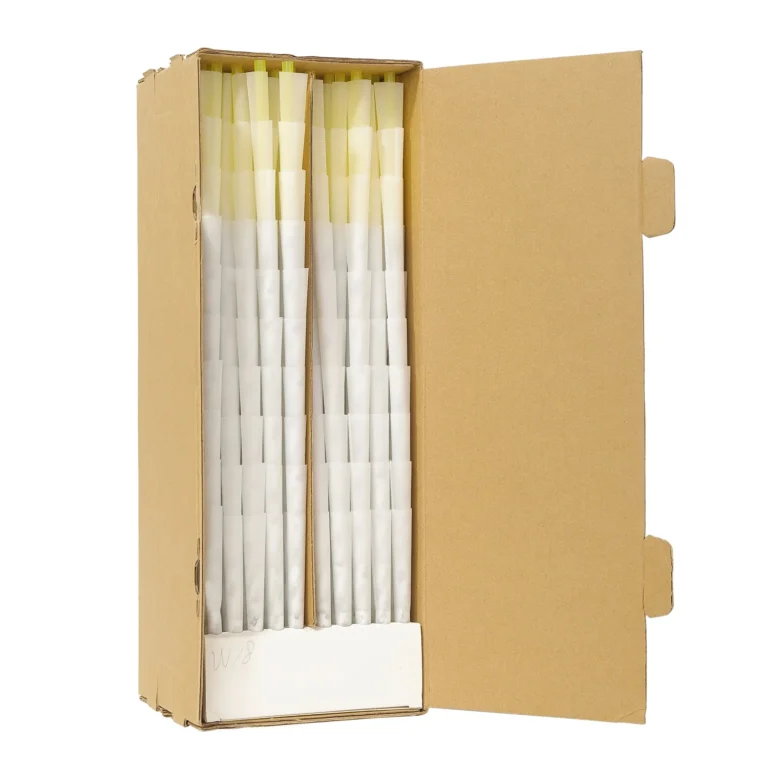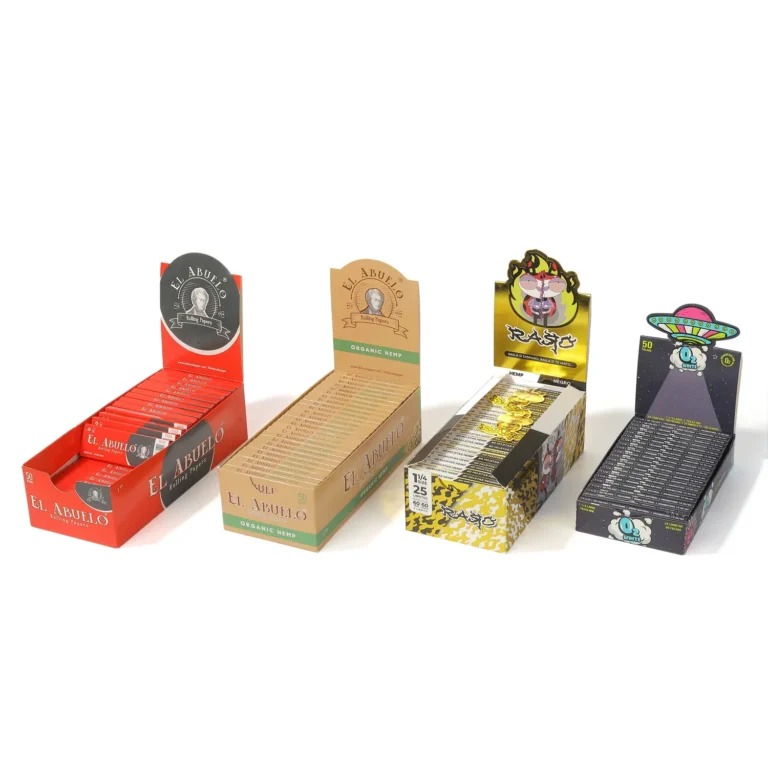

How do you order custom pre-roll tube labels wholesale? Decide between a printed label/sticker wrap and a full printed sleeve first—labels are faster and cheaper for smaller runs, while a printed sleeve suits higher-volume branded programs—then brief tube diameter, label material, and print scope together with Ace’s standard OEM packaging process.
SERP peers such as Creativelabz list pre-roll tube labels as a common private-label packaging accessory. This guide walks through the label-vs-sleeve decision and how to brief either route for a wholesale tube packaging order.
What’s the Difference Between a Tube Label and a Full Sleeve?
Lead-in: Both add branding to a tube, but coverage and cost differ.
Summary: A label or sticker covers a portion of the tube—often a wraparound band or a front-facing panel—leaving some of the tube’s base material visible. A full printed sleeve covers the entire tube surface with printed graphics, giving complete branding coverage but at a higher unit cost and typically a higher MOQ.

| Format | Coverage | Cost tier |
|---|---|---|
| Label/sticker | Partial | Lower |
| Full sleeve | Complete | Higher |
Key Takeaway: Choose based on branding coverage needs and budget—labels for partial coverage at lower cost, sleeves for full coverage.
Tube packaging: https://ace-rolling.com/custom-rolling-papers/.
When Does a Label Make More Sense Than a Sleeve?
Lead-in: Smaller runs and simpler branding often favor labels.
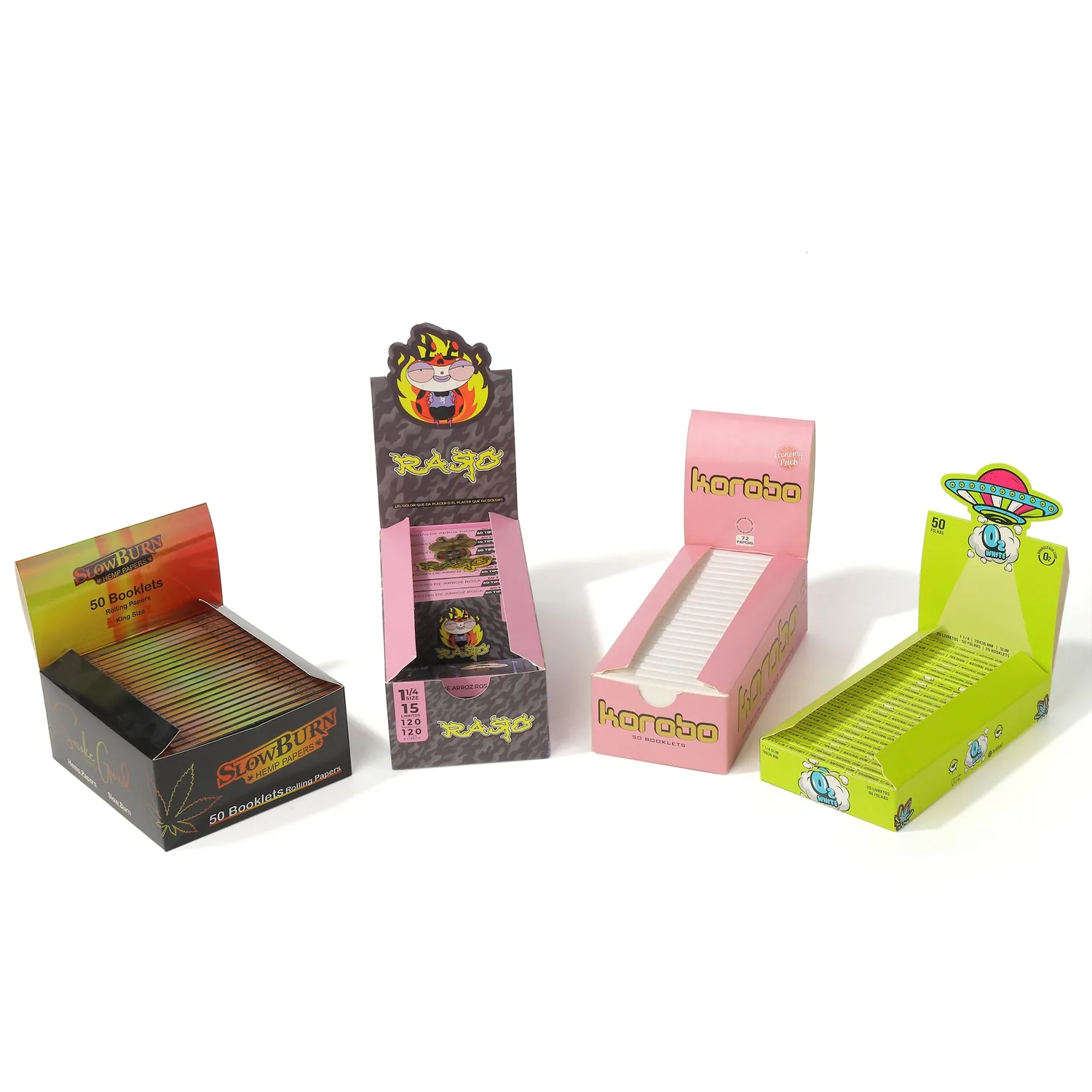
Summary: Labels suit smaller production runs, simpler brand marks (logo plus basic info), and tighter budgets, since label tooling and minimums are typically lower than full sleeve printing. They’re also faster to update if you need to change compliance text or a promotional detail without re-tooling a full sleeve print.
| Scenario | Better fit |
|---|---|
| Smaller runs | Label |
| Simple logo/info | Label |
| Frequent text updates | Label |
Key Takeaway: Labels offer more flexibility for smaller runs and frequent updates than a fully committed sleeve print.
MOQ guide: https://ace-rolling.com/what-is-the-moq-for-custom-branded-rolling-papers/.
When Does a Full Sleeve Make More Sense Than a Label?
Lead-in: Larger runs and premium branding often justify the sleeve investment.
Summary: A full sleeve makes sense when a brand wants complete visual coverage, complex multi-color graphics across the entire tube, and is committing to a higher-volume, more stable SKU that won’t need frequent text changes. The unit economics improve at higher volume, offsetting the higher tooling cost.
| Scenario | Better fit |
|---|---|
| Larger, stable runs | Full sleeve |
| Complex full-coverage graphics | Full sleeve |
| Premium shelf positioning | Full sleeve |
Key Takeaway: Full sleeves reward volume and complete branding ambition—confirm your run size justifies the higher tooling investment.
OEM programs: https://ace-rolling.com/oem-odm-rolling-paper-manufacturer/.
What Label Materials and Finishes Are Available?
Lead-in: Material choice affects durability and shelf feel.
Summary: Common label materials include matte paper, glossy paper, and durable synthetic/vinyl stock for better moisture resistance. Finish options like matte, gloss, or spot-UV accents change the shelf presentation. Confirm your material choice based on expected handling and any moisture exposure during shipping or storage.

| Material | Best for |
|---|---|
| Matte/glossy paper | Standard, cost-efficient |
| Synthetic/vinyl | Better moisture resistance |
| Spot-UV finish | Premium accent detailing |
Key Takeaway: Match label material to your expected handling conditions—synthetic stock resists moisture better than standard paper.
Custom packaging: https://ace-rolling.com/custom-rolling-papers/.
How Should Labels Fit the Tube’s Compliance Information?
Lead-in: Labels often need to carry required text alongside branding.
Summary: Plan label layout to fit both branding graphics and any required compliance text (warnings, net contents, batch info) without the design feeling cramped. Some brands use a wraparound label specifically to give enough surface area for both branding and required text without compromising either.
| Layout consideration | Purpose |
|---|---|
| Wraparound layout | More surface for text + branding |
| Front-panel-only layout | Simpler but less text space |
| Compliance text placement | Confirm per market requirement |
Key Takeaway: Plan label layout with compliance text in mind from the start—retrofitting required text onto a finished design is harder.
Compliance framing: https://ace-rolling.com/quality-certifications/.
What Should You Check on a Tube Label Sample?
Lead-in: Application and adhesion matter as much as print quality.
Summary: Check that the label applies cleanly to the tube’s curved surface without bubbling or misalignment, confirm adhesive holds under normal handling and moderate temperature/humidity, and verify print colors match your approved proof. Test on the actual tube material you’ll use in production, not a flat proof alone.

| Check | Why it matters |
|---|---|
| Clean application | No bubbling/misalignment on curved surface |
| Adhesive durability | Holds under handling and climate |
| Color match | Matches approved proof |
Key Takeaway: Test the label on the actual curved tube, not just a flat proof—curved application reveals issues flat samples miss.
Sample process: https://ace-rolling.com/how-to-get-a-custom-rolling-paper-sample-kit/.
How Do You Order Custom Tube Labels From Ace Rolling?
Lead-in: One brief settles format, material, and compliance layout together.
Summary: Send Ace your tube size, label-vs-sleeve preference, material/finish choice, compliance text requirements, target quantity, destination, and timeline. Ace will confirm feasibility, quote accordingly, and run a curved-surface sample approval before mass production.
| Step | Action |
|---|---|
| 1 | Choose label or full sleeve |
| 2 | Confirm material and finish |
| 3 | Plan layout with compliance text |
| 4 | Approve curved-surface sample |
| 5 | Mass after approvals |
Key Takeaway: Decide label vs. sleeve first—it shapes every other packaging decision that follows in the brief.
Start: https://ace-rolling.com/contact/.
FAQ
How do you order custom pre-roll tube labels wholesale?
Decide between a printed label/sticker wrap and a full printed sleeve first, since this shapes material, cost, and MOQ. Labels suit smaller runs and simpler branding at lower cost; full sleeves suit higher-volume programs wanting complete coverage. Brief tube diameter, material, print scope, and any required compliance text together in one RFQ.
What’s the main difference between a tube label and a full printed sleeve?
A label or sticker covers only a portion of the tube—often a wraparound band—leaving some base material visible, while a full sleeve covers the entire tube surface with printed graphics. Sleeves give complete branding coverage but at a higher unit cost and typically a higher MOQ than a simpler label or sticker format.
When should I choose a label over a full sleeve?
Labels make more sense for smaller production runs, simpler brand marks, and tighter budgets, since label tooling and minimums are typically lower than full sleeve printing. They’re also faster to update if you need to change compliance text or a promotional detail later without re-tooling a full sleeve print run.
What label materials work best for pre-roll tubes?
Common options include matte or glossy paper for standard, cost-efficient runs, and durable synthetic or vinyl stock for better moisture resistance during shipping and storage. Finish choices like spot-UV can add premium accent detailing. Match your material to expected handling conditions rather than defaulting to the cheapest paper option.
How do I make sure my tube label design fits required compliance text?
Plan the label layout with both branding graphics and required text—warnings, net contents, batch info—in mind from the start, rather than retrofitting text onto a finished design later. Some brands use a wraparound layout specifically because it provides more surface area to fit both branding and required compliance text without compromising either.
What should I test on a tube label sample before mass production?
Check that the label applies cleanly to the tube’s curved surface without bubbling or misalignment, confirm the adhesive holds under normal handling and moderate temperature or humidity, and verify printed colors match your approved proof. Always test on the actual tube material used in production, since curved application reveals issues a flat proof won’t show.
Ready to Brief a Custom Tube Label Program?
Decide label vs. sleeve first, then brief material and compliance layout together in one RFQ.
- Custom packaging: https://ace-rolling.com/custom-rolling-papers/
- Sample process: https://ace-rolling.com/how-to-get-a-custom-rolling-paper-sample-kit/
- Quote: https://ace-rolling.com/contact/