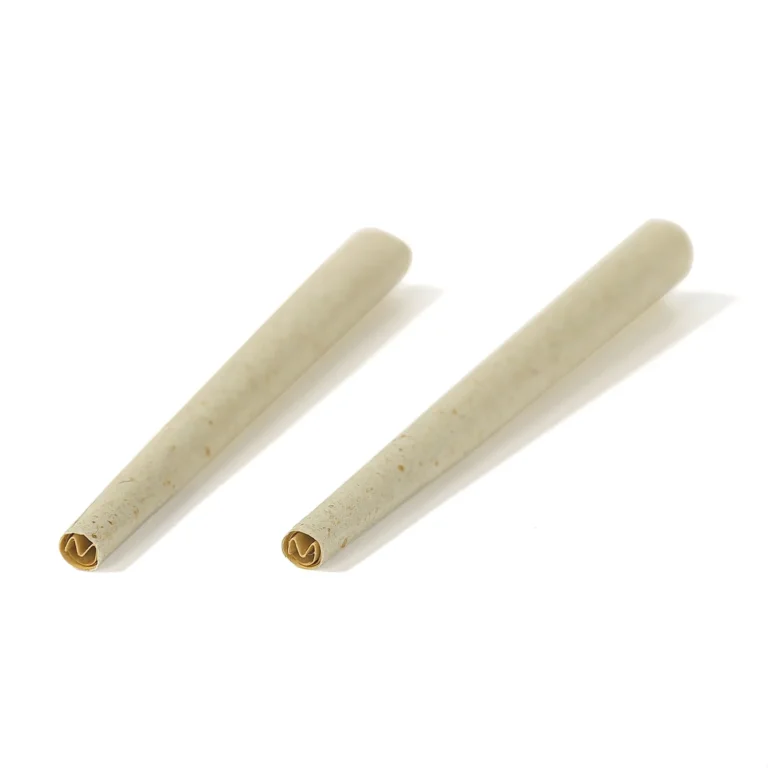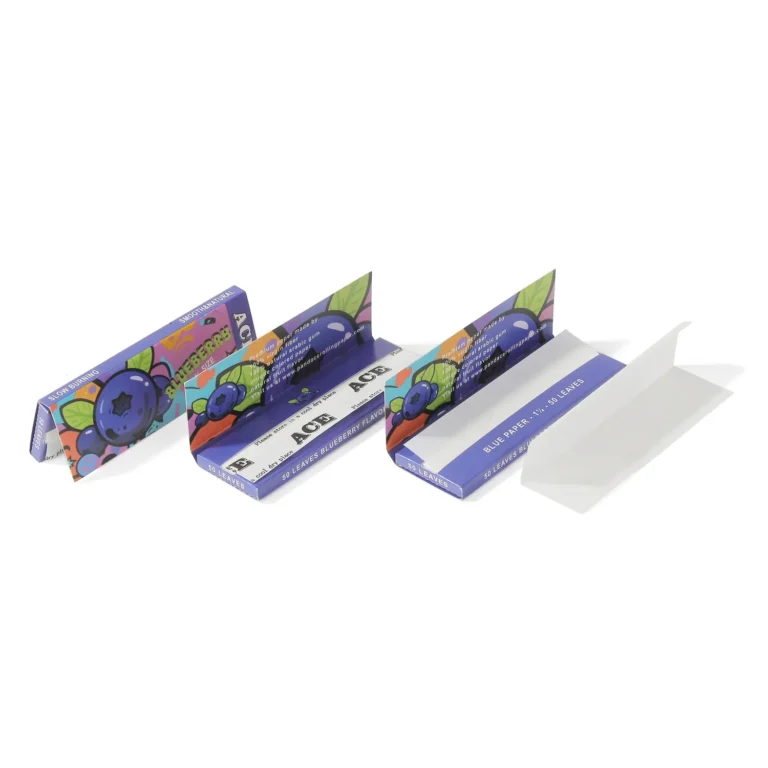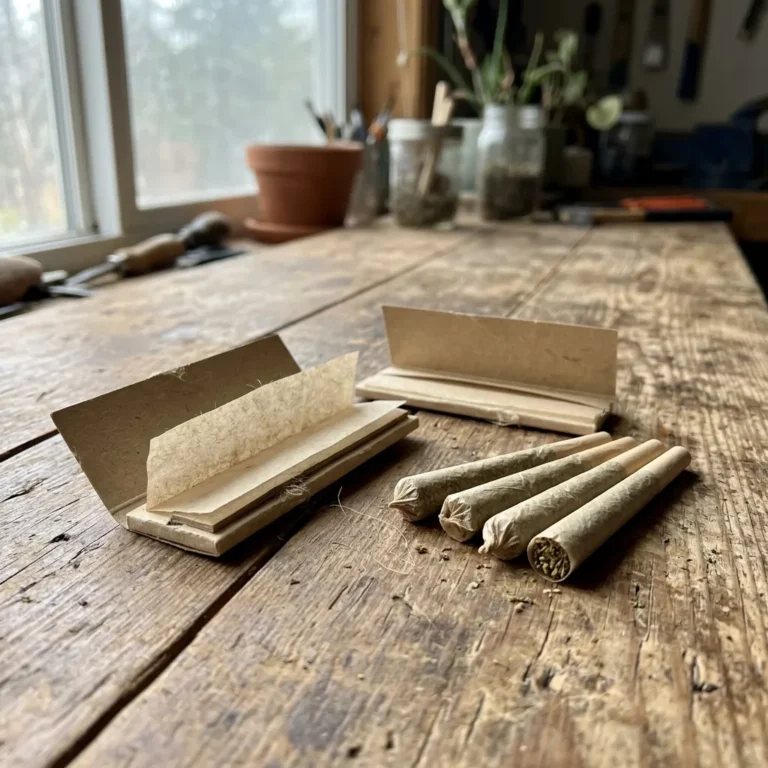

You requested samples from three hemp paper suppliers. One batch burned evenly with light ash. The second canoed and tasted harsh. The third looked identical to the first but fell apart during rolling. Same material label, three completely different products.
Hemp paper contains approximately 85% cellulose compared to 30% in wood pulp, which produces stronger fibers and more predictable burn behavior. But those advantages disappear if the manufacturer does not control fiber processing, slitting tension, and gum-line application.
This article explains how to evaluate hemp paper manufacturers before you commit volume orders. We cover material science, factory verification, customization limits, and the certifications that separate real manufacturers from trading companies.
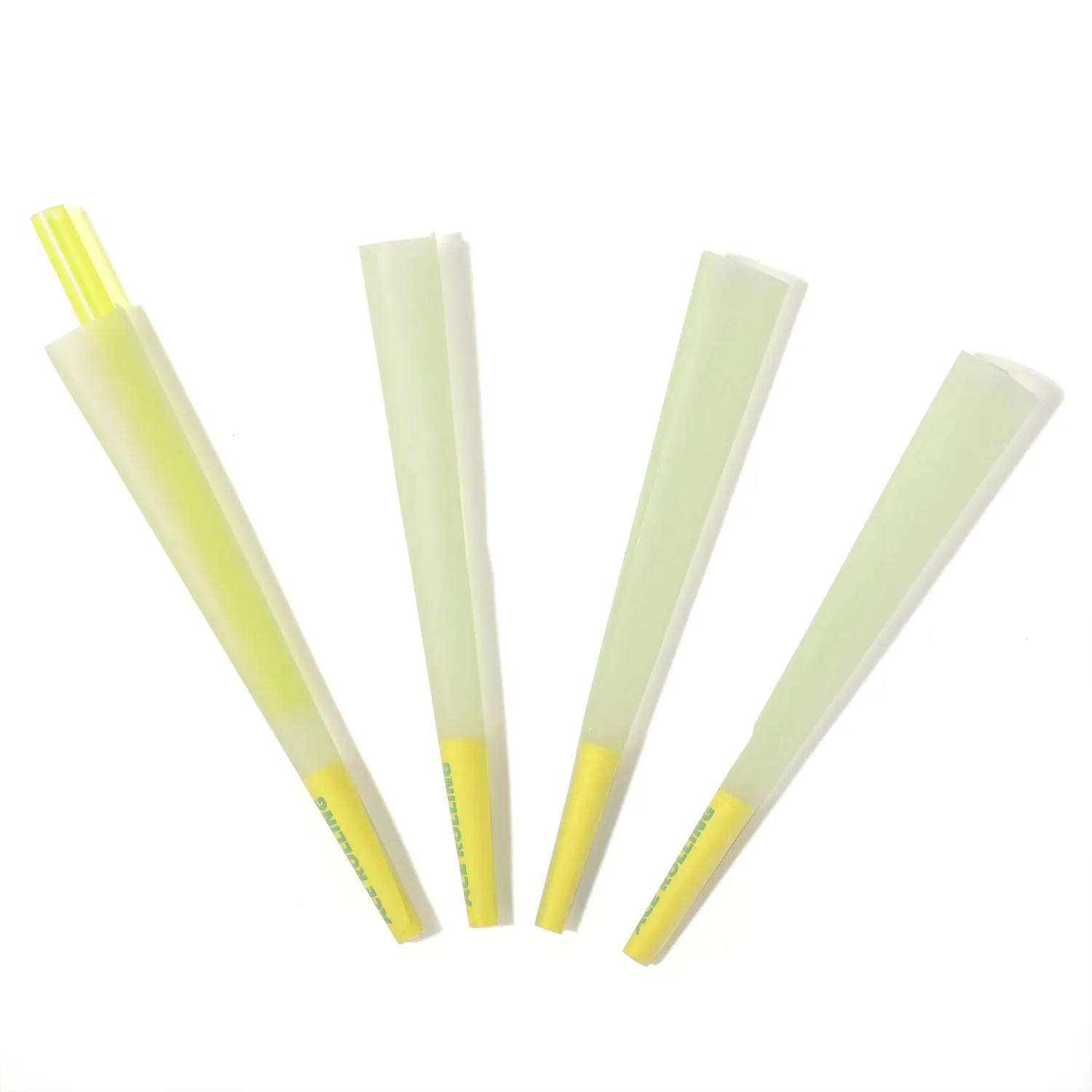
What Makes Hemp Paper Different from Wood Pulp?
Hemp paper is not a marketing label. It is a material category with measurable properties that differentiate it from wood-pulp and rice-paper alternatives.
Higher cellulose content. Industrial hemp contains approximately 85% cellulose, compared to roughly 30% in wood pulp. Higher cellulose content means stronger fibers, better sheet formation, and more predictable burn behavior.
Faster renewability. Hemp reaches maturity in approximately four months. Trees require 20 years or more to produce comparable fiber volume. One acre of hemp can yield the equivalent of four to ten acres of timber over a two-decade cycle.
Fiber strength and burn characteristics. Hemp fibers are longer and more durable than wood fibers. In rolling paper applications, this translates to sheets that resist tearing during handling, hold their shape when rolled, and burn at a steady, even rate — provided the manufacturing process preserves those fiber properties.
These material advantages matter only when the manufacturer understands how to process hemp fibers without degrading them. Not every factory that *claims* hemp capability actually controls the production stack.
Why Are Brands Switching to Hemp-Based Rolling Papers?
Three forces are driving the shift:
Consumer demand for natural materials. End users increasingly read packaging labels. Unbleached hemp paper, free of chlorine and chemical additives, aligns with the preference for transparency and simplicity.
Regulatory and sourcing advantages. Hemp is not classified as a controlled substance in most jurisdictions when THC content remains below 0.3%. This simplifies import/export documentation and reduces customs complexity compared to products with less transparent supply chains. FSC-certified hemp sourcing also satisfies sustainability requirements from major retail chains.
Burn consistency and user experience. When manufactured correctly, hemp paper delivers a mild taste profile that does not overpower the material being rolled. The natural fiber structure supports even combustion — a functional property that directly affects customer satisfaction and repeat purchases.
What to Verify Before Partnering with a Hemp Paper Manufacturer
Sourcing decisions in this category should be driven by factory-level verification, not brochure claims. Here is what to examine:
Raw Material Traceability
Where does the base paper come from? A genuine manufacturer can name their paper supplier and explain the relationship. White-label resellers typically cannot.
The base paper determines everything: fiber consistency, porosity, ash color, and gum adhesion. If a factory buys jumbo rolls from opaque intermediaries, batch-to-batch variation is inevitable. Demand documentation showing the origin of raw materials and, ideally, an exclusive or primary-supplier relationship with a recognized paper mill.
Production Capacity and Automation Level
Ask direct questions: How many production lines? What is annual booklet and cone capacity? What is the average lead time for standard versus custom orders?
Semi-automated factories struggle with large-volume consistency. Fully automated lines with international-standard equipment are the baseline for any partner claiming industrial-scale capability.
Profundidade de Customização
Can the manufacturer adjust sheet dimensions, booklet leaf count, paper weight (gsm), and cone sizes? Do they offer tipping paper, filter tips, and accessory integration? Can they handle packaging design and logo printing?
Surface-level customization — printing a logo on standard booklets — is common. Deep customization, including unique paper formulations, proprietary leaf counts, and built-in accessories, requires engineering capacity that only integrated manufacturers possess.
Certifications That Matter
| Certification | O que verifica |
|---|---|
| ISO 9001:2015 | Quality management systems and process consistency |
| FSC (Forest Stewardship Council) | Responsible sourcing of wood-pulp components and supply-chain traceability |
| Food-Grade Gum | Natural Arabic gum adhesion, safe for intended use |
| Third-Party Factory Audit | On-site verification by TÜV, SGS, or equivalent agencies |
Certificates should be current and verifiable. Ask for certificate numbers and issuing bodies.
Quality Testing Protocols
A credible manufacturer tests for:
- Dynamic porosity — airflow resistance that affects draw and burn rate
- Slow, even burn — preventing “canoeing” or uneven combustion
- Ash color and purity — clean white or light gray ash indicates minimal chemical residue
- Gum adhesion — consistent stickiness across temperature and humidity ranges
Request test reports or, better, arrange third-party inspection before committing to volume orders.
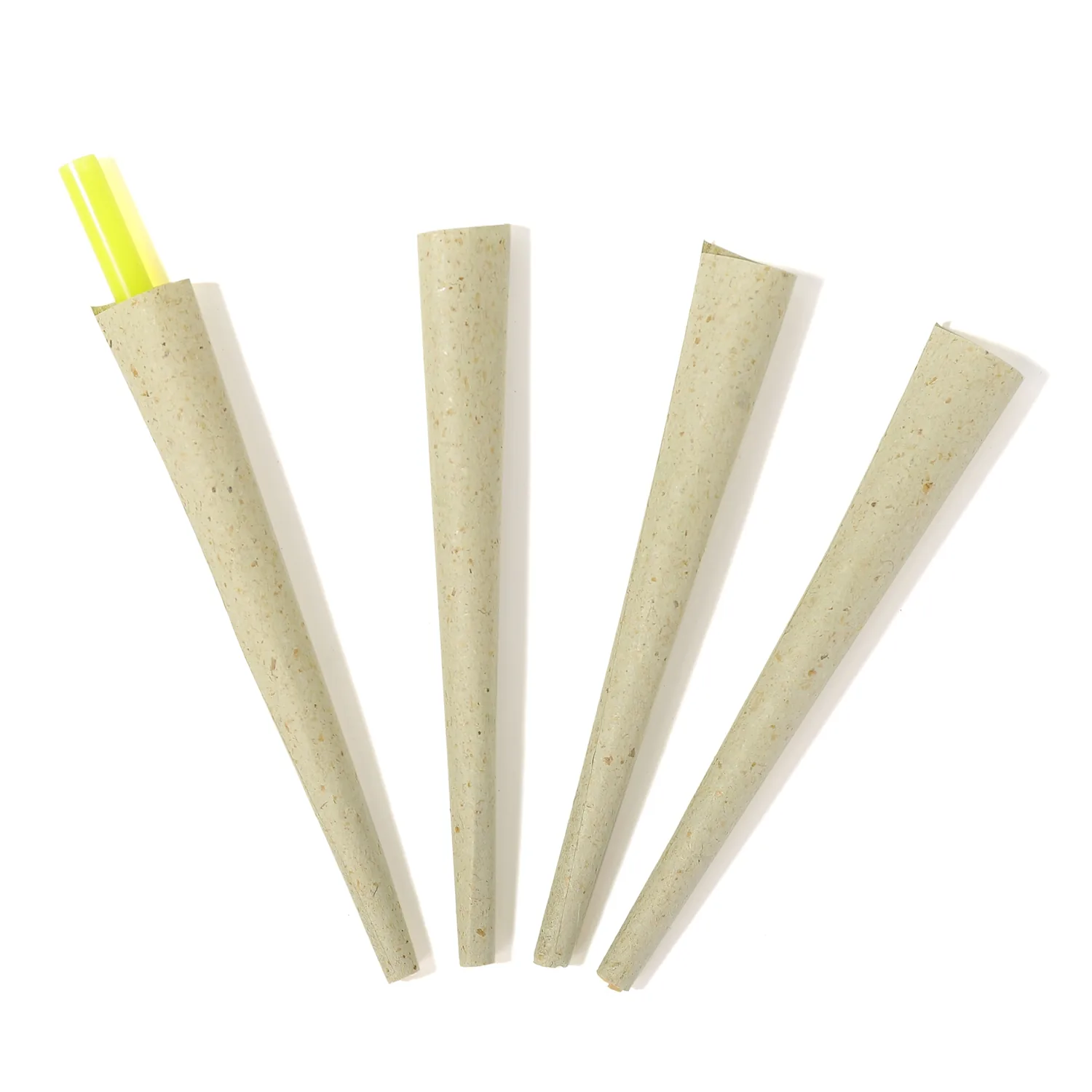
How Do You Tell a Real Manufacturer from a Reseller?
The rolling paper industry has a deep layer of trading companies and resellers. They market aggressively but own no equipment. Here is how to distinguish them:
White-label resellers source finished booklets from anonymous factories, apply branding, and resell. They cannot modify paper formulation, adjust leaf count, or guarantee batch consistency because they do not control production.
Actual manufacturers own or directly operate production facilities. They buy base paper in jumbo rolls, run slitting and folding lines, apply gum, and manage packaging in-house. They can modify specifications, run quality control at every stage, and absorb volume increases without outsourcing.
How to spot the difference:
- Ask for factory video or live virtual tour
- Request samples from two different production batches and compare
- Check if they can customize leaf count per booklet (a precise mechanical setting)
- Verify if they name their base paper supplier
- Look for Alibaba Verified Supplier status with on-site audit documentation
What Manufacturing Capabilities Should You Demand?
Not every factory that produces rolling papers can handle the technical requirements of hemp-specific manufacturing. Hemp fibers behave differently than rice or wood pulp during slitting and folding. These capabilities signal serious production competence:
High-speed precision slitting. The number of leaves per booklet is determined by slitting accuracy. Industry-standard booklet sizes range from 32 to 50 leaves. Advanced manufacturers with precision slitters can customize up to 120 leaves per booklet — a capability that requires equipment investment most factories have not made.
Multi-material production lines. A factory worth partnering with should handle more than hemp. The ability to switch between hemp, rice, flax, bamboo, and cellulose papers on the same equipment indicates operational maturity and gives your brand flexibility to expand product lines without switching suppliers.
Packaging and accessory integration. Finished booklets are only part of the product. Can the manufacturer supply filter tips (glass, wood, ceramic, acetate), custom trays, and retail-ready packaging? Integrated accessory production simplifies logistics and ensures design consistency across the product family.
What Mistakes Do Buyers Make When Sourcing Hemp Paper?
Even experienced buyers make these mistakes:
Inconsistent base paper quality. If the manufacturer changes base paper suppliers to cut costs, your product changes without warning. Demand supplier-lock agreements or single-source documentation.
Hidden customization costs. Some factories quote low base prices but charge excessively for tooling, plate changes, or packaging design. Request fully loaded quotations including setup fees, mold costs, and design services.
Long lead times from under-capacitized factories. A factory running at 95% capacity cannot absorb your order without delays. Verify current capacity utilization and ask for guaranteed delivery windows with penalty clauses.
Compliance gaps. Missing FSC chain-of-custody documentation or expired ISO certificates can block retail distribution in regulated markets. Audit compliance before signing contracts, not after production begins.
Sobre a Ace Rolling
Ace Rolling is Guangdong Ace Rolling New Material Technology Co., Ltd. — one of only two RYO paper factories operating at industrial scale globally. We are not a reseller. We are the manufacturer.
Manufacturing at Scale
Our 2,000–4,000 sqm facility in Dongguan, China runs fully automated production across 5–7 international-standard high-speed lines and 17 core machines. Annual capacity reaches 500 million booklets and cones. We maintain an average response time under two hours and an on-time delivery rate exceeding 98%.
Material Control
100% of our base paper is supplied by Mudanjiang Hengfeng Paper Co., Ltd. (Hengfeng Group) — the world’s third-largest specialty and smoking paper enterprise, commanding one-third of global smoking paper market share. This exclusive supply relationship gives us batch-to-batch consistency that trading companies cannot match.
Certificações
- ISO 9001:2015
- FSC (Forest Stewardship Council)
- Alibaba Verified Supplier — audited on-site by TÜV Rheinland / SGS with full raw-material traceability
Material Innovation
Beyond standard hemp, rice, and wood pulp, we develop sustainable alternatives for brands seeking differentiation:
- Pandace pure flax — the world’s first 100% tree-free, biodegradable rolling paper
- Authentic bamboo paper — fast-growing, low-impact fiber source
- Envoltórios de pétalas de rosa — alternativa botânica para posicionamento premium
- Celulose transparente — papel transparente para produtos com apelo visual
Todos os papéis usam goma arábica natural orgânica 100% para adesão, sem aditivos químicos nocivos. Cada lote é testado quanto à porosidade dinâmica, taxa de combustão lenta e pureza das cinzas.
Capacidade Única no Setor
Somos o único fabricante equipado com máquinas avançadas de corte de precisão de alta velocidade capazes de personalizar livretos até 120 folhas por livreto — uma flexibilidade que nenhum concorrente atualmente iguala.
Global Footprint
- Dongguan — sede de fabricação
- Shenzhen — escritório de vendas
- Hong Kong — filial de comércio global
Atendemos mercados em toda a América do Norte, Europa Ocidental, América do Sul, Sudeste Asiático e África por meio de Incoterms e opções de pagamento flexíveis.
Dois Modelos de Negócios
Seja você precisando de produtos de varejo totalmente finalizados sob nossas quatro marcas registradas, ou de personalização profunda OEM/ODM construída do zero — desde pontas de madeira com gravação a laser até marcas d'água e sabores personalizados — o mesmo padrão de qualidade se aplica.
Perguntas Frequentes
Quais certificações um fabricante de papel de cânhamo deve ter?
No mínimo: ISO 9001:2015 para gestão da qualidade, FSC para origem responsável e documentação de goma grau alimentício. Auditorias de fábrica por terceiros (TÜV, SGS, Bureau Veritas) fornecem verificação adicional das capacidades declaradas.
Como o papel de cânhamo se compara ao papel de arroz para enrolar?
O papel de cânhamo é mais forte e resistente a rasgos devido às fibras mais longas. O papel de arroz é mais fino e queima mais rápido com cinzas mínimas. O cânhamo oferece uma experiência de fumo um pouco mais robusta; o arroz atrai usuários que priorizam o sabor mínimo do papel. A escolha certa depende da preferência do seu mercado-alvo.
Qual MOQ devo esperar de uma fábrica de papel de cânhamo?
Fabricantes industriais normalmente exigem de 5.000 a 10.000 unidades para folhetos personalizados. Algumas fábricas acomodam quantidades mínimas de pedido (MOQ) menores para startups — 2.000 unidades em certas configurações — mas verifique se pedidos com MOQ baixo recebem a mesma prioridade na linha de produção que pedidos em volume.
O papel de cânhamo pode ser personalizado com o logotipo e embalagem da minha marca?
Sim. A personalização inclui impressão de livreto, marca d'água nas folhas internas, design de embalagem e integração de acessórios (pontas, bandejas, cones). A profundidade da personalização depende se você está trabalhando com um fabricante real ou um revendedor. Os fabricantes controlam toda a cadeia; os revendedores estão limitados à marcação superficial.
Considerações Finais
O papel de cânhamo não é uma moda. É uma melhoria de material respaldada por propriedades mensuráveis: maior teor de celulose, renovabilidade mais rápida e fibras mais resistentes. Mas essas vantagens existem apenas quando o fabricante sabe processar o cânhamo sem degradá-lo.
Se você está avaliando fabricantes de papel de cânhamo para sua próxima linha de produtos, verifique a rastreabilidade do material, capacidade de produção, profundidade de personalização e certificações antes de se comprometer. A fábrica que você escolhe determina tudo, desde a consistência dos lotes até a confiabilidade da entrega.
Na Ace Rolling, controlamos toda a cadeia de produção — desde o papel base adquirido exclusivamente do Grupo Hengfeng até a produção final de livretos e cones em nossa fábrica em Dongguan. Se você precisa de amostras, documentação de capacidades ou uma visita à fábrica, nossa equipe responde em até duas horas.
Amazing Paper, Create, Enjoyable Life! — Ace Rolling