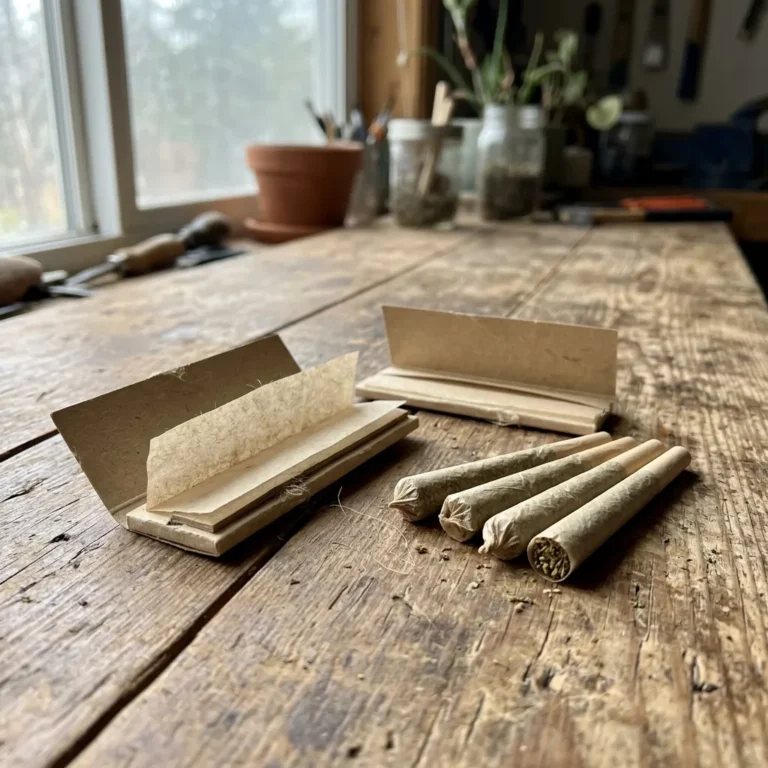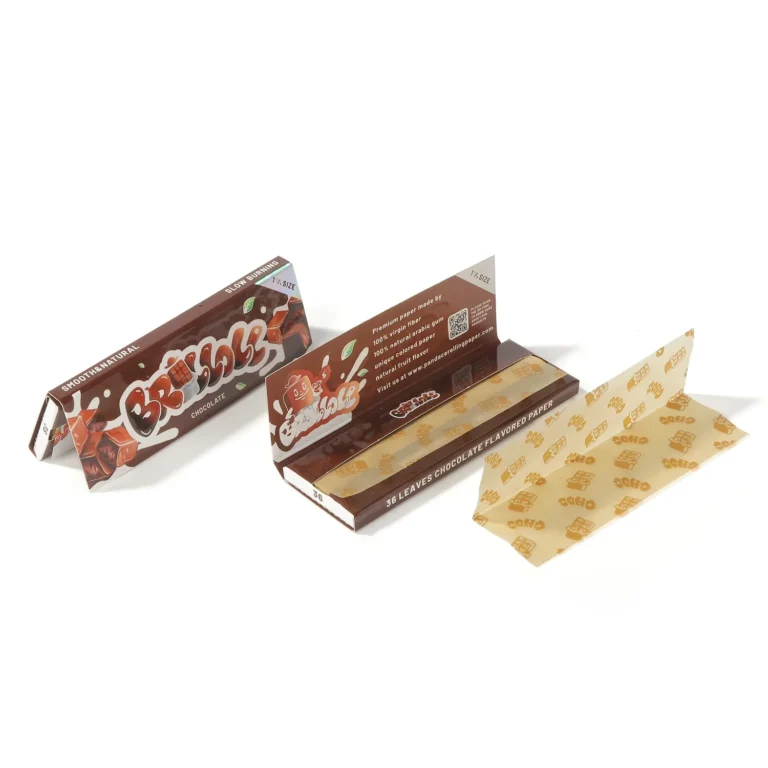

Ya—kertas gulung bambu bisa bagus untuk label pribadi ketika pembeli menginginkan cerita serat tanaman yang khas, rasa yang dapat dikerjakan, dan rentang booklet-ke-kerucut. Mereka tidak secara otomatis lebih baik daripada rami, gaya beras, atau bubur. Setujui kertas, permen karet, pembakaran, kemasan, klaim, MOQ, dan biaya mendarat yang tepat sebelum peluncuran.
Ace Rolling menawarkan bambu sebagai jalur kertas yang tersedia untuk booklet label pribadi dan kerucut pra-gulung dari Dongguan, China. Keputusan grosir yang tepat bergantung pada SKU jadi dan hasil sampel—bukan hanya nama seratnya.
Apakah Kertas Gulung Bambu Cocok untuk Merek?
Bambu mendapatkan tempat dalam daftar pendek ketika memberikan alasan jelas bagi pembeli untuk memperhatikan dan mengingat produk. Ini harus memecahkan masalah penempatan, bukan sekadar menghiasi lembar spesifikasi.
Untuk label pribadi, bambu paling kuat sebagai jalur serat tanaman yang berbeda antara rami yang familiar dan bubur konvensional. Uji komersial adalah apakah cerita itu cocok dengan pelanggan target, harga rak, arah warna, dan format produk.
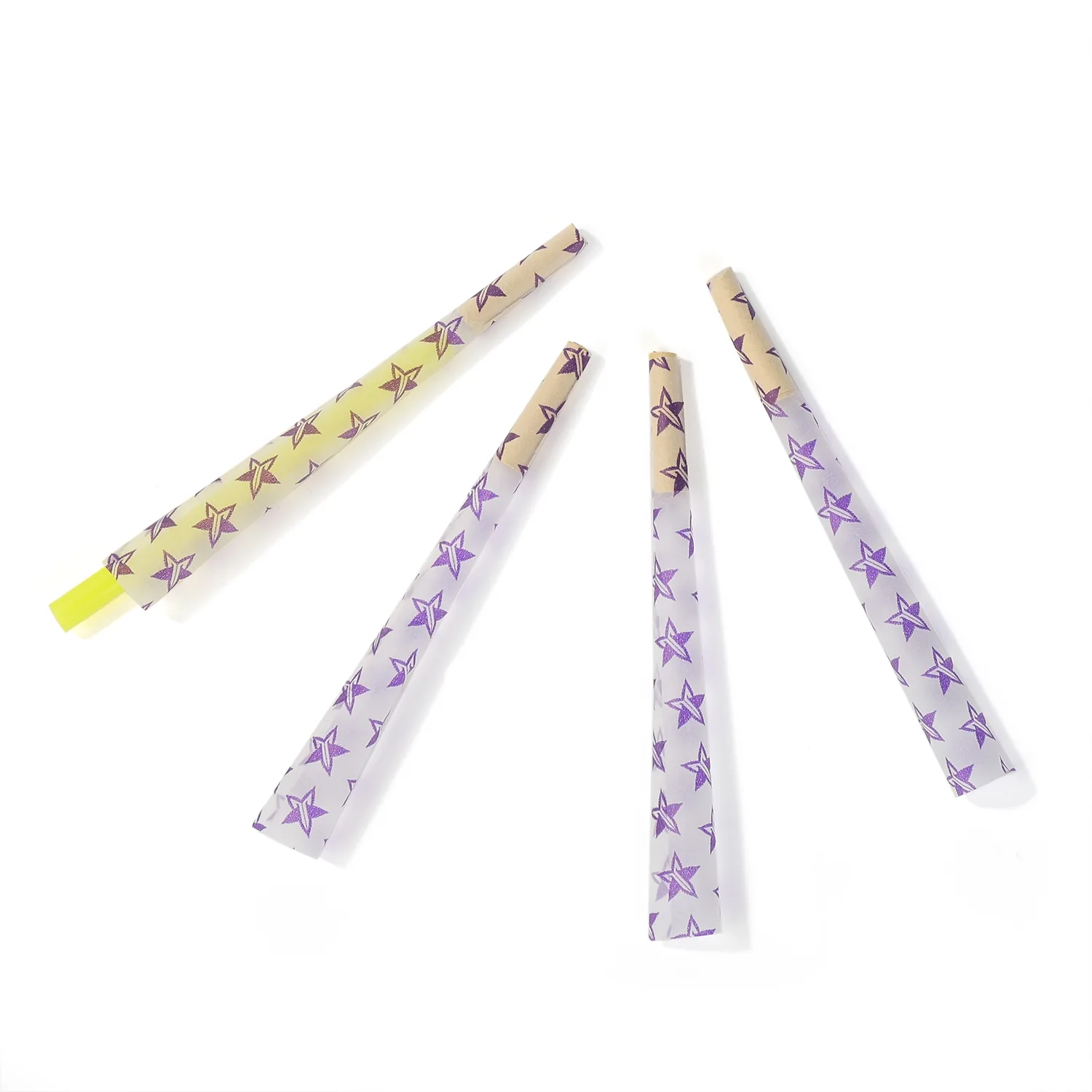
Mulai dengan janji pelanggan. Pengecer spesialis mungkin menghargai serat yang kurang umum dan cerita produk taktil; saluran kenyamanan yang mengutamakan harga mungkin lebih memilih bubur yang familiar. Bambu dapat mendukung kemasan yang terlihat alami, tetapi kata “bambu” saja tidak membuktikan keberlanjutan, keamanan, status organik, atau sesi yang lebih baik.
Ace Rolling’s program kertas gulung kustom dapat menerjemahkan rute kertas yang dipilih menjadi karya seni booklet dan kemasan ritel. Pertahankan klaim kertas yang tepat, lalu biarkan desain mengomunikasikan merek daripada membuat janji lingkungan atau medis yang tidak didukung.
| Tujuan merek | Kesesuaian bambu | Alternatif yang lebih baik untuk sampel | Alasan pembeli |
|---|---|---|---|
| SKU unggulan serat tanaman yang khas | Kuat | Hemp | Bambu kurang dikenal dan dapat menciptakan rasa ingin tahu |
| SKU berposisi alami yang luas dan familiar | Sedang | Hemp | Rami sudah memiliki pengenalan pembeli yang tinggi |
| Kehadiran kertas ultra-ringan | Uji terlebih dahulu | Gaya beras | Lembaran tipis gaya beras mungkin lebih cocok untuk brief tersebut |
| Garis harga masuk, penanganan mudah | Uji terlebih dahulu | Bubur kayu | Bubur familiar dan sering lebih mudah untuk diperdagangkan |
| Cerita sumber berbasis bukti | Bersyarat | Serat terdokumentasi apa pun | Klaim bergantung pada dokumen tingkat SKU, bukan reputasi serat |
Poin Penting: Pilih bambu ketika keunikannya mendukung pembeli dan rentang harga yang jelas; jangan memilihnya hanya karena bahan terdengar mudah dipasarkan.
Bagaimana Bambu Dibandingkan dengan Rami, Beras, dan Bubur?
Nama serat berguna sebagai label daftar pendek, tetapi pembeli grosir membeli konstruksi jadi. Ketebalan, porositas, perekat, watermark, warna, dan kualitas konversi dapat mengungguli bahan utama.
Bambu bukanlah titik tengah universal atau peningkatan otomatis. Bandingkan dengan rami, kertas gaya beras, dan bubur kayu dengan ukuran, jumlah kemasan, dan spesifikasi target yang sama.
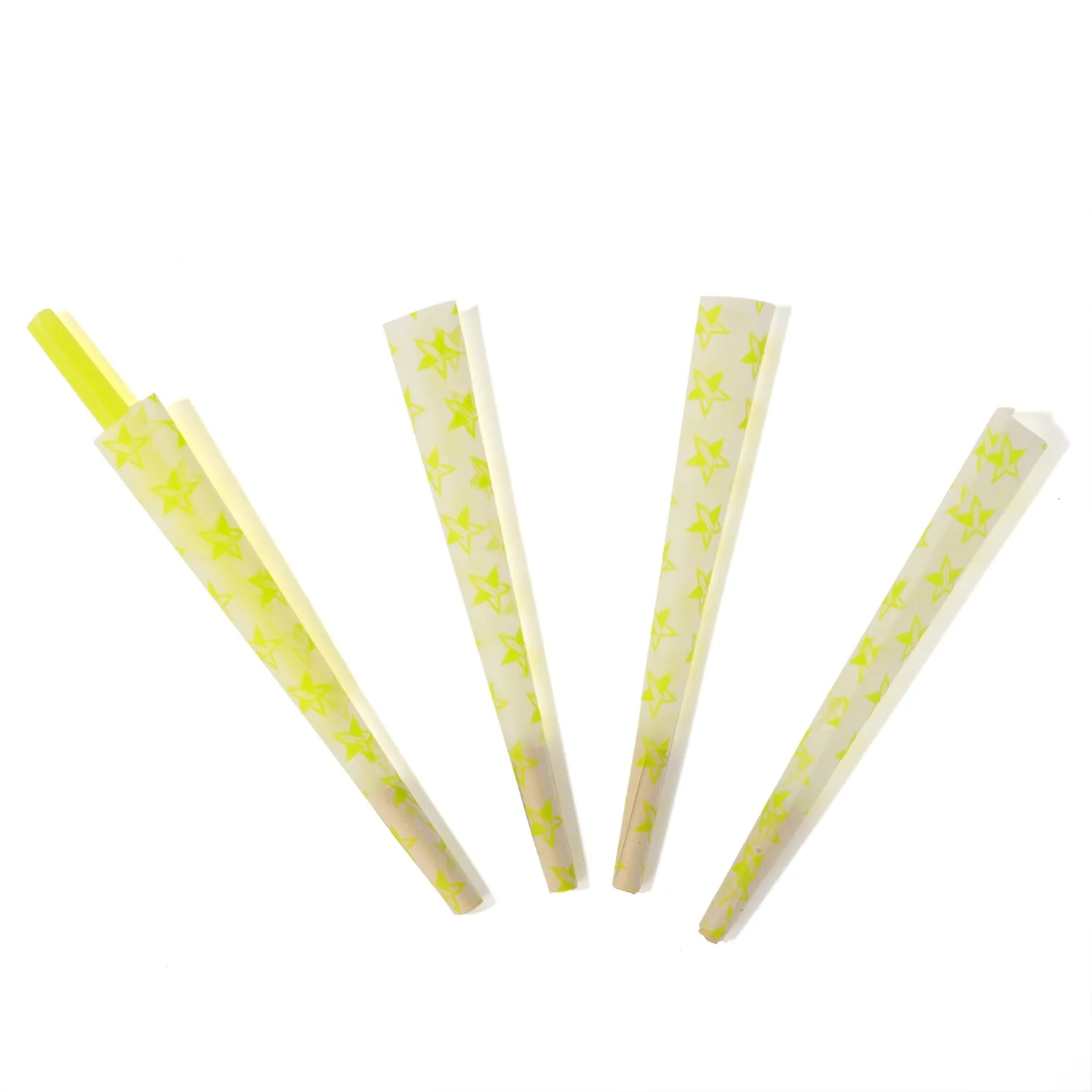
Bambu dapat menawarkan presentasi warna alami yang mudah dikenali dan narasi merek yang halus. Rami sering membawa pengenalan kategori yang lebih kuat. Kertas gaya beras dapat cocok untuk brief yang sangat tipis dan kehadiran kertas rendah tetapi mungkin memerlukan perawatan penanganan lebih. Bubur kayu tetap menjadi patokan praktis untuk kekuatan, keakraban, dan nilai. Ini adalah kecenderungan penyaringan, bukan hasil bakar yang dijamin.
Minta Ace Rolling untuk mengutip kandidat yang sesuai melalui Layanan kertas gulung OEM/ODM. Perbandingan yang adil mempertahankan ukuran, jumlah daun, perekat, cakupan cetak, dan kemasan tetap konstan sambil mengubah rute kertas.
| Faktor keputusan | Bambu | Hemp | Gaya beras | Bubur kayu |
|---|---|---|---|---|
| Kefamiliaran merek | Muncul/berbeda | Tinggi dalam garis alami yang diposisikan | Dikenal dalam garis kertas tipis | Sangat tinggi |
| Cerita visual tipikal | Warna alami, serat tanaman | Serabut yang bersahaja dan mapan | Minimal, halus, tipis | Putih klasik atau tidak diputihkan |
| Harapan penanganan | Sampel untuk kekakuan dan lipatan | Sering lengket; verifikasi campuran | Dapat menjadi rapuh saat sangat tipis | Biasanya memaafkan |
| Ekspektasi pembakaran | Bergantung pada GSM, porositas, watermark, isian | Variabel yang sama berlaku | Ketipisan dapat mengubah perilaku | Rentang konstruksi yang luas |
| Peran grosir terbaik | SKU pahlawan yang terdiferensiasi | SKU alami yang dapat dikenali | SKU tipis premium | SKU inti/nilai |
| Persyaratan klaim | Verifikasi setiap pernyataan sumber | Verifikasi serat dan pemrosesan | Verifikasi bahasa komposisi | Verifikasi bahasa pemutihan dan sumber |
Poin Penting: Bandingkan sampel jadi di bawah satu brief terkontrol; label material saja tidak dapat memprediksi penanganan, pembakaran, atau pembelian ulang.
Apa yang Harus Dibuktikan Sampel tentang Pembakaran dan Rasa Tangan?
Pembeli tidak dapat menyetujui bambu dari PDF, contoh warna, atau kata sifat pemasok. Rasa kertas dan perilaku pembakaran muncul dari konstruksi lengkap dan cara produk diisi atau digulung.
Gerbang sampel harus diuji cengkeraman, ketahanan sobek, aktivasi permen karet, kehadiran kertas, abu, nyala ulang, dan kecenderungan pembakaran samping terhadap kasus penggunaan nyata merek. Jangan pernah menjamin pembakaran yang benar-benar merata atau tanpa kano.
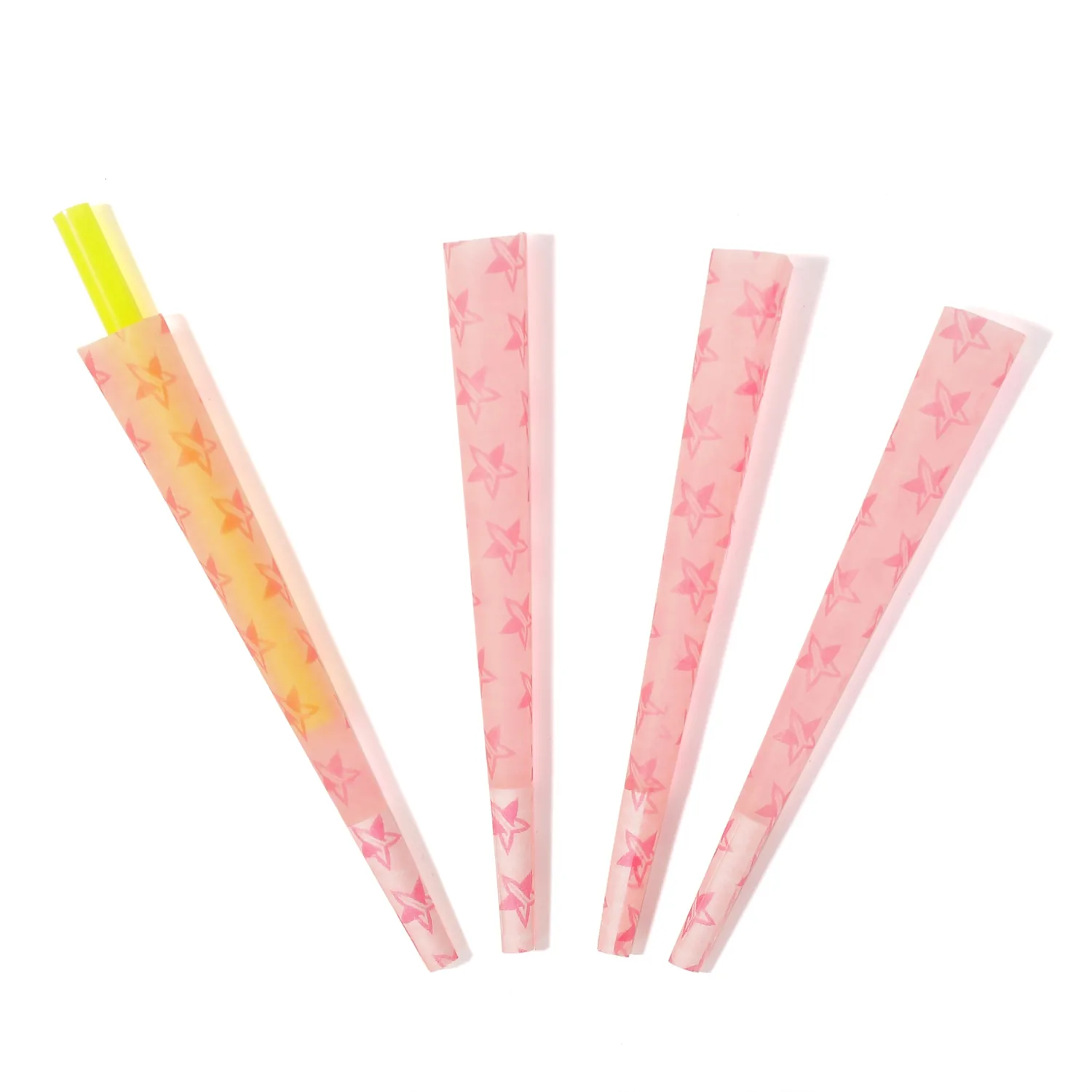
Untuk booklet, mintalah beberapa penguji menggulung ukuran yang sama dengan rentang isian yang sama. Untuk kerucut, uji ukuran yang dimaksudkan 84 mm, 98 mm, 109 mm, atau geometri kustom dan metode pengisian aktual. Catat kelembapan dan kondisi penyimpanan karena kertas tipis dan permen karet dapat berperilaku berbeda setelah pengiriman atau paparan.
Gunakan Ace Rolling opsi kerucut pra-gulung ketika program membutuhkan kerucut bambu yang cocok. Minta sampel yang disetujui dan disimpan agar lot produksi dapat diperiksa terhadap referensi fisik daripada deskripsi yang samar.
| Pemeriksaan sampel | Metode booklet | Metode kerucut | Lewati pertanyaan |
|---|---|---|---|
| Rasa tangan | Lipat dan gulung berulang kali | Periksa dinding dan jahitan | Apakah terasa tepat untuk pengguna target? |
| Ketahanan terhadap robekan | Gulung dengan tegangan normal | Isi dengan kecepatan yang dimaksudkan | Apakah itu bertahan dari penanganan yang realistis? |
| Permen karet | Aktifkan dengan kelembapan yang konsisten | Periksa jahitan setelah penyimpanan | Apakah segel tetap tanpa garis residu yang berat? |
| Terbakar | Isi, ukuran, dan kondisi pengujian yang sama | Berat isi dan kepadatan pengemasan yang sama | Apakah performa cukup dapat diulang untuk brief? |
| Kehadiran kertas | Bandingkan secara buta dengan rami/beras/bubur kertas | Bandingkan kerucut yang cocok secara buta | Apakah panel lebih menyukainya pada harga target? |
| Penyimpanan | Periksa ulang setelah pengkondisian | Periksa ulang sampel yang dikemas | Does performance remain within the agreed standard? |
Poin Penting: Bamboo is good for private label only after the exact booklet or cone beats—or intentionally differs from—matched alternatives in a recorded sample test.
Should You Launch Bamboo Booklets, Cones, or Both?
Format changes the buying proposition. Booklets sell paper choice and rolling ritual; cones sell convenience, fill compatibility, and repeatable geometry.
Most new brands should lead with one hero format, validate sell-through, and add the matching format later. Launching both can work when the audience and channel already support two distinct use occasions.
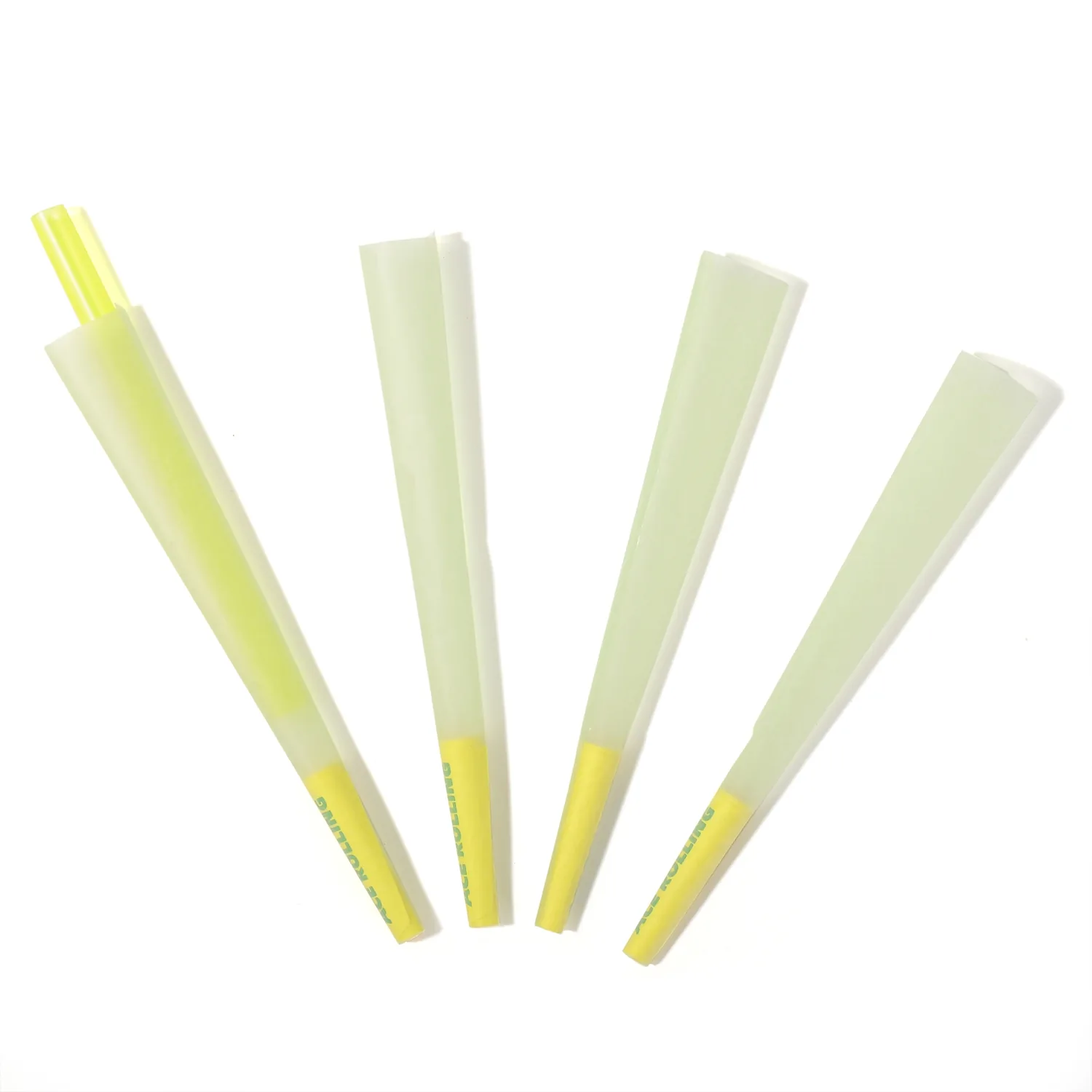
For booklets, lock leaf size, count, gum, tips, cover, display box, and paper route. For cones, lock length, tip dimensions, paper, packing method, bulk or retail pack-out, and filling-machine requirements. Ace Rolling lists bamboo among available paper routes for both product families, subject to the chosen specification.
Tinjauan kertas gulung kustom for booklet programs and the separate cone page for formed products. Matching colors and claims can unite the range, but the two SKUs still require separate functional approvals.
| Launch path | Main advantage | Risiko utama | Paling sesuai |
|---|---|---|---|
| Bamboo booklet first | Simpler story and lower assortment complexity | Does not test cone demand | Rolling-paper brands and smoke shops |
| Bamboo cone first | Convenience-led differentiation | Fill fit and tip geometry add variables | Pre-roll and automated-filling buyers |
| Booklet + cone together | Stronger shelf family | More samples, artwork, cash, and inventory | Established distributors with known demand |
| Bamboo hero + pulp value SKU | Clear good/better architecture | Brand story can fragment | Multi-price wholesale catalogs |
| Bamboo hero + hemp alternative | Fiber choice without a value cue | Two natural-positioned SKUs may compete | Specialty retailers with educated buyers |
Poin Penting: Pick the first format by customer behavior and operational capability; matching bamboo booklets and cones are a range strategy, not a requirement for launch.
Can Bamboo Support a Credible Packaging Story?
Bamboo can give private-label packaging a memorable material anchor, but claim discipline is part of product development. An attractive fiber story becomes a liability when the carton says more than the documents prove.
Use factual language such as “bamboo paper” when the specification supports it. Treat FSC as an available sourcing option for applicable programs—not a default certification for every bamboo SKU.

Do not turn “plant fiber” into “medical,” “healthier,” “non-toxic,” “organic,” “biodegradable,” or “eco-friendly” without current evidence applicable to the exact product and market. Packaging should distinguish verified material facts, optional sourcing documentation, and general brand design.
Ace Rolling operates under an ISO 9001:2015 management framework and can discuss FSC-certified sourcing options where applicable. Use the halaman kualitas dan sertifikasi to frame the document request, then approve final wording against the SKU’s actual records.
| Packaging statement | Use status | Evidence needed | Safer drafting approach |
|---|---|---|---|
| “Made with bamboo paper” | Appropriate if true | Bill of materials/specification | Name the material plainly |
| “FSC-certified” | Bersyarat | Applicable chain/scope documents | Confirm the exact SKU before print |
| “Sustainable” or “eco-friendly” | Do not assume | Defined standard and substantiation | Describe verified sourcing facts instead |
| “Organic” | Do not assume | Applicable certification | Omit unless documented and approved |
| “Healthier” or “safer” | Hindari | Medical/health proof and legal review | Make no comparative health claim |
| Competitor affiliation | Prohibited unless true | Formal authorization | State your own private-label manufacturer |
Ace Rolling adalah tidak the manufacturer of RAW, Rizla, or OCB. Do not borrow those trademarks, imply affiliation, or copy their trade dress when briefing bamboo packaging.
Poin Penting: Bamboo gives packaging a useful material fact; credible private label stops at what the exact SKU and documents can substantiate.
Do MOQ and Wholesale Cost Make Commercial Sense?
A promising sample still has to work in cash flow. Compare identical quote scopes because paper, size, print, leaf count, tip, display packaging, quantity, and freight all move the final number.
Program kustom Ace Rolling umumnya dimulai sekitar 2.000 unit, depending on the specification. Approved factory-direct reference ranges are about $0.07–$0.30 per buku kecil kustom dan $0.04–$0.06 per pre-rolled cone, with MOQ applying and final quotation required.
Do not assume bamboo sits at one fixed point inside those ranges. Ask for bamboo, hemp, rice-style, and pulp alternatives on the same RFQ. Then model landed unit cost, samples, artwork, freight, duties, warehousing, breakage allowance, and channel margin. A lower ex-factory unit price can still lose if the MOQ exceeds realistic sell-through.
Ace Rolling’s OEM/ODM team can quote once the material, format, dimensions, print, packaging, quantity, and destination are clear.
| Commercial input | Ace planning reference | What changes it | Tindakan pembeli |
|---|---|---|---|
| Custom booklet price | About $0.07–$0.30 each | Size, material, leaf count, print, tips, pack, volume | Request a matched bamboo quote |
| Pre-rolled cone price | About $0.04–$0.06 each | Length, paper, tip, print, pack, volume | Quote intended cone geometry |
| MOQ | Often starts around 2,000 units | Material, size, print, filter/tip, packaging | Confirm MOQ per SKU |
| Landed cost | Not the ex-factory price | Freight, duty, destination, cartons | Model delivered unit economics |
| First-order depth | Based on sell-through | Number of SKUs and channel velocity | Start with a focused hero SKU |
Poin Penting: Bamboo makes commercial sense when a matched factory quote leaves margin after MOQ and landed costs—not when its ex-factory price is viewed in isolation.
How Should You Approve the Supplier and Production Plan?
Material choice is only one part of supplier risk. The private-label partner must convert the chosen paper consistently, control packaging, retain approvals, provide applicable documents, and communicate a realistic schedule.
Ace Rolling manufactures OEM products in Dongguan, China. A typical private-label project is commonly planned around about two months from concept to delivery, while mass production after approvals often takes roughly four to five weeks, depending on complexity.
Run the project through clear gates: written brief, material samples, functional tests, dieline and artwork proof, claim/document review, pre-production approval, mass production, lot inspection, and export packing. Put change control in writing; a late paper, color, tip, or carton change can reset both cost and timing.
Review Ace Rolling’s Dongguan factory overview and request the documents relevant to the destination and SKU. ISO 9001 supports a management framework, but buyers still need product-specific approvals and an agreed QC plan.
| Approval gate | Required output | Bamboo-specific question | Stop condition |
|---|---|---|---|
| RFQ brief | One comparable specification | Is bamboo available for this exact format? | Quotes use different scopes |
| Material sample | Labeled matched papers | How does bamboo compare with hemp/rice/pulp? | Fiber or GSM is unclear |
| Functional test | Recorded roll/fill and burn results | Does the exact construction meet the brief? | Results are inconsistent |
| Artwork and claims | Signed dieline and claim list | Which bamboo/FSC statements are documented? | Unsupported wording remains |
| Pre-production | Approved retained sample | Does paper, gum, print, and pack match? | Physical sample is not approved |
| Produksi massal | QC and delivery plan | What checks protect lot consistency? | Timeline or tolerances are vague |
Poin Penting: Approve bamboo through samples, documents, retained standards, and production gates; a material preference is not a substitute for supplier qualification.
FAQ
Are bamboo rolling papers good for private-label brands?
Bamboo rolling papers can be good for private-label brands that want a distinctive plant-fiber story and are willing to validate the finished construction. The decision should depend on target customer, paper feel, gum, burn tests, format, packaging, MOQ, landed cost, and claim evidence—not on an assumption that bamboo is universally superior.
Are bamboo rolling papers better than hemp papers?
Bamboo rolling papers are not automatically better than hemp papers. Bamboo can feel more distinctive in a crowded catalog, while hemp has stronger recognition in natural-positioned ranges. Compare matched samples with the same size, thickness target, gum, and pack. Let handling, controlled burn tests, customer positioning, and quoted economics decide.
Can bamboo paper be used for booklets and pre-rolled cones?
Bamboo paper is an available route for both rolling paper booklets and pre-rolled cones in Ace Rolling programs, subject to the exact specification. Booklets require leaf, gum, count, tips, and cover approvals. Cones also require length, tip geometry, seam, pack-out, and filling-method tests before wholesale production.
What is the MOQ for private-label bamboo rolling papers?
Ace Rolling private-label programs commonly start around 2,000 units, but the actual MOQ depends on product format, dimensions, paper, print, filter or tip, packaging, and quantity. Buyers should confirm MOQ per SKU. A bamboo booklet and a custom bamboo cone may have different setup and pack-out requirements.
How much do custom bamboo papers and cones cost wholesale?
Ace Rolling’s approved factory-direct ranges are about $0.07–$0.30 per custom booklet and $0.04–$0.06 per pre-rolled cone, with MOQ applying. Bamboo’s exact position requires a quotation based on size, material, printing, tips, packaging, quantity, and destination. Compare landed cost rather than ex-factory price alone.
Can a bamboo rolling paper pack claim FSC or eco-friendly status?
A bamboo rolling paper pack should claim FSC only when current documents cover the applicable SKU and sourcing route. FSC options are available, but not automatic. Avoid unsupported eco, organic, or health claims. To compare bamboo samples, request a private-label quote with your format, size, packaging, quantity, destination, and document needs.