
Ja – Bambus-Zigarettenpapier kann für Eigenmarken geeignet sein, wenn Käufer eine markante Pflanzenfasergeschichte, ein praktikables Gefühl und eine Auswahl von Heftchen bis zu Tüten wünschen. Sie sind nicht automatisch besser als Hanf-, Reisstil- oder Zellstoffpapiere. Genehmigen Sie das genaue Papier, den Kleber, den Abbrand, die Verpackung, die Behauptungen, die Mindestbestellmenge und die Landekosten vor dem Start.
Ace Rolling bietet Bambus als verfügbare Papierroute für private-label Booklets und vorgefertigte Cones aus Dongguan, China an. Die richtige Großhandelsentscheidung hängt von der fertigen SKU und den Probenergebnissen ab – nicht allein vom Fasernamen.
Sind Bambus-Rolling-Papers die richtige Markenpassform?
Bambus erhält einen Platz auf der Kurzliste, wenn er den Käufern einen klaren Grund gibt, das Produkt zu bemerken und sich daran zu erinnern. Es sollte ein Positionierungsproblem lösen, nicht einfach ein Datenblatt schmücken.
Für Private Label ist Bambus am stärksten als ein unterscheidende Pflanzenfaser-Spur zwischen vertrautem Hanf und konventionellem Zellstoff. Der kommerzielle Test besteht darin, ob diese Geschichte zur Zielkundschaft, dem Regalpreis, der Farbrichtung und dem Produktformat passt.
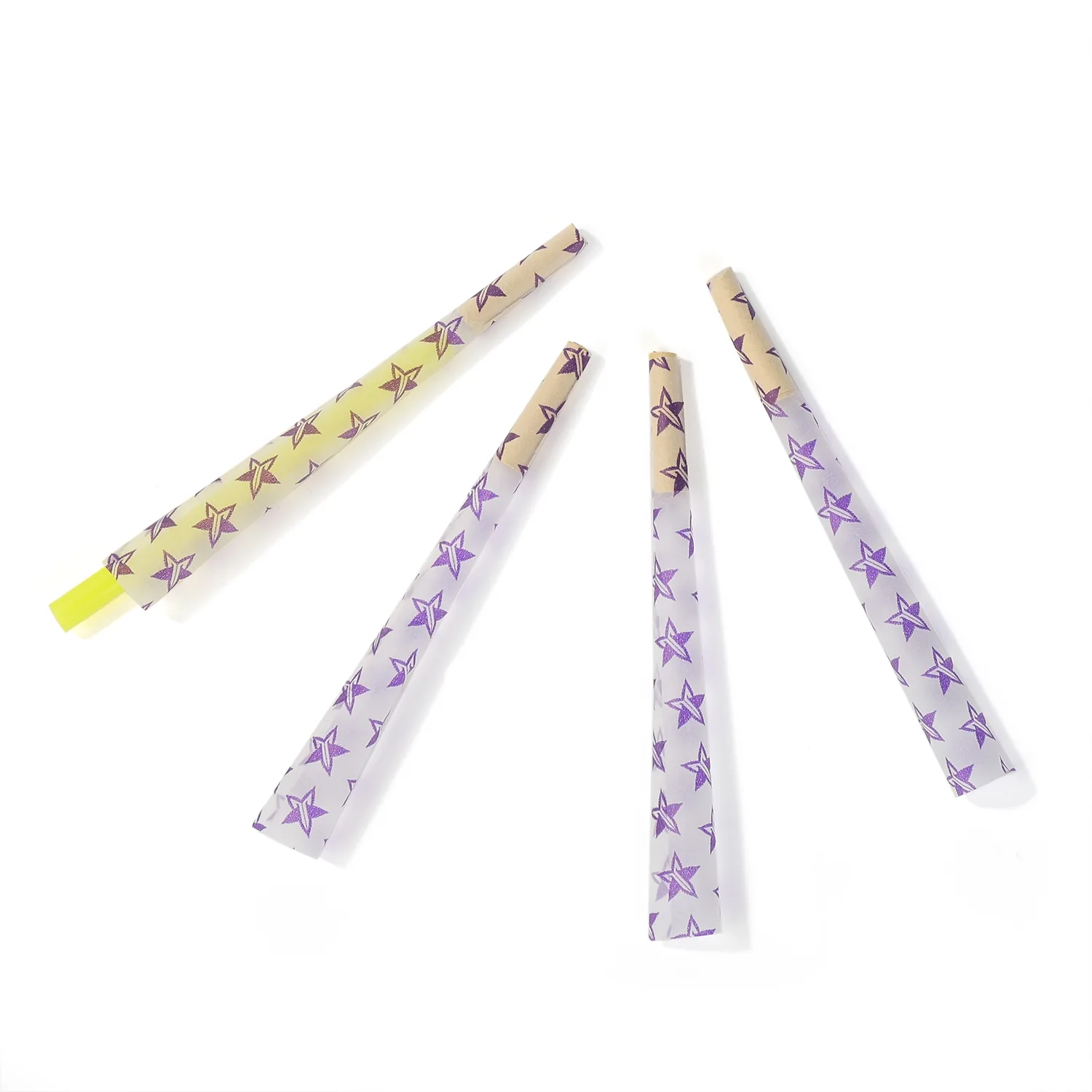
Beginnen Sie mit dem Kundenversprechen. Ein Fachhändler könnte eine weniger verbreitete Faser und eine haptische Produktgeschichte schätzen; ein preisorientierter Convenience-Kanal bevorzugt möglicherweise vertrauten Zellstoff. Bambus kann natürlich aussehende Verpackungen unterstützen, aber das Wort “Bambus” allein beweist keine Nachhaltigkeit, Sicherheit, Bio-Qualität oder eine bessere Sitzung.
Ace Rolling’s maßgeschneiderte Rolling-Paper-Programme kann eine gewählte Papierroute in Booklet-Kunst und Einzelhandelsverpackungen übersetzen. Halten Sie die Papieraussage präzise, und lassen Sie dann das Design die Marke kommunizieren, anstatt unbegründete Umwelt- oder medizinische Versprechen zu machen.
| Markenziel | Bambus-Passform | Bessere Alternative zur Probe | Käufergrund |
|---|---|---|---|
| Unterscheidende Pflanzenfaser-Hauptartikel | Stark | Hanf | Bambus ist weniger bekannt und kann Neugier erzeugen |
| Breite, vertraute, natürlich positionierte SKU | Mittel | Hanf | Hanf hat bereits eine hohe Käuferbekanntheit |
| Ultra-leichte Papierpräsenz | Zuerst testen | Reisartig | Dünne Reisstil-Blätter passen möglicherweise besser zu diesem Brief |
| Einstiegspreis, leicht handhabbare Linie | Zuerst testen | Holzschliff | Zellstoff ist vertraut und oft einfacher zu vermarkten |
| Evidenzbasierte Beschaffungsgeschichte | Bedingt | Jede dokumentierte Faser | Aussagen hängen von SKU-spezifischen Dokumenten ab, nicht vom Faserr Ruf |
Wesentliche Erkenntnis: Wählen Sie Bambus, wenn seine Besonderheit einen definierten Käufer und Preisbereich unterstützt; wählen Sie ihn nicht nur, weil das Material vermarktbar klingt.
Wie schneidet Bambus im Vergleich zu Hanf, Reis und Zellstoff ab?
Fasernamen sind nützliche Shortlist-Labels, aber Großhandelskäufer erwerben fertige Konstruktionen. Dicke, Porosität, Gummierung, Wasserzeichen, Farbe und Verarbeitungsqualität können das Hauptmaterial überwiegen.
Bambus ist weder ein universeller Mittelpunkt noch ein automatisches Upgrade. Vergleichen Sie ihn mit Hanf, Reisstil-Papier und Holzschliff in derselben Größe, Packungsanzahl und Zielvorgabe.
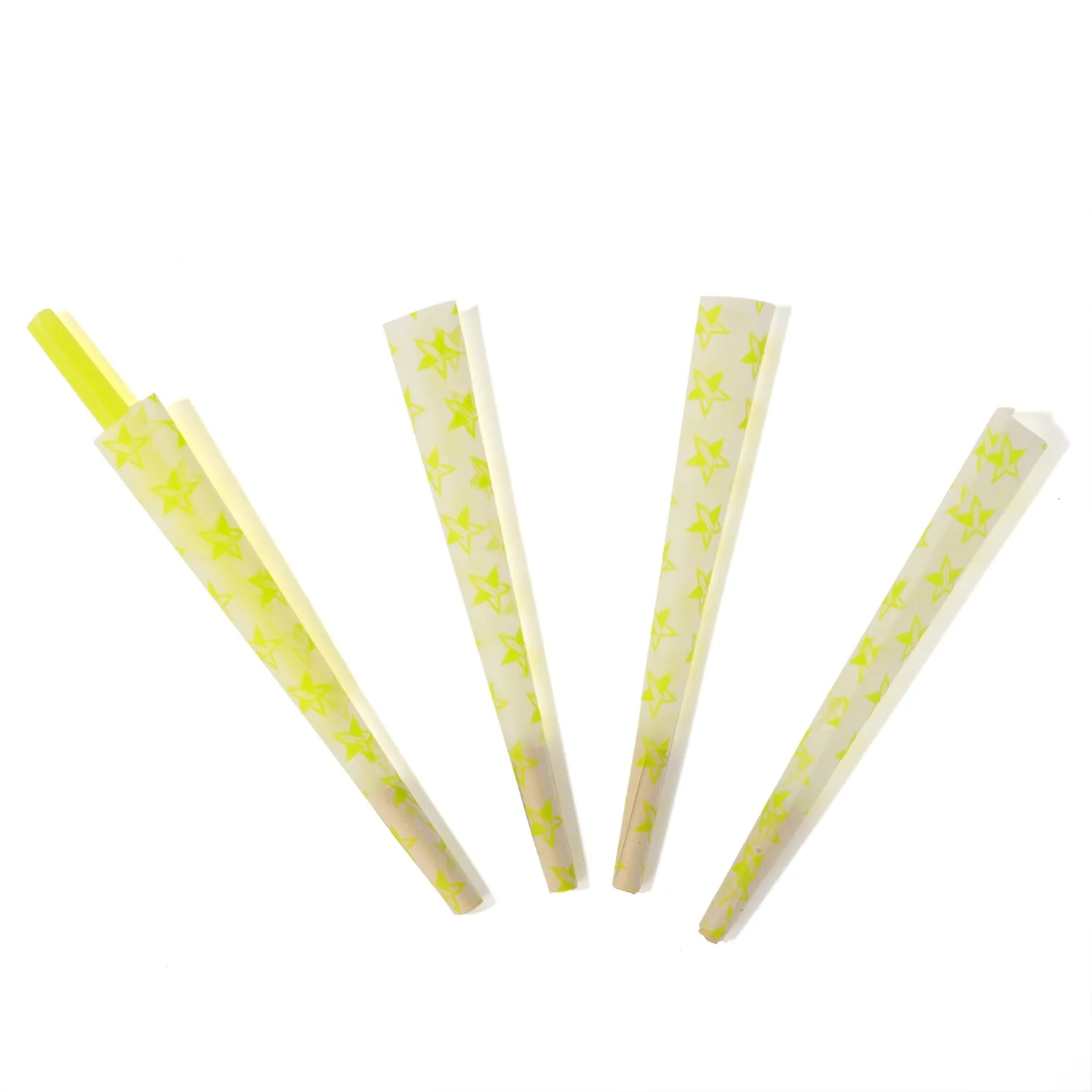
Bambus kann eine erkennbare Naturton-Präsentation und eine glatte Markengeschichte bieten. Hanf bringt oft eine stärkere Kategorieerkennung. Reisstil-Papier kann ultradünne und papierarme Briefe passen, erfordert aber möglicherweise mehr Handhabungssorgfalt. Holzzellstoff bleibt ein praktischer Benchmark für Stärke, Vertrautheit und Wert. Dies sind Screening-Tendenzen, keine garantierten Brennergebnisse.
Bitten Sie Ace Rolling, passende Kandidaten über seinen OEM/ODM-Rolling-Paper-Service. Ein fairer Vergleich hält Größe, Blattzahl, Gummierung, Druckumfang und Verpackung konstant, während die Papierroute geändert wird.
| Entscheidungsfaktor | Bambus | Hanf | Reisartig | Holzschliff |
|---|---|---|---|---|
| Markenbekanntheit | Aufkommend/unterscheidend | Hoch in natürlich positionierten Linien | Bekannt in dünnen Papierlinien | Sehr hoch |
| Typische visuelle Geschichte | Natürlich gefärbte, pflanzliche Faser | Erdige, etablierte Faser | Minimal, raffiniert, dünn | Klassisch weiß oder ungebleicht |
| Handhabungserwartung | Probe auf Steifigkeit und Falz | Oft griffig; Mischung überprüfen | Kann bei sehr dünner Ausführung empfindlich sein | Normalerweise nachsichtig |
| Burn expectation | Depends on GSM, porosity, watermark, fill | Same variables apply | Thinness can change behavior | Broad range of constructions |
| Best wholesale role | Differentiated hero SKU | Recognizable natural SKU | Premium thin SKU | Core/value SKU |
| Claim requirement | Verify every sourcing statement | Verify fiber and processing | Verify composition language | Verify bleach and sourcing language |
Wesentliche Erkenntnis: Compare finished samples under one controlled brief; material labels alone cannot predict handling, burn, or repeat purchase.
What Burn and Hand-Feel Should Samples Prove?
A buyer cannot approve bamboo from a PDF, color swatch, or supplier adjective. Paper feel and burn behavior emerge from the complete construction and the way the product is filled or rolled.
The sample gate should test grip, tear resistance, gum activation, paper presence, ash, relights, and side-burn tendency against the brand’s real use case. Never promise an absolutely even burn or zero canoeing.
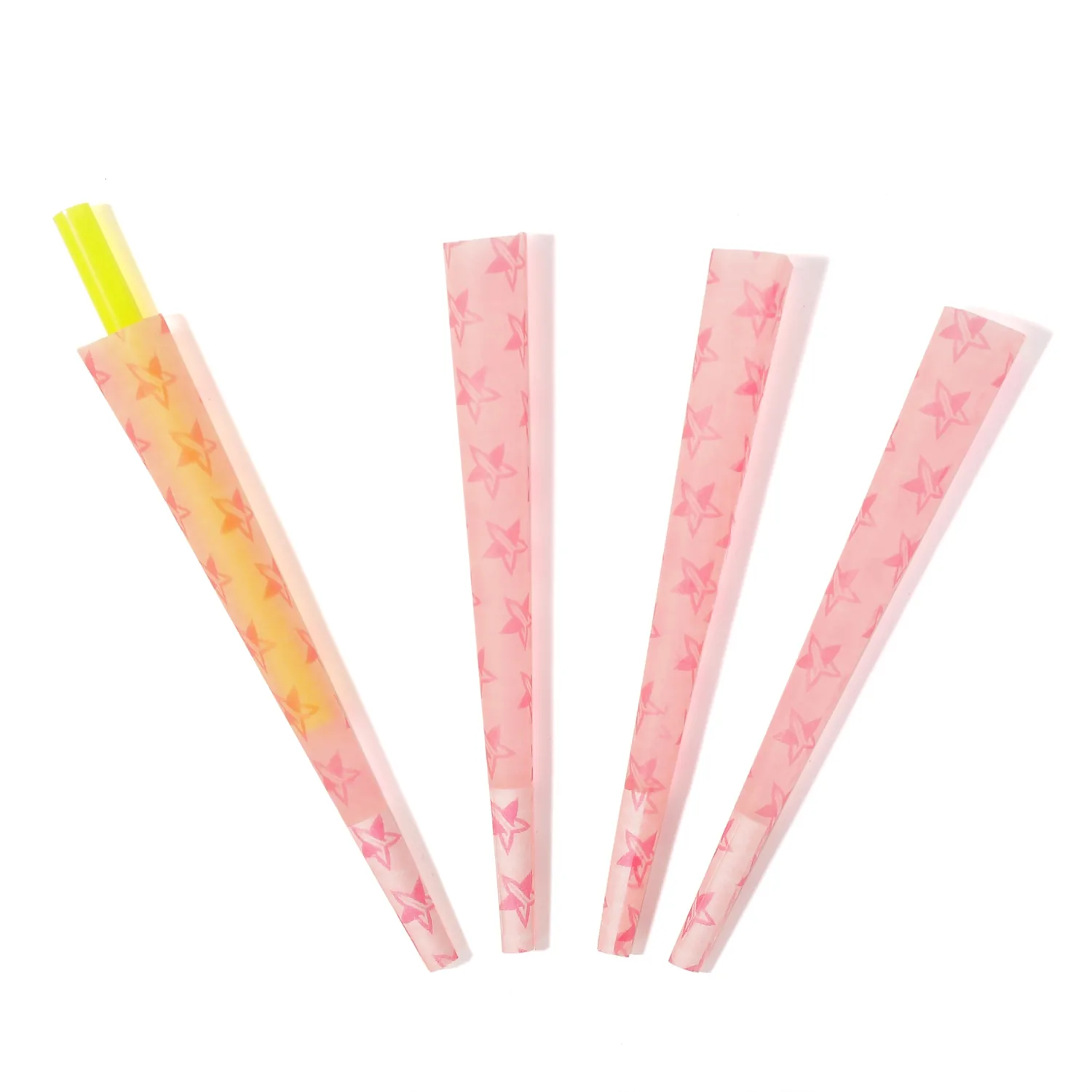
For booklets, have several testers roll the same size with the same fill range. For cones, test the intended 84 mm, 98 mm, 109 mm, or custom geometry and the actual filling method. Record humidity and storage conditions because thin papers and gum can behave differently after transit or exposure.
Use Ace Rolling’s Optionen für vorgefertigte Kegel when the program needs matching bamboo cones. Request a retained approved sample so production lots can be checked against a physical reference rather than a vague description.
| Sample check | Booklet method | Cone method | Pass question |
|---|---|---|---|
| Hand-feel | Fold and roll repeatedly | Inspect wall and seam | Does it feel right for the target user? |
| Reißfestigkeit | Roll with normal tension | Fill at intended speed | Does it survive realistic handling? |
| Gummi | Activate with consistent moisture | Inspect seam after storage | Does the seal hold without a heavy residue line? |
| Abbrand | Same fill, size, and test conditions | Same fill weight and packing density | Is performance repeatable enough for the brief? |
| Paper presence | Blind compare against hemp/rice/pulp | Blind compare matched cones | Does the panel prefer it at the target price? |
| Storage | Recheck after conditioning | Recheck packed samples | Does performance remain within the agreed standard? |
Wesentliche Erkenntnis: Bamboo is good for private label only after the exact booklet or cone beats—or intentionally differs from—matched alternatives in a recorded sample test.
Should You Launch Bamboo Booklets, Cones, or Both?
Format changes the buying proposition. Booklets sell paper choice and rolling ritual; cones sell convenience, fill compatibility, and repeatable geometry.
Most new brands should lead with one hero format, validate sell-through, and add the matching format later. Launching both can work when the audience and channel already support two distinct use occasions.
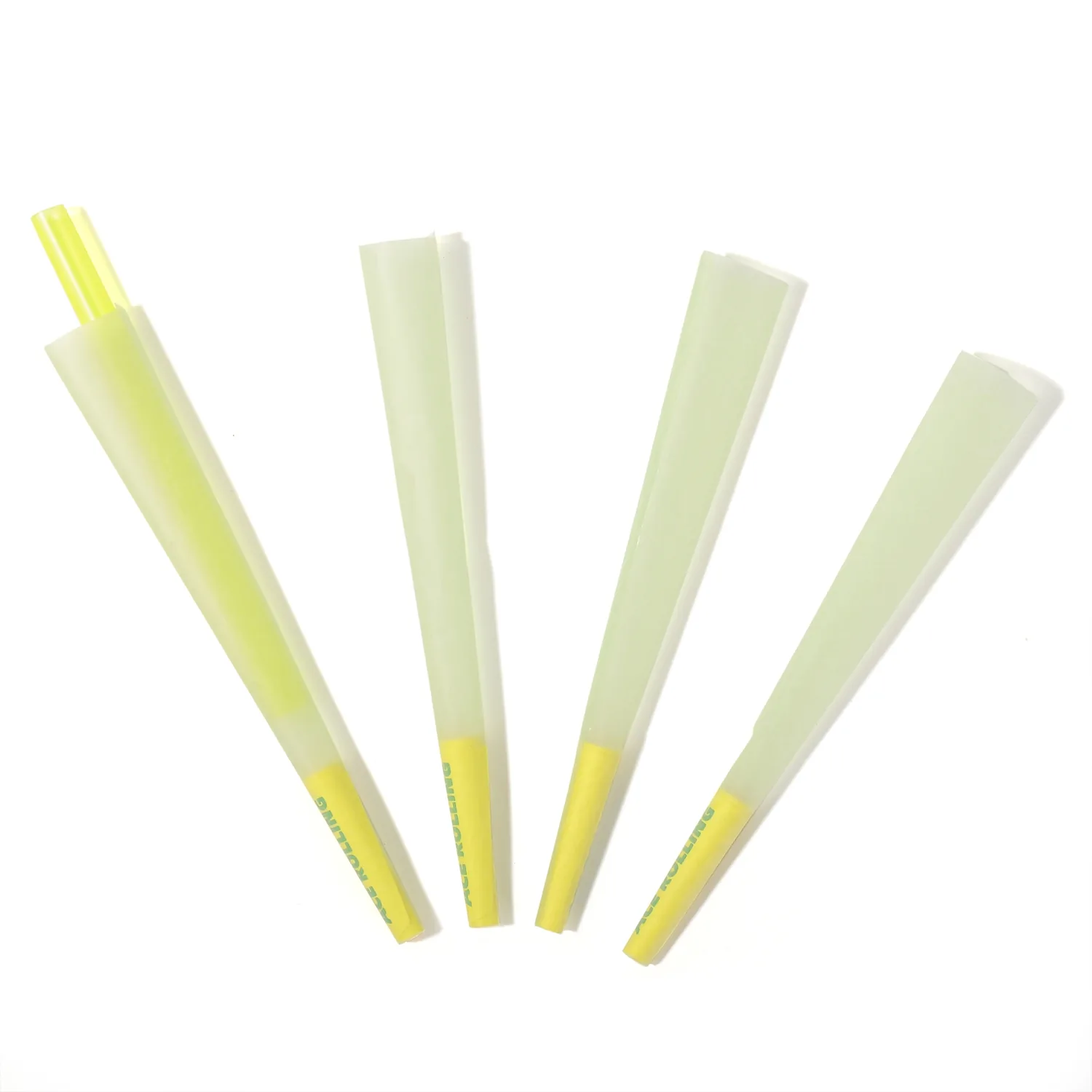
For booklets, lock leaf size, count, gum, tips, cover, display box, and paper route. For cones, lock length, tip dimensions, paper, packing method, bulk or retail pack-out, and filling-machine requirements. Ace Rolling lists bamboo among available paper routes for both product families, subject to the chosen specification.
Review maßgeschneiderte Rollpapiere for booklet programs and the separate cone page for formed products. Matching colors and claims can unite the range, but the two SKUs still require separate functional approvals.
| Launch path | Main advantage | Hauptrisiko | Best fit |
|---|---|---|---|
| Bamboo booklet first | Simpler story and lower assortment complexity | Does not test cone demand | Rolling-paper brands and smoke shops |
| Bamboo cone first | Convenience-led differentiation | Fill fit and tip geometry add variables | Pre-roll and automated-filling buyers |
| Booklet + cone together | Stronger shelf family | More samples, artwork, cash, and inventory | Established distributors with known demand |
| Bamboo hero + pulp value SKU | Clear good/better architecture | Brand story can fragment | Multi-price wholesale catalogs |
| Bamboo hero + hemp alternative | Fiber choice without a value cue | Two natural-positioned SKUs may compete | Specialty retailers with educated buyers |
Wesentliche Erkenntnis: Pick the first format by customer behavior and operational capability; matching bamboo booklets and cones are a range strategy, not a requirement for launch.
Can Bamboo Support a Credible Packaging Story?
Bamboo can give private-label packaging a memorable material anchor, but claim discipline is part of product development. An attractive fiber story becomes a liability when the carton says more than the documents prove.
Use factual language such as “bamboo paper” when the specification supports it. Treat FSC as an available sourcing option for applicable programs—not a default certification for every bamboo SKU.

Do not turn “plant fiber” into “medical,” “healthier,” “non-toxic,” “organic,” “biodegradable,” or “eco-friendly” without current evidence applicable to the exact product and market. Packaging should distinguish verified material facts, optional sourcing documentation, and general brand design.
Ace Rolling operates under an ISO 9001:2015 management framework and can discuss FSC-certified sourcing options where applicable. Use the Qualität und Zertifizierungsseite to frame the document request, then approve final wording against the SKU’s actual records.
| Packaging statement | Use status | Evidence needed | Safer drafting approach |
|---|---|---|---|
| “Made with bamboo paper” | Appropriate if true | Bill of materials/specification | Name the material plainly |
| “FSC-certified” | Bedingt | Applicable chain/scope documents | Confirm the exact SKU before print |
| “Sustainable” or “eco-friendly” | Do not assume | Defined standard and substantiation | Describe verified sourcing facts instead |
| “Organic” | Do not assume | Applicable certification | Omit unless documented and approved |
| “Healthier” or “safer” | Vermeiden | Medical/health proof and legal review | Make no comparative health claim |
| Competitor affiliation | Prohibited unless true | Formal authorization | State your own private-label manufacturer |
Ace Rolling is nicht the manufacturer of RAW, Rizla, or OCB. Do not borrow those trademarks, imply affiliation, or copy their trade dress when briefing bamboo packaging.
Wesentliche Erkenntnis: Bamboo gives packaging a useful material fact; credible private label stops at what the exact SKU and documents can substantiate.
Do MOQ and Wholesale Cost Make Commercial Sense?
A promising sample still has to work in cash flow. Compare identical quote scopes because paper, size, print, leaf count, tip, display packaging, quantity, and freight all move the final number.
Ace Rolling-Kundenprogramme beginnen üblicherweise bei etwa 2.000 Einheiten, depending on the specification. Approved factory-direct reference ranges are about $0,07–$0,30 pro individuelles Heft und $0,04–$0,06 pro vorgefertigtem Kegel, with MOQ applying and final quotation required.
Do not assume bamboo sits at one fixed point inside those ranges. Ask for bamboo, hemp, rice-style, and pulp alternatives on the same RFQ. Then model landed unit cost, samples, artwork, freight, duties, warehousing, breakage allowance, and channel margin. A lower ex-factory unit price can still lose if the MOQ exceeds realistic sell-through.
Ace Rolling’s OEM/ODM team can quote once the material, format, dimensions, print, packaging, quantity, and destination are clear.
| Kommerzieller Input | Ace-Planungsreferenz | What changes it | Käuferaktion |
|---|---|---|---|
| Custom booklet price | About $0.07–$0.30 each | Size, material, leaf count, print, tips, pack, volume | Request a matched bamboo quote |
| Pre-rolled cone price | About $0.04–$0.06 each | Length, paper, tip, print, pack, volume | Quote intended cone geometry |
| MOQ | Often starts around 2,000 units | Material, size, print, filter/tip, packaging | Confirm MOQ per SKU |
| Landed cost | Not the ex-factory price | Freight, duty, destination, cartons | Model delivered unit economics |
| First-order depth | Based on sell-through | Number of SKUs and channel velocity | Start with a focused hero SKU |
Wesentliche Erkenntnis: Bamboo makes commercial sense when a matched factory quote leaves margin after MOQ and landed costs—not when its ex-factory price is viewed in isolation.
How Should You Approve the Supplier and Production Plan?
Material choice is only one part of supplier risk. The private-label partner must convert the chosen paper consistently, control packaging, retain approvals, provide applicable documents, and communicate a realistic schedule.
Ace Rolling manufactures OEM products in Dongguan, China. A typical private-label project is commonly planned around about two months from concept to delivery, while mass production after approvals often takes roughly four to five weeks, depending on complexity.
Run the project through clear gates: written brief, material samples, functional tests, dieline and artwork proof, claim/document review, pre-production approval, mass production, lot inspection, and export packing. Put change control in writing; a late paper, color, tip, or carton change can reset both cost and timing.
Review Ace Rolling’s Dongguan factory overview and request the documents relevant to the destination and SKU. ISO 9001 supports a management framework, but buyers still need product-specific approvals and an agreed QC plan.
| Approval gate | Required output | Bamboo-specific question | Stop condition |
|---|---|---|---|
| RFQ brief | One comparable specification | Is bamboo available for this exact format? | Quotes use different scopes |
| Material sample | Labeled matched papers | How does bamboo compare with hemp/rice/pulp? | Fiber or GSM is unclear |
| Functional test | Recorded roll/fill and burn results | Does the exact construction meet the brief? | Results are inconsistent |
| Artwork and claims | Signed dieline and claim list | Which bamboo/FSC statements are documented? | Unsupported wording remains |
| Vorproduktion | Approved retained sample | Does paper, gum, print, and pack match? | Physical sample is not approved |
| Mass production | QC and delivery plan | What checks protect lot consistency? | Timeline or tolerances are vague |
Wesentliche Erkenntnis: Approve bamboo through samples, documents, retained standards, and production gates; a material preference is not a substitute for supplier qualification.
FAQ
Are bamboo rolling papers good for private-label brands?
Bamboo rolling papers can be good for private-label brands that want a distinctive plant-fiber story and are willing to validate the finished construction. The decision should depend on target customer, paper feel, gum, burn tests, format, packaging, MOQ, landed cost, and claim evidence—not on an assumption that bamboo is universally superior.
Are bamboo rolling papers better than hemp papers?
Bamboo rolling papers are not automatically better than hemp papers. Bamboo can feel more distinctive in a crowded catalog, while hemp has stronger recognition in natural-positioned ranges. Compare matched samples with the same size, thickness target, gum, and pack. Let handling, controlled burn tests, customer positioning, and quoted economics decide.
Can bamboo paper be used for booklets and pre-rolled cones?
Bamboo paper is an available route for both rolling paper booklets and pre-rolled cones in Ace Rolling programs, subject to the exact specification. Booklets require leaf, gum, count, tips, and cover approvals. Cones also require length, tip geometry, seam, pack-out, and filling-method tests before wholesale production.
What is the MOQ for private-label bamboo rolling papers?
Ace Rolling private-label programs commonly start around 2,000 units, but the actual MOQ depends on product format, dimensions, paper, print, filter or tip, packaging, and quantity. Buyers should confirm MOQ per SKU. A bamboo booklet and a custom bamboo cone may have different setup and pack-out requirements.
How much do custom bamboo papers and cones cost wholesale?
Ace Rolling’s approved factory-direct ranges are about $0.07–$0.30 per custom booklet and $0.04–$0.06 per pre-rolled cone, with MOQ applying. Bamboo’s exact position requires a quotation based on size, material, printing, tips, packaging, quantity, and destination. Compare landed cost rather than ex-factory price alone.
Can a bamboo rolling paper pack claim FSC or eco-friendly status?
A bamboo rolling paper pack should claim FSC only when current documents cover the applicable SKU and sourcing route. FSC options are available, but not automatic. Avoid unsupported eco, organic, or health claims. To compare bamboo samples, request a private-label quote with your format, size, packaging, quantity, destination, and document needs.