
What are the standard rolling papers? In retail and wholesale language, “standard” usually means the common booklet size formats—not one magic brand. The formats shoppers and shops stock most often are regular (single wide), 1¼, king size, and king size slim, plus related formats such as paper rolls and pre-rolled cones. Millimeters vary slightly by factory, but the size names are the industry shorthand buyers use when they order.
European size guides commonly list regular near 70 × 36 mm, king slim near 110 × 42 mm, fuller king near 110 × 52 mm, and 1¼ / wide short sheets near 79 × 42 mm. Ace’s own size articles treat 1¼ (~76–78 mm long) as the everyday default and ~110 mm as the long format family. Confirm exact mm on your sample when OEM precision matters.
Standard Size Chart
Use this as a practical map. Brand-to-brand millimeters can shift a few mm.
| Standard name | Typical size (approx.) | Best for |
|---|---|---|
| Regular / single wide | ~70 mm × 36–38 mm | Quick solo rolls; classic short booklet |
| 1¼ (one-and-a-quarter) | ~76–79 mm × ~42–44 mm | Everyday default in many markets |
| 1½ | Same length class as 1¼, wider | More fill room without going king-length |
| King size slim | ~110 mm × ~42–46 mm | Long session, narrower roll |
| King size | ~110 mm × ~52–60 mm | Longer / shared rolls with more width |
| Continuous roll | Cut-to-length; width often ~44 mm | Custom length control |
| Pre-rolled cones | Multiple size names (1¼, king, etc.) | Fill-only convenience |
So “standard rolling papers” are the named size system above—regular, 1¼, king/king slim—plus rolls and cones as standard *formats*.
Regular (Single Wide): The Classic Short Standard
Regular—also called single wide—is the oldest short booklet format in many cigarette-paper traditions. Size guides put it around 70 × 36 mm.
Choose regular when you want:
- A compact solo session
- Less paper waste on a short break
- An easy learning surface for tuck-and-seal
It is “standard” historically, even if many cannabis retailers now lead with 1¼ or king slim on the shelf.
1¼: The Everyday Standard for Many Shops
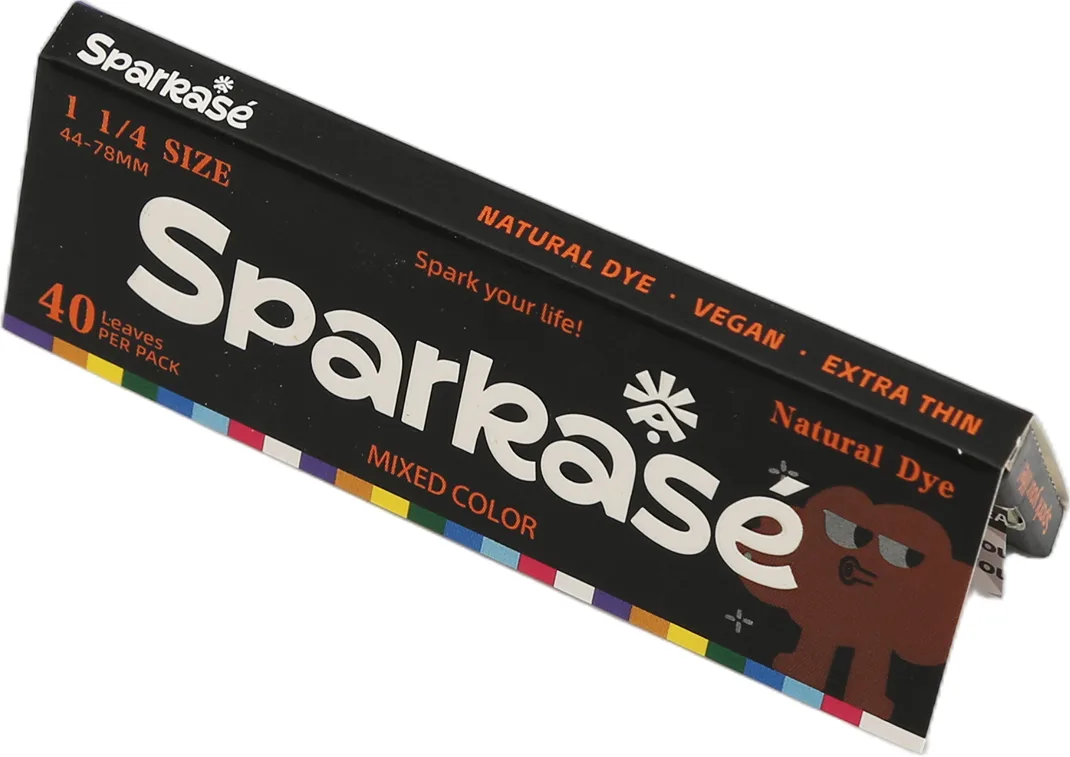
1¼ (often overlapping what some markets call wides) is the short-wide everyday format. Typical listings sit near 76–79 mm long and about 42–44 mm wide. Sparkasé-style packs may print dimensions such as 44–78 mm on the face—useful proof that size, not vibe, defines the SKU.
Why buyers treat 1¼ as standard stock:
- Long enough for a comfortable solo or small share
- Short enough that beginners are not fighting a king sheet
- Familiar next to tips, trays, and 1¼ cones
- Easy private-label hero size for new brands
If you need one booklet size to launch with, 1¼ is the safest default in many North American and Spanish-influenced retail patterns. Regional habits differ—some European markets still lead with slim long papers.
King Size and King Slim: The Long Standards
Both sit in the ~110 mm length family:
- King size slim — long and narrow (about 110 × 42 mm in many EU listings)
- King size — same length class, wider sheet (about 110 × 52 mm or broader depending on brand)
Choose long standards when you want longer sessions or shared passes. Slim stays elegant and easier to keep even; full king width holds more fill but needs careful packing to avoid canoeing.
Ace Rolling custom booklet programs commonly include 1¼ and king lines—confirm the exact cut on your quotation and samples.
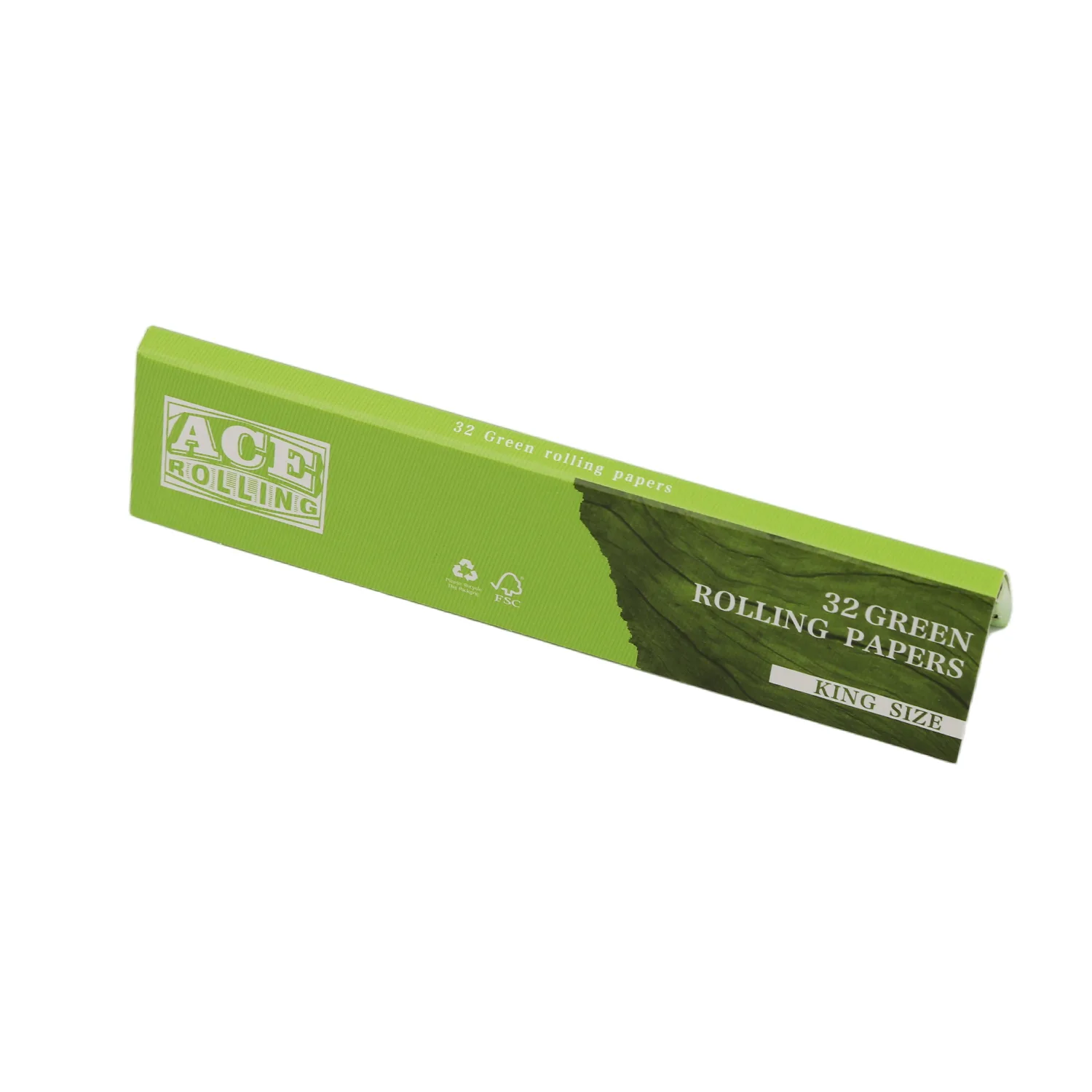
Other Standard Formats: Rolls, Cones, and Tips Kits
Rolling paper rolls
Rolls (often about 4 m of paper with a tear edge) let smokers cut custom length. Width is commonly around 44 mm. They are a standard *format* for people who do not want fixed booklet lengths.
Pre-rolled cones
Cones are standard retail SKUs in sizes that mirror booklet language—1¼, king, and larger novelty sizes. They include a tip and skip hand-rolling shape work. Natural/unbleached cone lines are common; treat cone size names the same way you treat booklet sizes when ordering wholesale.
Slim + tips kits
Many markets sell king slim booklets bundled with tips. That is packaging convenience, not a different sheet length—the paper is still the slim long standard.
Standard Size vs “Standard Material”
Do not confuse size standards with material standards:
| Question | What “standard” usually means |
|---|---|
| What size is standard? | Regular, 1¼, king / king slim, rolls, cones |
| What material is standard? | Often wood pulp historically; hemp/rice/bamboo are premium natural lanes |
| What thickness is standard? | Varies by SKU—ask GSM; Ace markets ultra-thin options including 10gsm messaging |
A king slim hemp paper and a regular bleached pulp paper are both “standard sizes” in different rows of the chart—they are not the same product brief.
How to Choose the Right Standard Size
- Session length — short solo → regular; everyday → 1¼; long share → king / king slim
- Fill room — need more width at short length → 1½; need long + narrow → king slim
- Skill — beginners usually learn faster on 1¼ than on full king width
- Market habit — stock what your region already buys (slim-heavy vs 1¼-heavy)
- Format — booklets for rollers; cones for fill-only; rolls for custom length
For private label, Ace Rolling programs commonly start around 2,000 units, with sample kits so you can compare size and material before bulk. Concept-to-delivery is often planned around about two months.
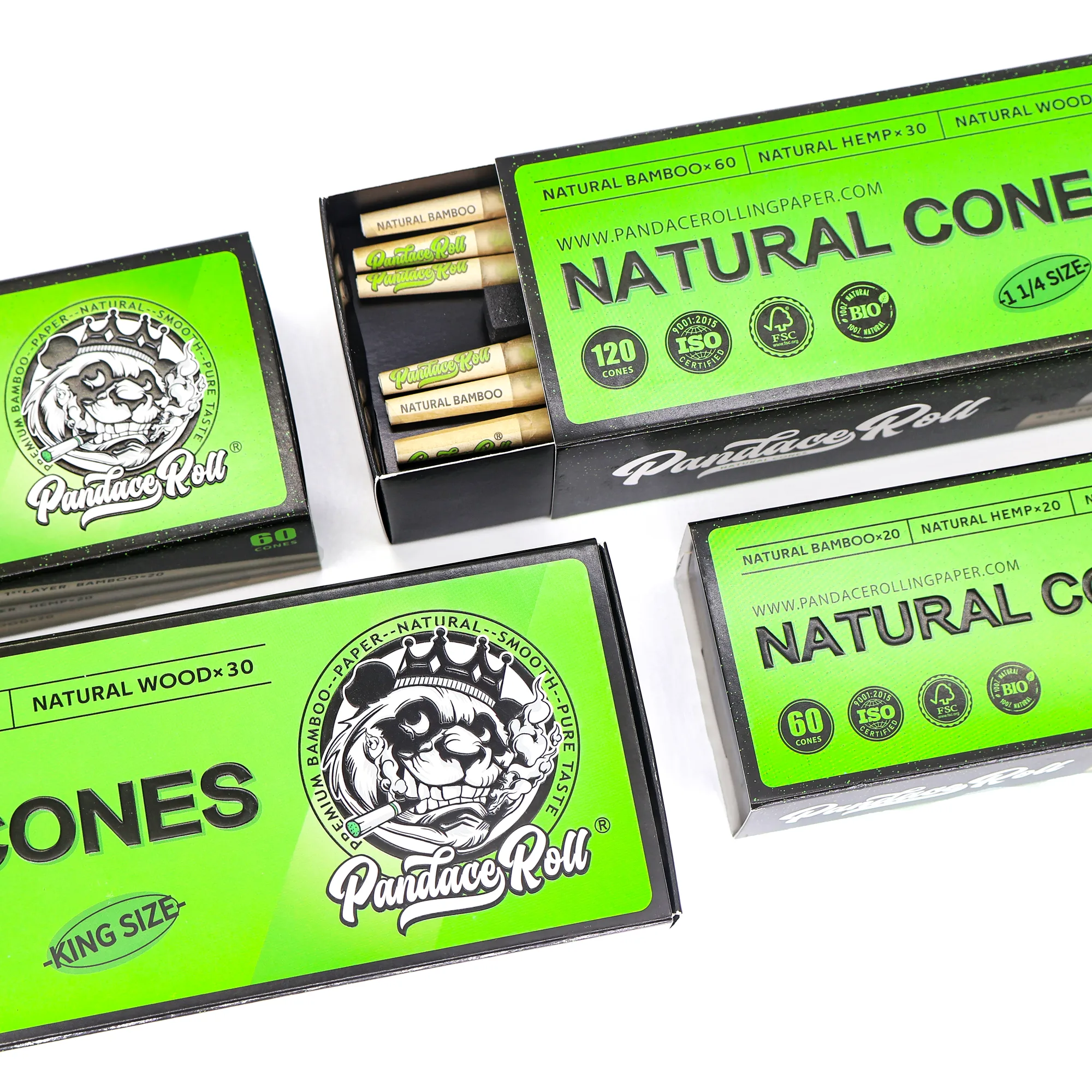
For Brands: Spec Standard Sizes Cleanly
When you RFQ a factory, write size as a system—not as “normal papers”:
| Spec line | Example |
|---|---|
| Size name | Regular / 1¼ / King slim / King |
| Target mm | e.g. 78 × 44 mm or 110 × 44 mm (confirm on sample) |
| Leaves per booklet | 32 / 40 / 50 (program-dependent) |
| Tips | None / tips card / tips kit |
| Format | Booklet / cone / bobbin for converters |
| Material | Hemp / bamboo / wood pulp / etc. |
That keeps “standard rolling papers” from becoming a vague email that produces the wrong cut.
Bottom Line
The standard rolling papers are the common size formats: regular (single wide), 1¼, king size slim, and king size, with rolls and pre-rolled cones as related standard formats. Pick by session length and fill room, then confirm millimeters on samples. Ace Rolling can OEM common booklet and cone sizes in hemp, bamboo, and wood-pulp directions for private-label programs.
FAQ
What are the standard rolling papers?
Standard rolling papers usually means the common size formats: regular/single wide (~70×36 mm), 1¼ (~76–79×42–44 mm), king slim (~110×42 mm), and king size (~110×52–60 mm), plus rolls and cones. The name describes cut size, not automatically the fiber or bleach process. Confirm exact millimeters on the SKU or OEM sample you order.
Is 1¼ or king size more standard?
Both are standard—just for different sessions. 1¼ is the everyday short-wide default in many shops; king and king slim are the long-format standards for longer or shared rolls. Regional habits differ, so stock what your customers already ask for. New brands often launch 1¼ first, then add a king slim hero.
What is the difference between king size and king slim?
Both are long papers around 110 mm. King slim is narrower (often near 42–46 mm wide); full king size is wider for more fill room. Slim is easier to keep elegant and even; wider king holds more material but needs careful packing. Choose based on fill volume, not on the word “king” alone.
Can Ace Rolling make standard sizes for private label?
Yes. Ace Rolling manufactures OEM and private-label rolling papers and cones in common formats such as 1¼ and king-size programs, with materials including hemp, bamboo, and wood pulp. Custom runs commonly start around 2,000 units, with samples before bulk. Share size name, target mm, leaf count, and destination market for a quote.