
Request a kit against a written B2B brief, not a vague “free samples” message. It should help you choose fiber, GSM, size, gum, tips, cone geometry, print, and packaging. Then approve and retain a production-intent sample before bulk manufacturing begins.
What Should a B2B Sample Kit Prove?
A professional sample kit is a decision system. Its job is to reduce specification risk before a buyer commits to tooling, artwork, MOQ, freight, and inventory.
Unlike a consumer assortment, a B2B kit needs labels, comparable constructions, and a path from exploratory samples to the exact product intended for mass production. It should separate what is merely illustrative from what can become the contractual approval standard.
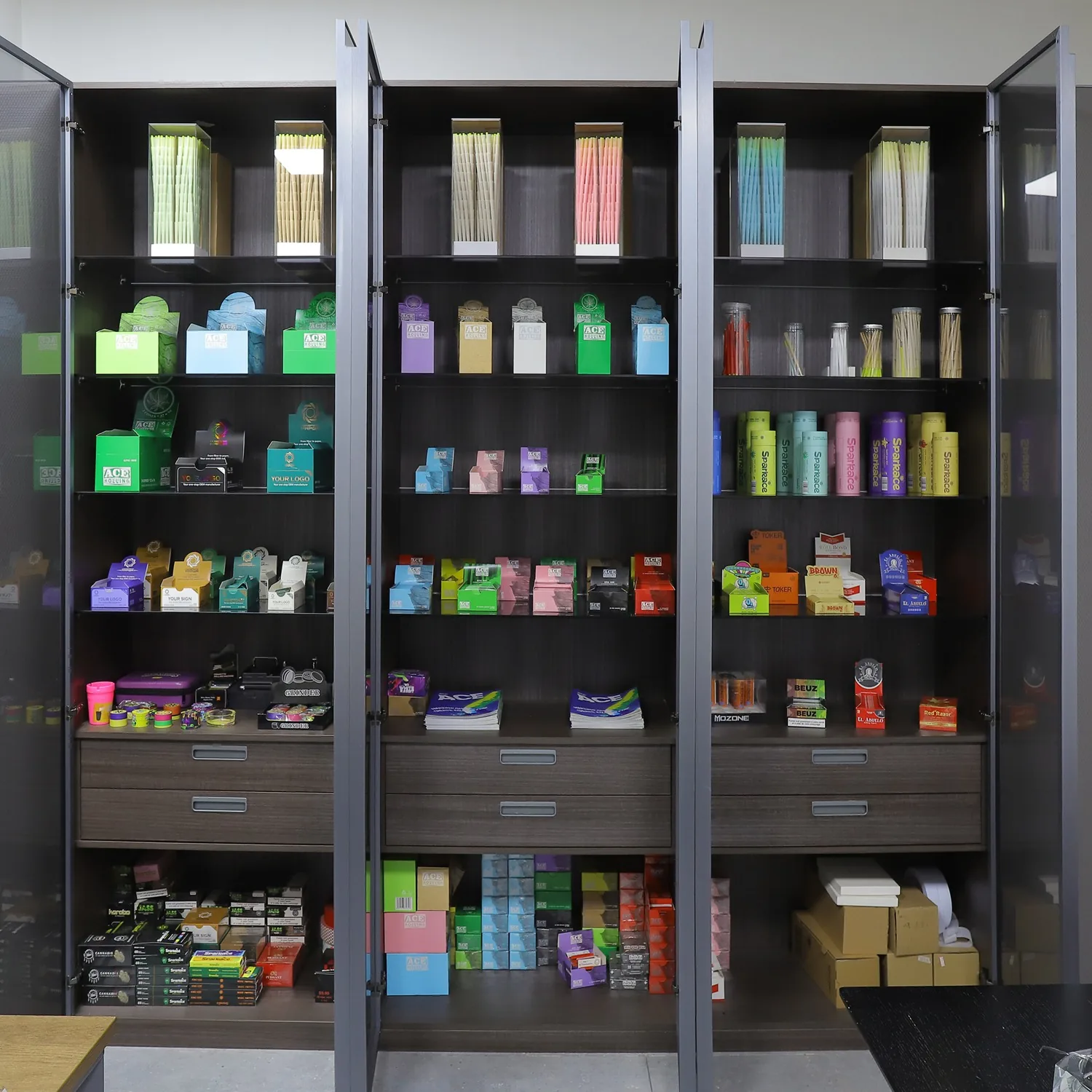
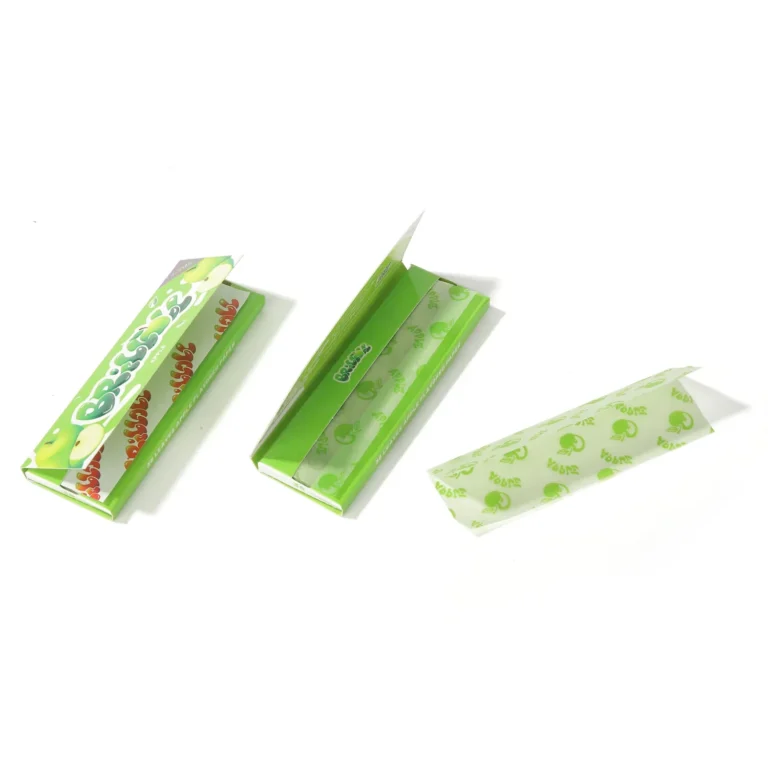
Ask Ace Rolling to mark every item with material, GSM or weight target where applicable, dimensions, gum, tip, print status, and sample purpose. A stock example can prove feel or pack structure, but it cannot prove your final artwork or bulk lot. Begin with the custom rolling paper program and state the commercial decision each sample must support.
| Kit layer | Main question | Useful contents | Not yet approved |
|---|---|---|---|
| Orientation | What is possible? | Broad stock assortment | Final construction |
| Comparison | Which route wins? | Matched fibers and sizes | Final print |
| Production intent | Is this the product? | Exact paper, gum, print, pack | Bulk lot |
| Lot approval | Did mass match? | Samples pulled from production | Future reorders |
Key Takeaway: A B2B kit should move a buyer from broad comparison to one traceable, production-intent approval.
Which Fiber Swatches and Paper Specs Belong Inside?
The paper section should let buyers compare materials without guessing which variable changed. Include relevant hemp, rice-style, bamboo, flax, or wood-pulp directions that the OEM can discuss for the target format.
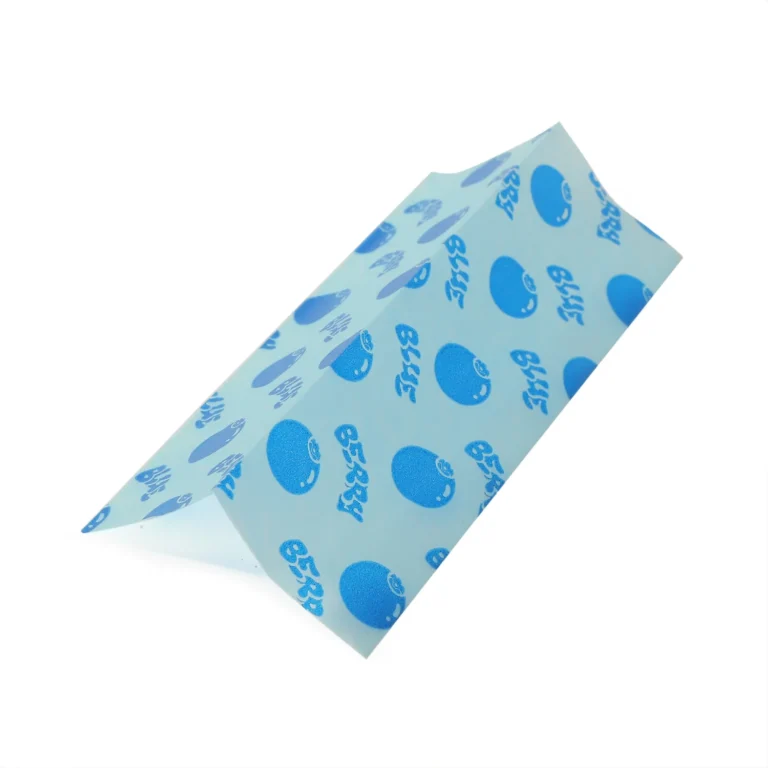
Each swatch needs an identifier and, where available, fiber description, GSM target, color, gum status, print status, and intended format. Fiber and GSM belong together because two papers at the same weight can feel and perform differently.

Ask for enough material to handle, fold, tear, gum, and run a controlled use test. Do not choose solely from a photograph or sustainability adjective. FSC-certified sourcing can be discussed as an option where applicable, but it is not a default feature of every paper. Use Ace Rolling’s quality and certifications information to request documents for the exact shortlisted construction.
| Swatch label field | Why needed | Example decision | Approval evidence |
|---|---|---|---|
| Fiber/blend | Defines material route | Hemp versus rice-style | Supplier specification |
| GSM target | Defines area weight | 14 versus 18 GSM | Method and tolerance |
| Gum | Affects sealing | Gum Arabic option | Finished strip test |
| Color/opacity | Affects shelf and print | White versus unbleached | Conditioned sample |
| Document status | Controls claims | FSC option if applicable | SKU-level records |
Key Takeaway: Require labeled fiber-and-GSM swatches so a winning feel can be converted into a reproducible purchasing specification.
Which Sizes, Tips, and Cone Fills Should Be Included?
Dimensions change usability and machinery fit, so the kit must represent the sizes the buyer may actually sell or fill. A king-size booklet does not validate a 1¼ booklet, and an empty cone alone does not validate a filling workflow.
For booklets, compare leaf dimensions, count, gum width, interleaving, optional tips, and closed pack size. For cones, include relevant lengths, tip dimensions, seam construction, empty examples, and filled test units prepared to a stated fill weight and density.
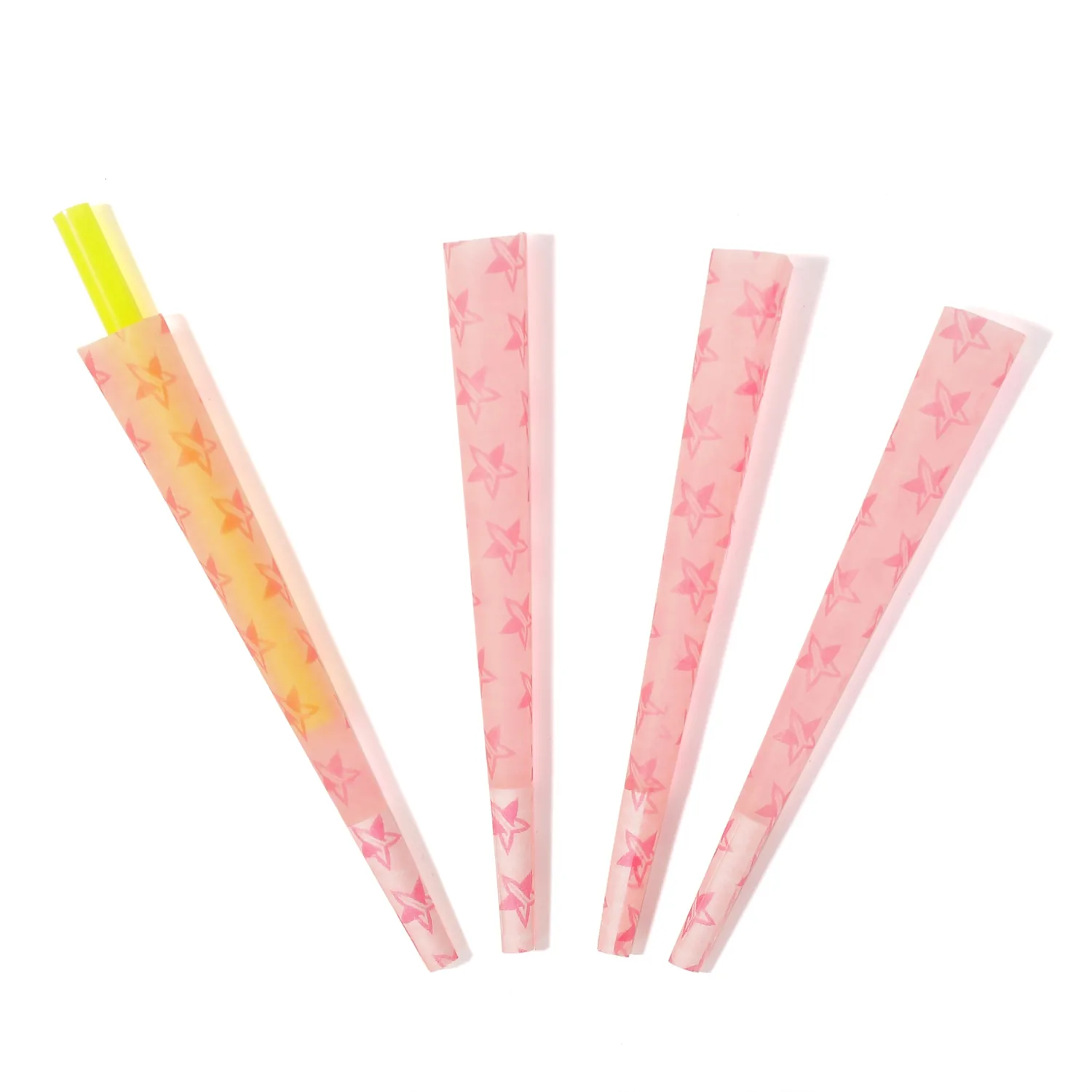
If automated filling is planned, provide machine model, target throughput, fill characteristics, and packing method. Test collapse, nesting, loading, fill consistency, and finished pack-out. Ace Rolling’s pre-rolled cone options can be narrowed around the buyer’s intended length and tip geometry.
| Format sample | Variables to label | Test | Pass condition |
|---|---|---|---|
| Booklet leaf | Size, count, gum, GSM | Roll and seal | Repeatable handling |
| Tip sheet | Stock and dimensions | Fold or roll | Desired rigidity |
| Empty cone | Length, tip, seam | Inspect and load | Fits process |
| Filled cone | Fill weight and density | Handling/use test | Repeatable result |
| Retail pack | Unit count and structure | Transit simulation | No crushing or movement |
Key Takeaway: Sample the real selling and filling format; flat paper alone cannot approve cone geometry, tips, or pack-out.
How Should Print Proofs and Packaging Samples Work?
Artwork approval has layers. A digital mockup checks layout, a printed color proof checks reproduction, and a physical pack checks dielines, folds, finishes, closure, readability, and shelf presence.
The kit should distinguish paper printing from booklet-cover and display-carton printing. Ink appearance changes with substrate color, opacity, coating, and finish. A screen image cannot prove how small legal copy, spot colors, embossing, foil, or spot UV will survive conversion.

Use versioned filenames, identify Pantone or other color targets where needed, and sign both the artwork proof and assembled physical sample. Keep required warnings, country-of-origin wording, and claims subject to destination-market review. Ace Rolling’s custom packaging route can coordinate paper, booklet, and display presentation under one controlled brief.
| Proof type | Proves | Does not prove | Approval record |
|---|---|---|---|
| Digital mockup | Layout and content | Physical color | Versioned PDF |
| Printed flat proof | Color and detail | Folding durability | Signed sheet |
| White dummy | Structure and dimensions | Final print | Dimension check |
| Assembled sample | Full look and function | Entire mass lot | Signed retain |
| Display carton | Shelf pack-out | Freight performance alone | Pack test |
Key Takeaway: Approve digital, printed, and assembled outputs separately because each catches a different class of bulk-order error.
What Testing Record Should Travel With the Kit?
Samples become useful procurement evidence only when tests are repeatable. Create a scorecard before opening the kit so brand preference does not erase operational results.
Record handling, tear resistance, gum activation, seal hold, print rub, paper presence, relights, side-burn tendency, ash, cone seam, fill fit, and packaging strength as relevant. Use the same fill, weight, grind, humidity, conditioning time, and testers for comparisons.
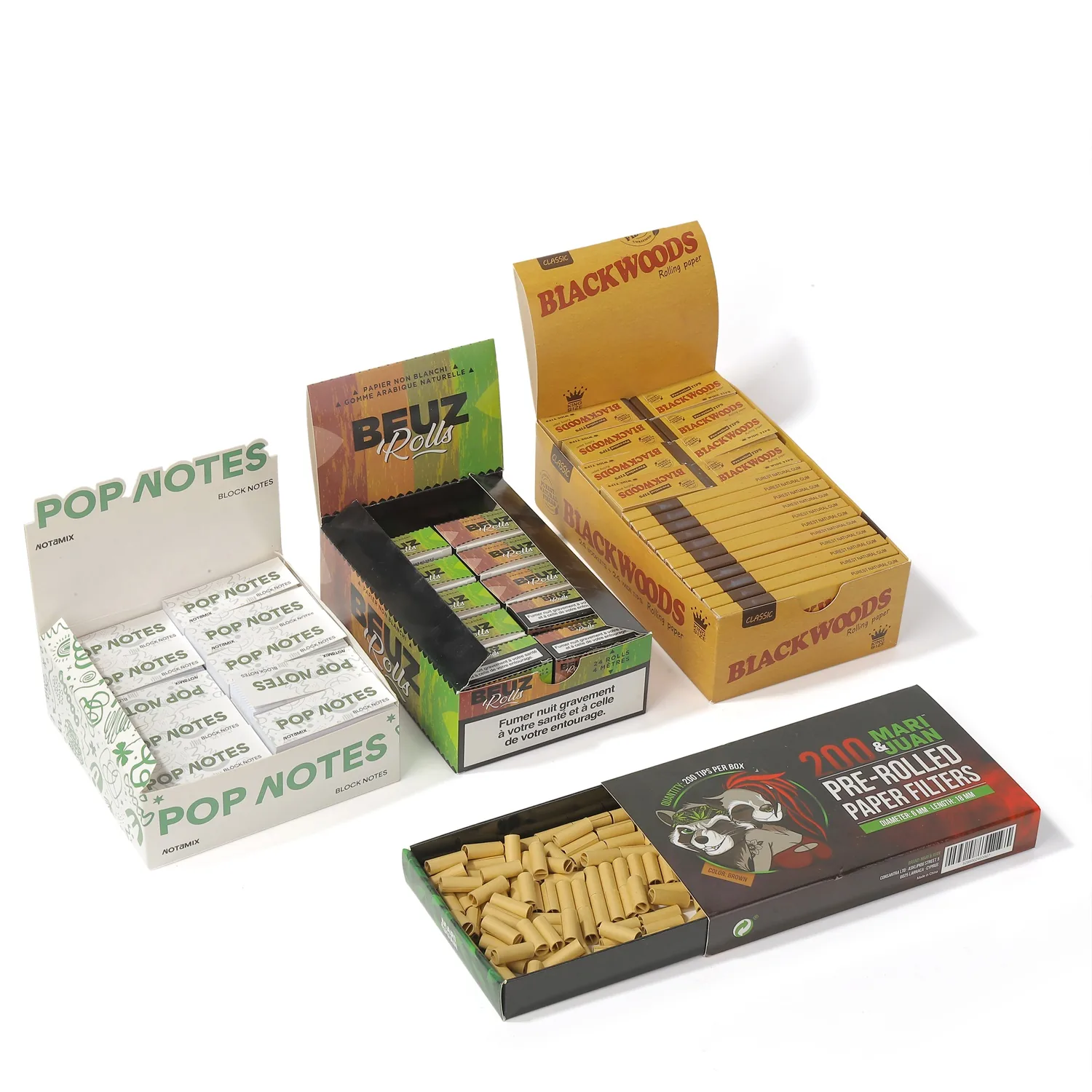
Photograph failures, note sample IDs, and avoid absolute performance language based on a few trials. A passing score means “meets this buyer’s recorded brief under these conditions,” not a medical, safety, or universal burn claim. Ask Ace Rolling’s OEM team to answer exceptions in writing before the next sample round.
| Test area | Controlled input | Observation | Decision |
|---|---|---|---|
| Handling | Same users and humidity | Tears, folds, grip | Pass/revise |
| Gum | Same activation method | Seal and residue | Pass/revise |
| Burn | Same fill and density | Relights, side burn | Compare only |
| Same rub and light review | Smear, readability | Pass/revise | |
| Packaging | Same load and drop plan | Crush or opening | Pass/revise |
Key Takeaway: A labeled scorecard turns subjective samples into a clear approve, revise, or reject decision.
How Does the Retain-Sample Process Protect Bulk Orders?
The most valuable item in the sample process is the signed production-intent retain. It freezes what “approved” means when mass production starts and when the brand reorders months later.
Create at least two matched retains: one held by the buyer and one held by the factory. Mark product code, material, GSM, gum, size, print version, packaging version, approval date, approver, and sample lot. Seal and store them in appropriate conditions.

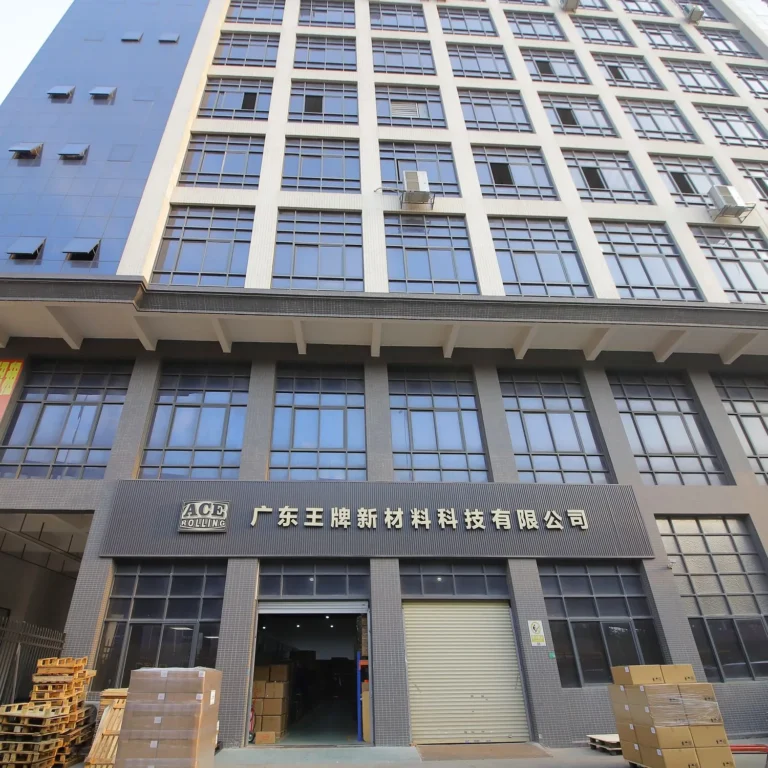
The QC plan should say which bulk attributes are measured numerically and which are compared visually or functionally to the retain. Any paper, gum, ink, tip, dieline, or supplier change should trigger written notice and, when material, reapproval. Review the process with Ace Rolling’s Dongguan factory.
| Retain control | Buyer copy | Factory copy | Reapproval trigger |
|---|---|---|---|
| Finished booklet/cone | Yes | Yes | Material or construction change |
| Printed pack | Yes | Yes | Artwork, color, or finish change |
| Signed specification | Yes | Yes | Revision to any controlled field |
| Test scorecard | Yes | Yes | Changed test method |
| Lot identifier | Yes | Yes | New production investigation |
Key Takeaway: Keep matched, signed retains with change-control rules so the approved sample remains enforceable during production and reorder review.
What Timeline and Request Brief Gets the Right Kit?
A fast sample request begins with a precise commercial brief: buyer type, market, formats, sizes, fibers, GSM range, gum, print scope, packaging, quantity forecast, destination, required documents, testing priorities, and launch date.
Ace Rolling samples before mass production. A private-label project is commonly planned around about two months from concept to delivery, while mass production after approvals often takes roughly four to five weeks, depending on complexity. Sample and revision time sits before that production release.

Do not bury the critical date or ask only for “anything you have.” Request an orientation kit, then identify the expected production-intent round and approval owners. Confirm current kit charges, shipping, lead time, and customs details rather than assuming every international sample is free. Start through Ace Rolling’s contact page.
| Request field | Example | Why it matters | Owner |
|---|---|---|---|
| Target SKU | 1¼ booklet or 109 mm cone | Focuses samples | Buyer |
| Material range | Two fibers, two GSMs | Enables comparison | Buyer/OEM |
| Artwork stage | Draft or final | Selects proof type | Brand |
| Bulk forecast | Often from ~2,000 units | Tests commercial fit | Procurement |
| Destination/date | Country and launch | Frames freight and schedule | Logistics |
Key Takeaway: Send a complete brief and build revision time ahead of the four-to-five-week post-approval mass-production window.
FAQ
What should a custom rolling paper sample kit contain?
It should contain labeled fiber and GSM swatches, relevant booklet sizes, gum and tip options, empty and filled cone examples, print proofs, packaging structures, specification sheets, and a test scorecard. The final stage should add matched, signed production-intent retains held by both buyer and factory before mass production begins.
Is a stock sample kit enough to approve a bulk order?
No. A stock kit is useful for orientation, material feel, size comparison, and package ideas, but it may use standard constructions and placeholder artwork. Bulk approval requires a production-intent sample made to the exact paper, gum, dimensions, print, tips, and packaging specification, supported by a signed retain and change control.
Why should a sample kit include filled cones?
Empty cones reveal geometry, seam, paper, and tip details, but filled cones test the intended workflow and finished handling. Label fill weight, density, material condition, and filling method. If machinery is involved, run samples on the planned equipment. This exposes collapse, loading, nesting, pack-out, and consistency issues before volume production.
How long does custom rolling paper production take after samples?
Ace Rolling commonly plans about two months from concept to delivery for private-label work, depending on scope. After all materials, artwork, samples, and packaging are approved, mass production often takes roughly four to five weeks. Revisions, shipping, destination customs, and complex finishes can change the total schedule, so confirm dates in writing.
Should the buyer and factory both keep approved samples?
Yes. Both parties should hold matched, signed retains labeled with product code, paper, GSM, gum, dimensions, print version, packaging version, approval date, and lot reference. The quality plan can then compare bulk output to the same physical standard. Material changes or meaningful deviations should trigger notice, investigation, and reapproval.
How do I request a sample kit from Ace Rolling?
Prepare your buyer type, destination, formats, sizes, fiber and GSM shortlist, gum, tips, cone fill needs, artwork stage, packaging, forecast quantity, documents, test priorities, and deadline. Then contact Ace Rolling to confirm kit contents, charges, shipping, current availability, production-intent sampling, MOQ, and approval schedule.