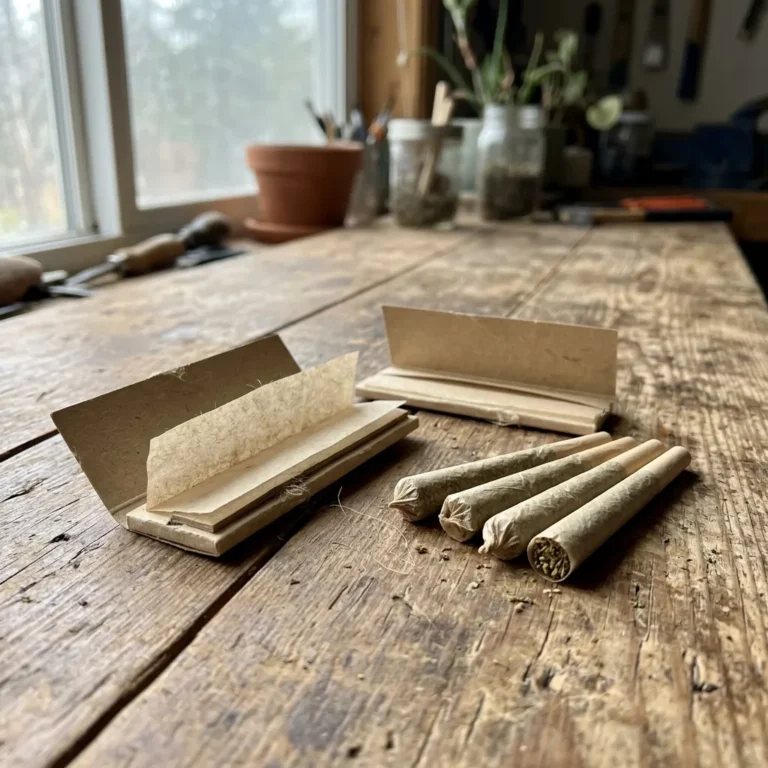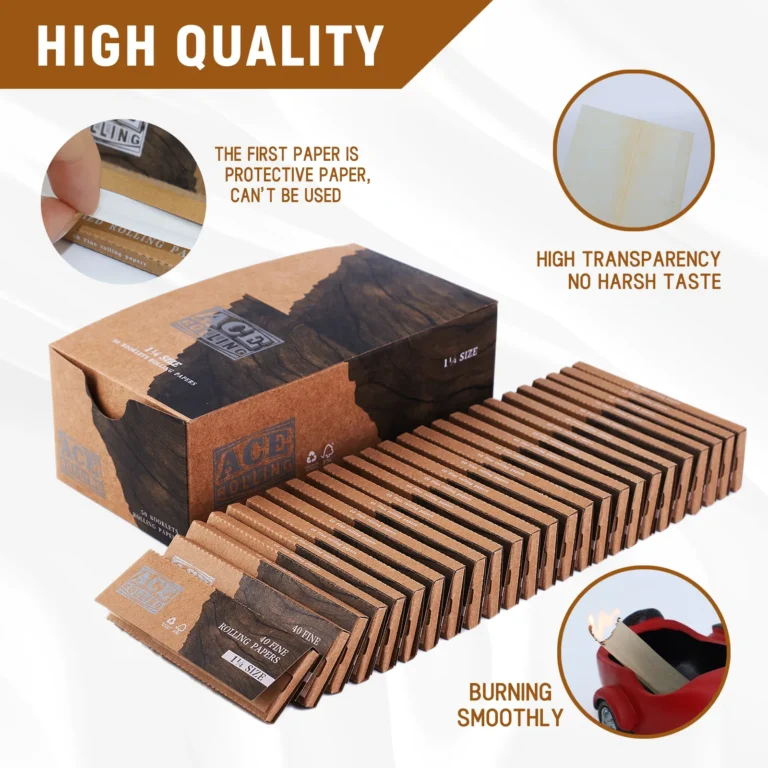

Was ist der Unterschied zwischen Reis, Hanf und Holzpulpe? In Rollpapieren sind sie drei Pflanzenfaserbasen die sich ändern Geschmack, Abbrandgeschwindigkeit, Asche und wie leicht sich das Blatt rollen lässt. Verbraucherleitfäden (einschließlich Monkey Kings Reis-/Hanf-/Holzzellstoff-Analyse) ordnen sie normalerweise so ein: Reis für den langsamsten, saubersten Geschmack; Hanf für ökologische Balance und Griff; Holzschliff für klassische anfängerfreundliche Blätter, die oft schneller abbrennen.
Ace Rolling stellt her Hanf, Bambus und Holzzellstoff Anleitungen für Signature- und OEM-Programme (mit Ultradünn-Optionen und Gummi arabicum bei zutreffenden SKUs). Reis-Blätter sind eine gängige Marktkategorie – fragen Sie die Fabrik, welche Proben verfügbar sind, wenn Reis Ihr Hauptkriterium ist. Der Fasername allein ersetzt keinen Brenntest.
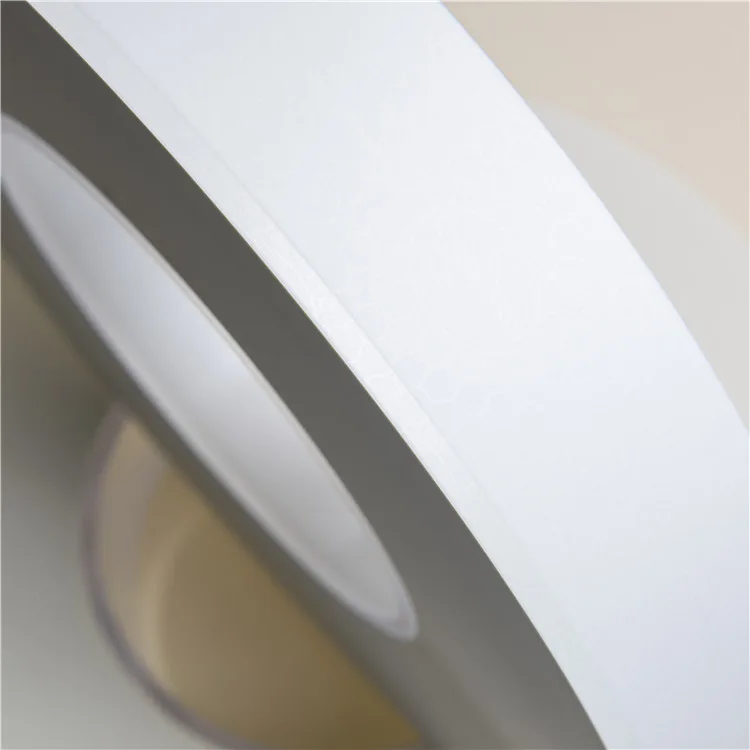
Direkter Vergleich nebeneinander
| Faktor | Reisartig | Hanf | Holzschliff |
|---|---|---|---|
| Typisches Gefühl | Ultradünn, glatt, durchscheinend | Mittel, leicht strukturiert | Oft dicker / steifer |
| Geschmack | Geringster Papiergeschmack / fast neutral | Milde erdige oder leicht süßliche Note | Am “papierigsten”, besonders dickere gebleichte |
| Abbrand (typisch) | Langsamste / längste Sitzung | Mittel-langsam, gleichmäßig | Schneller als Reis oder Hanf |
| Asche | Sehr niedrig bei dünner Ausführung | Niedrig–mäßig | Höher / sichtbarer |
| Rollenfähigkeit | Am schwierigsten für Anfänger | Einfachste tägliche Balance | Sehr nachsichtig für Lernende |
| Öko-Geschichte | Narrativ über landwirtschaftliche Nebenprodukte | Starke regenerative / natürliche Geschichte | Gebleicht vs. ungebleicht verändert die Geschichte |
| Am besten für | Geschmackspuristen, geübte Roller | Alltägliche Naturkäufer, Eigenmarke | Anfänger, Wert-/klassische weiße Packungen |
Behandeln Sie Brenn-/Geschmackszeilen als typische Branchenmuster. GSM, Wasserzeichen, Mischung und Packungsdichte können einen SKU in der Tabelle nach oben oder unten verschieben.
Reis-Rollpapiere
Reispapiere werden aus verarbeiteten Reisfasern oder reisbezogenen Stoffen hergestellt (einige historische Bezeichnungen “Reispapier” meinten ultradünne, raffinierte Blätter – nicht immer tatsächlich aus Reis). Moderne Naturmarken bedeuten normalerweise eine Reisfaser- oder Reisstil ultradünnes Blatt.
Stärken
- Minimale Geschmacksbeeinträchtigung – Kraut oder Tabak führen
- Langsamer Abbrand und geringe Asche bei wirklich dünnem Blatt
- Saubere, Kenner-Positionierung
Kompromisse
- Rutschig, reißanfällig für neue Roller
- Humidity can make handling worse
- Demands careful tuck-and-seal technique
Choose rice when least paper taste is the KPI—not when you need a forgiving first-roll SKU.
Hemp Rolling Papers
Hemp papers use industrial hemp plant fiber. Monkey King–style explainers call out textured grip, a burn between rice and wood pulp, and a mild natural taste some buyers like.
Stärken
- Easier to roll than ultra-thin rice
- Strong “natural / organic / eco” merchandising
- Durable enough for daily use and private-label volume
Kompromisse
- Not fully tasteless—mild plant note vs rice neutrality
- Unbleached tan color is a brand choice some markets love, some do not
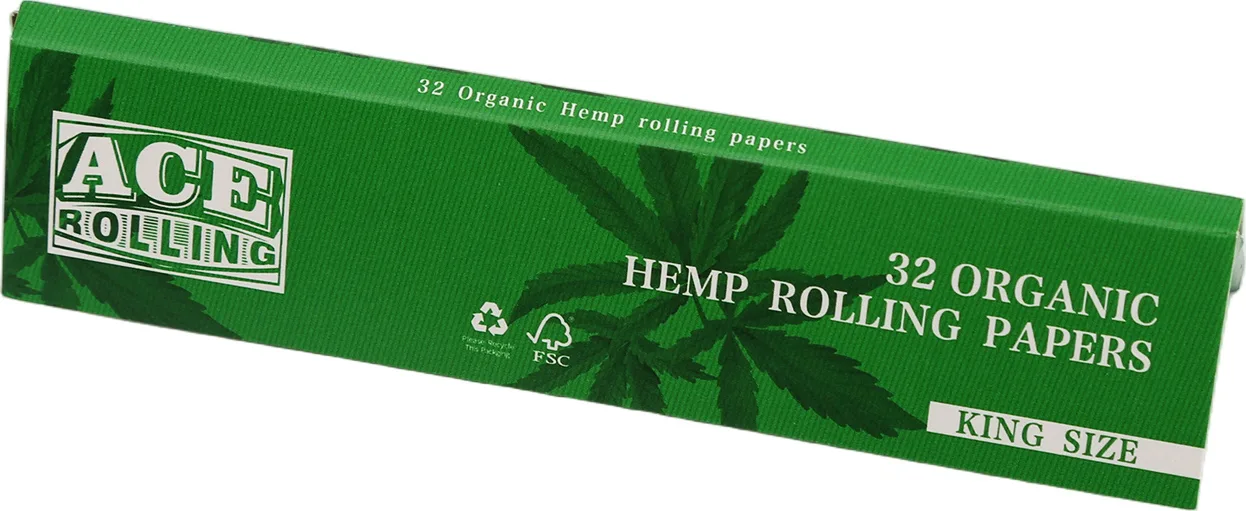
Ace Signature and OEM hemp lines (including organic hemp messaging on applicable packs) sit in this lane. Sample GSM before you print a “slow burn hemp” claim.
Zellstoff-Rollpapiere
Wood pulp is the classic base—tree fiber formed into a sturdier leaf. It appears as bright bleached white oder unbleached brown/tan.
Stärken
- Firm grip; beginner-friendly
- Widely available and familiar on shelves
- Stays lit more readily for quick sessions
Kompromisse
- Faster burn than rice or many hemp SKUs
- More paper taste and ash when the sheet is heavy
- Bleaching/process story matters for “natural” shoppers
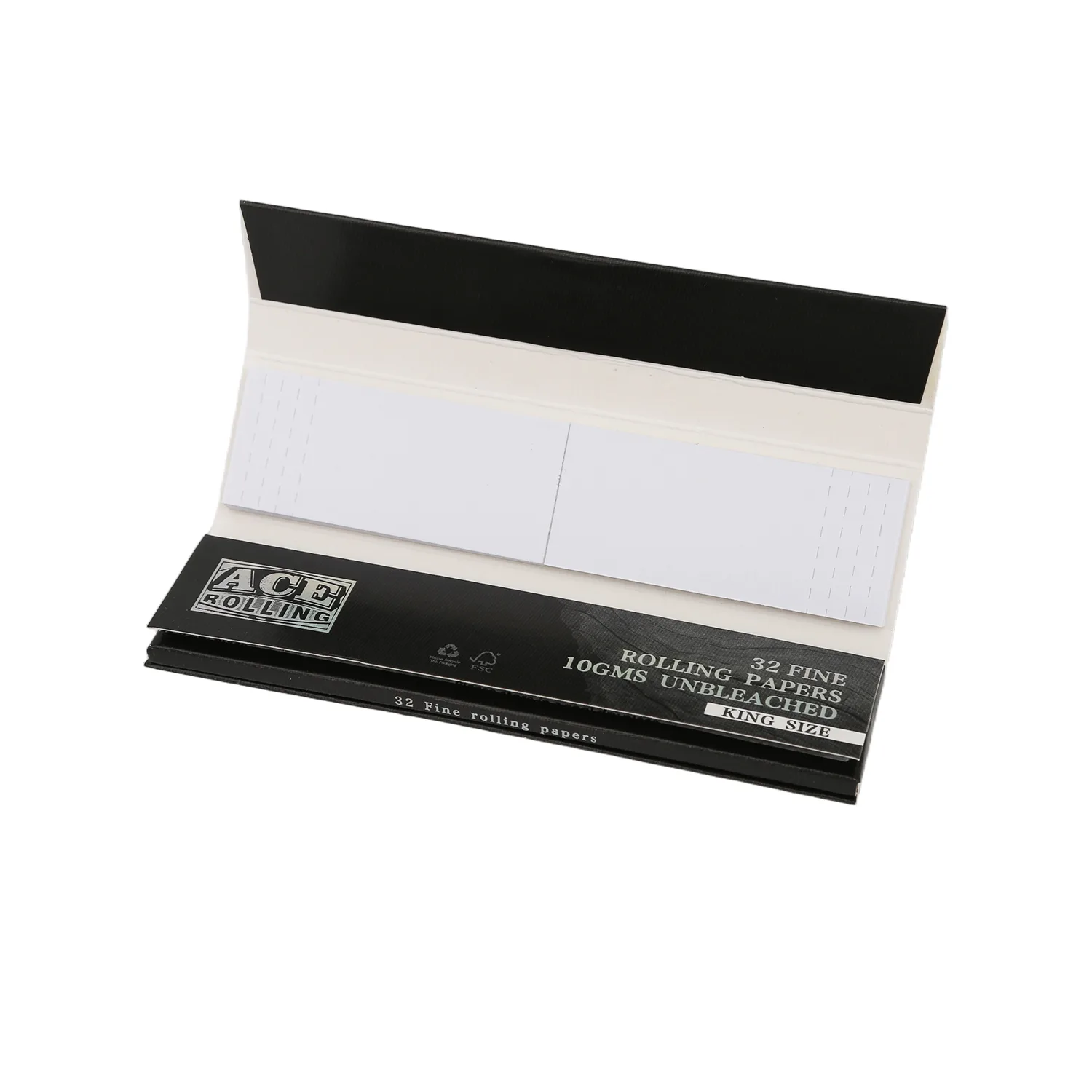
Unbleached pulp is not the same as hemp—read the fiber line on the pack.
Thickness (GSM) Matters as Much as Fiber Name
Fiber answers “what plant.” GSM answers how much paper mass burns. Consumer guides often place rice-style in a lower GSM band, hemp in a mid band, and many wood pulp SKUs thicker—but factories can cut thin pulp or thicker hemp. Ace OEM pages highlight ultra-thin / slow-burn positioning (including low-teens gsm and flagship 10gsm-class messaging where applicable).

Rule of thumb: compare fiber + GSM + gum on samples, not fiber logos alone.
Bleached, Unbleached, and Blends
Wood pulp and hemp both appear bleached-white or natural-tan. Color is a process choice, not proof of fiber. A bright white pack can still be pulp; a brown pack can be hemp, unbleached pulp, or a blend. Rice-style leaves are often pale and translucent even without a “kraft” look.
Some retail SKUs blend fibers for strength or cost. If the pack only says “natural” without naming rice, hemp, or wood pulp, treat the fiber as unverified until you get a factory spec sheet.
Which Should You Choose?
| You want… | Start with… |
|---|---|
| Purest flavor / least paper taste | Reisartig ultradünn |
| Easy roll + natural story | Hanf |
| Beginner forgiveness / classic pack | Holzschliff (oft dicker) |
| Private-label first hero | Hemp or wood pulp, then add rice-style |
| Passende Konen | Same fiber story as the booklet |
Shops often stock one hemp hero und one thin rice-style so customers can self-select. Distributors launching a brand should avoid three fibers × three sizes on day one—prove sell-through on a single material first.
For OEM, Ace Rolling commonly starts custom booklet programs around 2.000 Einheiten, with sample kits before artwork lock. Arabic gum seals apply on applicable programs across materials. Private-label calendars often run about zwei Monate concept to delivery, with mass production about vier bis fünf Wochen nach Genehmigungen.
Unterm Strich
Rice, hemp, and wood pulp differ mainly in thinness, taste interference, burn speed, and rollability: rice for clean slow sessions, hemp for balanced natural daily use, wood pulp for classic easy rolling. Ace Rolling builds hemp, bamboo, and wood pulp programs and can discuss rice-style options for sampling—lock the fiber and GSM on retained samples before you brand bulk.
FAQ
What’s the difference between rice, hemp, and wood pulp rolling papers?
Rice-style papers are usually ultra-thin with the least taste and a slow burn but harder rolling. Hemp is grippier, mildly earthy, and balanced for everyday use. Wood pulp is the classic, often thicker sheet that is easiest for beginners and typically burns faster. GSM and blends can shift any of those traits.
Which burns slower—rice or hemp?
Rice-style ultra-thin papers usually burn slowest when well made; hemp typically sits in a medium-slow band, still slower than many thick wood pulp sheets. Pack density and watermark matter as much as the fiber name. Confirm with a side-by-side burn test on your fill.
Which material is best for beginners?
Wood pulp or mid-weight hemp is usually easier than ultra-thin rice because of grip and tear resistance. Rice rewards skill and dry hands. Ace Rolling often recommends sampling a forgiving hemp or pulp SKU first for new private-label launches, then adding a thin rice-style line later.
Does Ace Rolling make all three materials?
Ace Rolling’s core OEM and Signature manufacturing directions include hemp, bamboo, and wood pulp, with ultra-thin options and Arabic gum on applicable programs. Rice-style availability should be confirmed on a sample request. Custom booklet MOQs commonly start around 2,000 units after approvals.