
Qual é a diferença entre arroz, cânhamo e polpa de madeira? Em papéis de enrolar, eles são três bases de fibra vegetal que mudam sabor, velocidade de queima, cinza e facilidade de enrolar a folha. Guias do consumidor (incluindo a análise de arroz/cânhamo/polpa de madeira do Monkey King) geralmente os classificam assim: arroz para o sabor mais lento e mais limpo; cânhamo para equilíbrio ecológico e aderência; polpa de madeira para folhas clássicas amigáveis a iniciantes que geralmente queimam mais rápido.
A Ace Rolling fabrica cânhamo, bambu e polpa de madeira instruções para programas Signature e OEM (com opções ultrafinas e goma arábica nos SKUs aplicáveis). Folhas estilo arroz são uma categoria comum de mercado—pergunte à fábrica o que está disponível para amostrar se o arroz é sua principal referência. O nome da fibra sozinho não substitui um teste de queima.
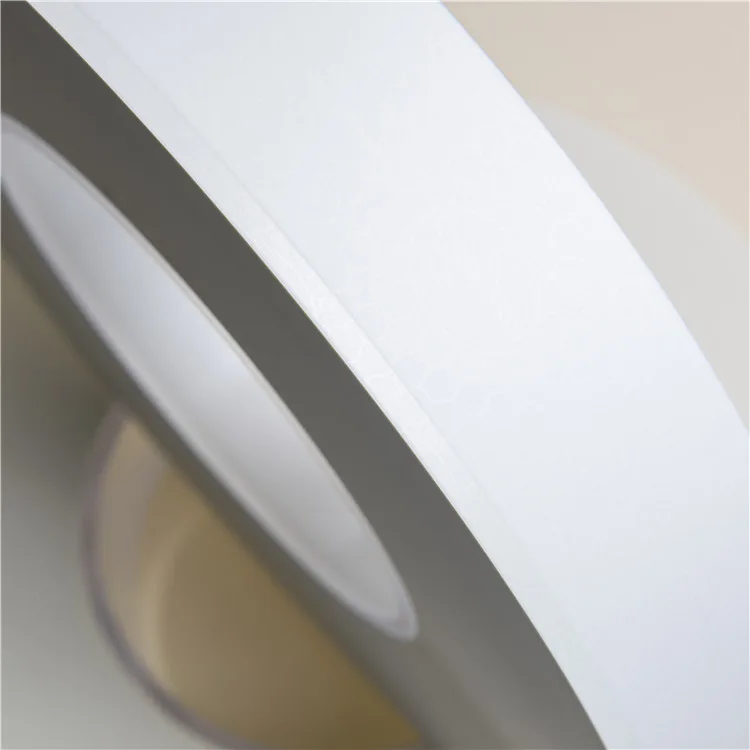
Comparação Lado a Lado
| Fator | Estilo arroz | Cânhamo | Polpa de madeira |
|---|---|---|---|
| Sensação típica | Ultrafino, liso, translúcido | Médio, levemente texturizado | Frequentemente mais espesso / mais rígido |
| Sabor | Menor sabor de papel / quase neutro | Nota terrosa suave ou levemente adocicada | Mais “papel”, especialmente os mais espessos e branqueados |
| Queima (típica) | Sessão mais lenta / mais longa | Médio-lento, uniforme | Mais rápido que arroz ou cânhamo |
| Cinza | Muito baixo quando fino | Baixo–moderado | Maior / mais visível |
| Capacidade de Enrolar | Mais difícil para iniciantes | Equilíbrio diário mais fácil | Muito tolerante para iniciantes |
| História eco | Narrativa de subproduto agrícola | História regenerativa/natural forte | Branqueado versus não branqueado muda a história |
| Melhor para | Puristas de sabor, enroladores habilidosos | Compradores naturais do dia a dia, marca própria | Iniciantes, valor/pacotes brancos clássicos |
Trate as linhas de queima/sabor como padrões típicos da indústria. GSM, marca d'água, blend e densidade da embalagem podem mover um SKU para cima ou para baixo na tabela.
Papéis de Arroz para Fumar
Os papéis estilo arroz são feitos de fibra de arroz processada ou matéria-prima relacionada ao arroz (alguns rótulos históricos de “papel de arroz” significavam folhas refinadas ultrafinas — nem sempre literalmente arroz). As marcas naturais modernas geralmente significam uma folha ultrafina de fibra de arroz ou estilo arroz.
Pontos Fortes
- Interferência mínima de sabor—erva ou tabaco predominam
- Queima lenta e baixa cinza quando a folha é realmente fina
- Posicionamento clean e conhecedor
Compensações
- Escorregadio, propenso a rasgar para novos enroladores
- Humidity can make handling worse
- Demands careful tuck-and-seal technique
Choose rice when least paper taste is the KPI—not when you need a forgiving first-roll SKU.
Hemp Rolling Papers
Hemp papers use industrial hemp plant fiber. Monkey King–style explainers call out textured grip, a burn between rice and wood pulp, and a mild natural taste some buyers like.
Pontos Fortes
- Easier to roll than ultra-thin rice
- Strong “natural / organic / eco” merchandising
- Durable enough for daily use and private-label volume
Compensações
- Not fully tasteless—mild plant note vs rice neutrality
- Unbleached tan color is a brand choice some markets love, some do not
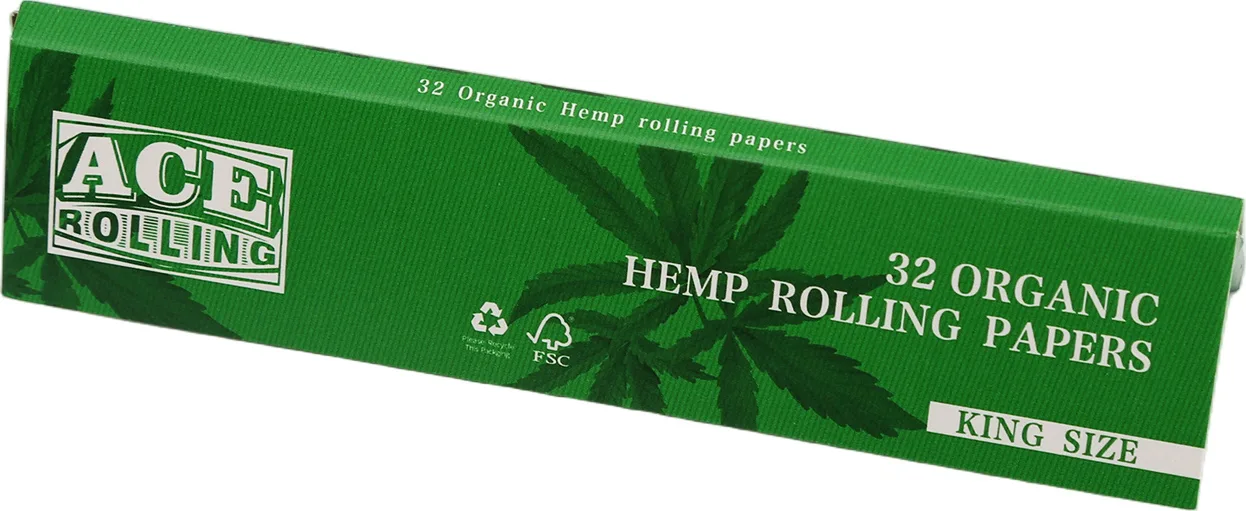
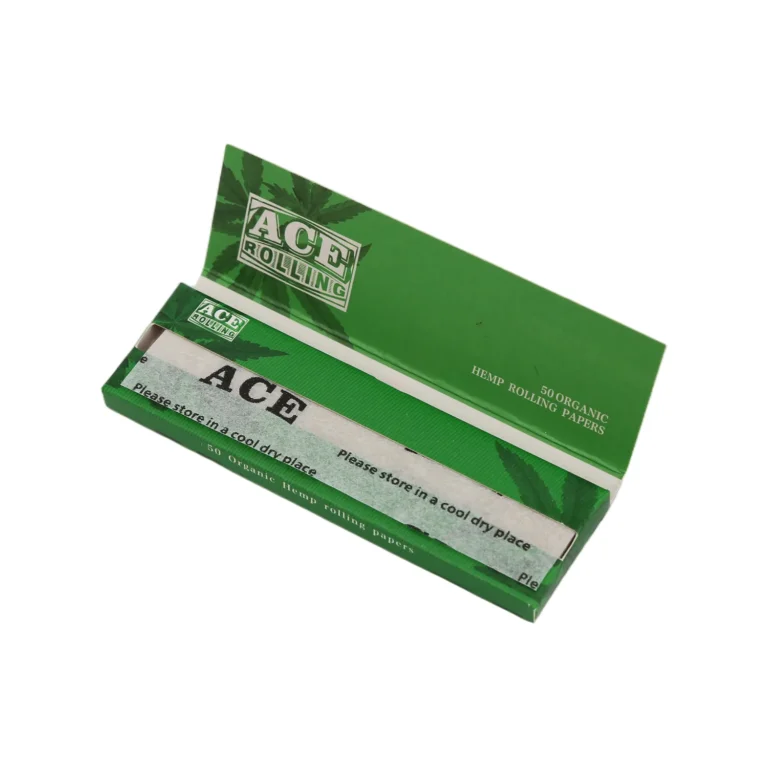
Ace Signature and OEM hemp lines (including organic hemp messaging on applicable packs) sit in this lane. Sample GSM before you print a “slow burn hemp” claim.
Papéis para enrolar de polpa de madeira
Wood pulp is the classic base—tree fiber formed into a sturdier leaf. It appears as bright bleached white or unbleached brown/tan.
Pontos Fortes
- Firm grip; beginner-friendly
- Widely available and familiar on shelves
- Stays lit more readily for quick sessions
Compensações
- Faster burn than rice or many hemp SKUs
- More paper taste and ash when the sheet is heavy
- Bleaching/process story matters for “natural” shoppers
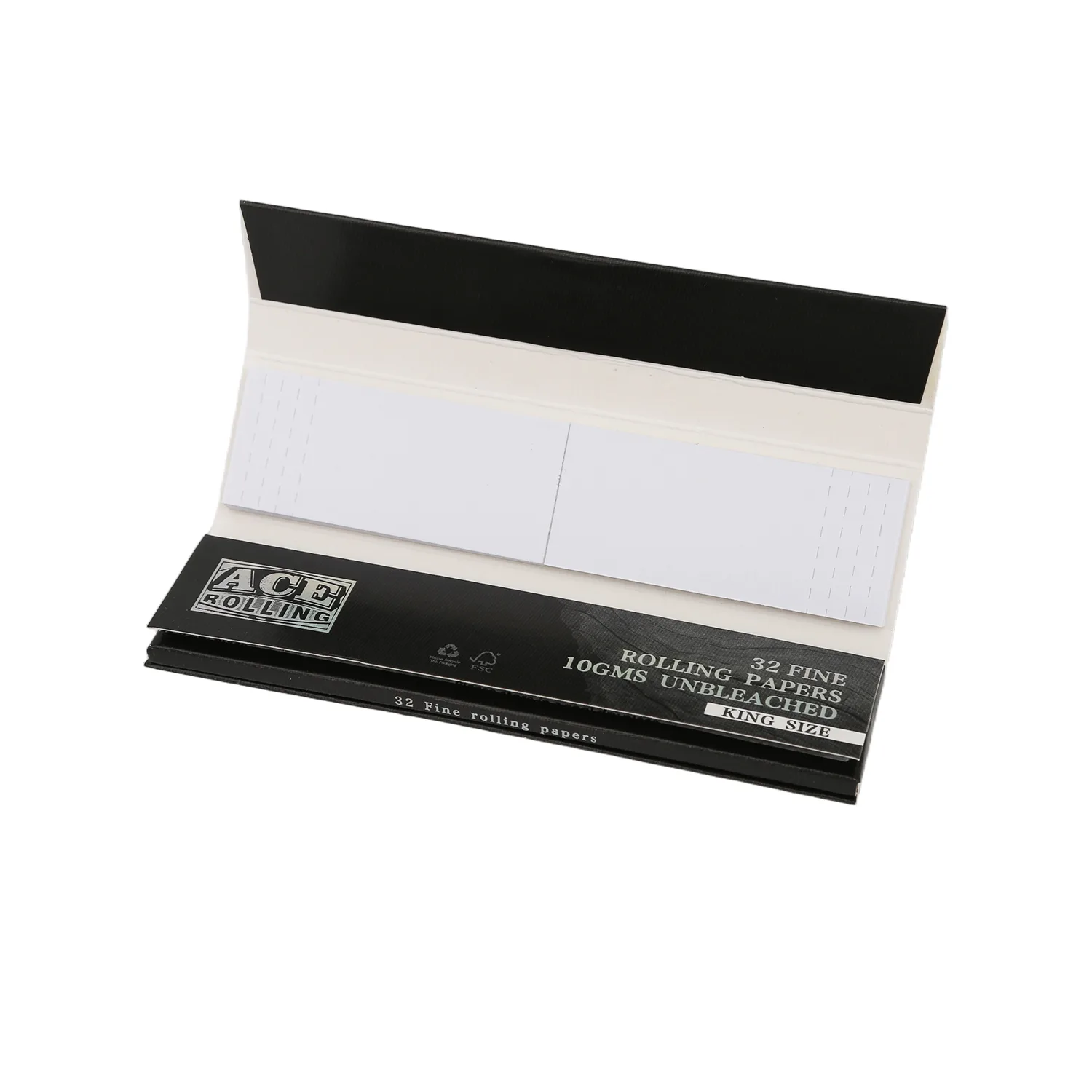
Unbleached pulp is not the same as hemp—read the fiber line on the pack.
Thickness (GSM) Matters as Much as Fiber Name
Fiber answers “what plant.” g/m² answers how much paper mass burns. Consumer guides often place rice-style in a lower GSM band, hemp in a mid band, and many wood pulp SKUs thicker—but factories can cut thin pulp or thicker hemp. Ace OEM pages highlight ultra-thin / slow-burn positioning (including low-teens gsm and flagship classe 10gsm messaging where applicable).

Rule of thumb: compare fiber + GSM + gum on samples, not fiber logos alone.
Bleached, Unbleached, and Blends
Wood pulp and hemp both appear bleached-white or natural-tan. Color is a process choice, not proof of fiber. A bright white pack can still be pulp; a brown pack can be hemp, unbleached pulp, or a blend. Rice-style leaves are often pale and translucent even without a “kraft” look.
Some retail SKUs blend fibers for strength or cost. If the pack only says “natural” without naming rice, hemp, or wood pulp, treat the fiber as unverified until you get a factory spec sheet.
Which Should You Choose?
| You want… | Start with… |
|---|---|
| Purest flavor / least paper taste | Estilo arroz ultra fino |
| Easy roll + natural story | Cânhamo |
| Beginner forgiveness / classic pack | Polpa de madeira (geralmente mais grossa) |
| Private-label first hero | Hemp or wood pulp, then add rice-style |
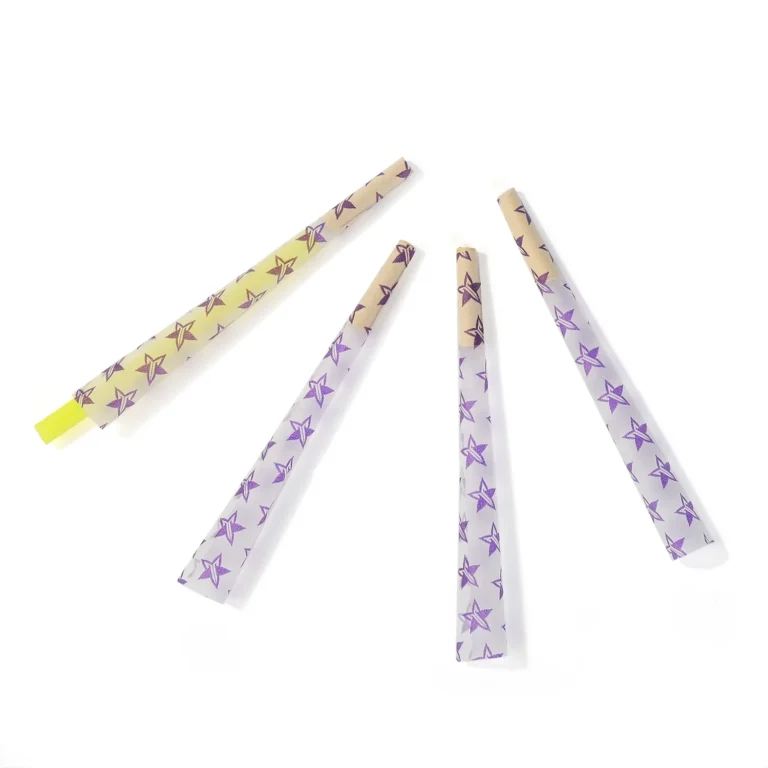
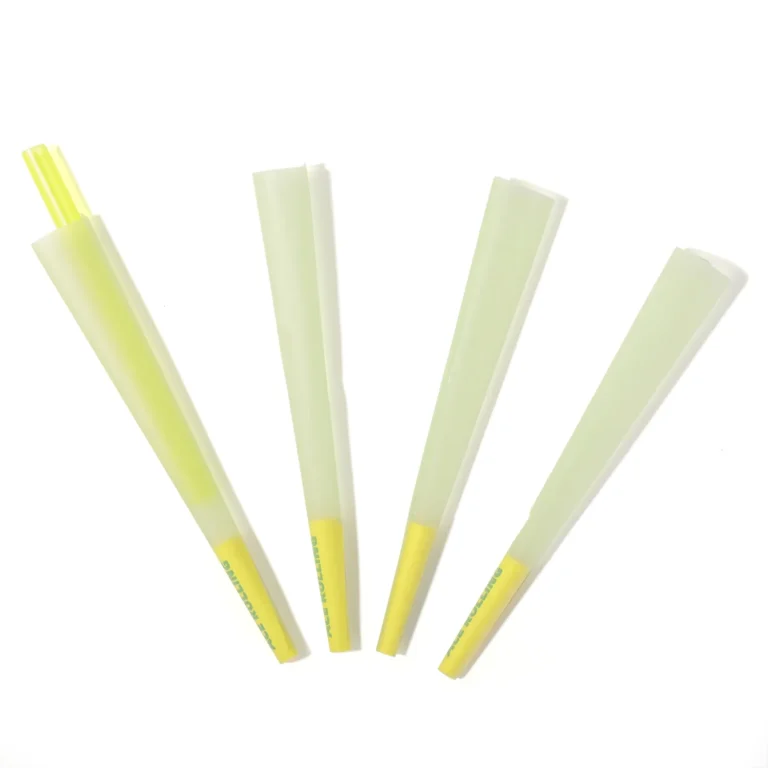
| Matching cones | Same fiber story as the booklet |
Shops often stock one hemp hero e one thin rice-style so customers can self-select. Distributors launching a brand should avoid three fibers × three sizes on day one—prove sell-through on a single material first.
For OEM, Ace Rolling commonly starts custom booklet programs around 2.000 unidades, with sample kits before artwork lock. Arabic gum seals apply on applicable programs across materials. Private-label calendars often run about dois meses concept to delivery, with mass production about quatro a cinco semanas após aprovações.
Conclusão
Rice, hemp, and wood pulp differ mainly in thinness, taste interference, burn speed, and rollability: rice for clean slow sessions, hemp for balanced natural daily use, wood pulp for classic easy rolling. Ace Rolling builds hemp, bamboo, and wood pulp programs and can discuss rice-style options for sampling—lock the fiber and GSM on retained samples before you brand bulk.
Perguntas Frequentes
What’s the difference between rice, hemp, and wood pulp rolling papers?
Rice-style papers are usually ultra-thin with the least taste and a slow burn but harder rolling. Hemp is grippier, mildly earthy, and balanced for everyday use. Wood pulp is the classic, often thicker sheet that is easiest for beginners and typically burns faster. GSM and blends can shift any of those traits.
Which burns slower—rice or hemp?
Rice-style ultra-thin papers usually burn slowest when well made; hemp typically sits in a medium-slow band, still slower than many thick wood pulp sheets. Pack density and watermark matter as much as the fiber name. Confirm with a side-by-side burn test on your fill.
Which material is best for beginners?
Wood pulp or mid-weight hemp is usually easier than ultra-thin rice because of grip and tear resistance. Rice rewards skill and dry hands. Ace Rolling often recommends sampling a forgiving hemp or pulp SKU first for new private-label launches, then adding a thin rice-style line later.
Does Ace Rolling make all three materials?
Ace Rolling’s core OEM and Signature manufacturing directions include hemp, bamboo, and wood pulp, with ultra-thin options and Arabic gum on applicable programs. Rice-style availability should be confirmed on a sample request. Custom booklet MOQs commonly start around 2,000 units after approvals.