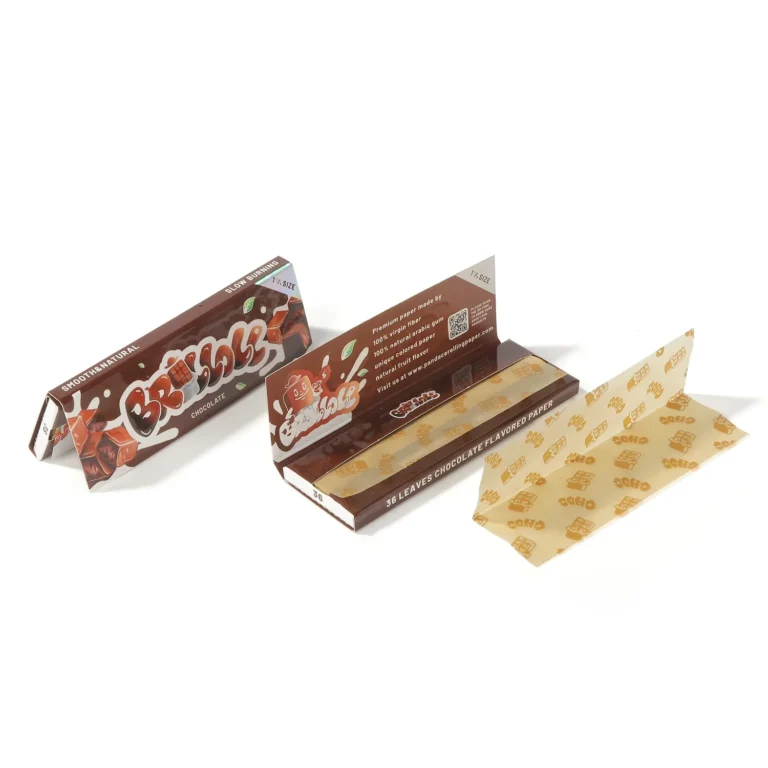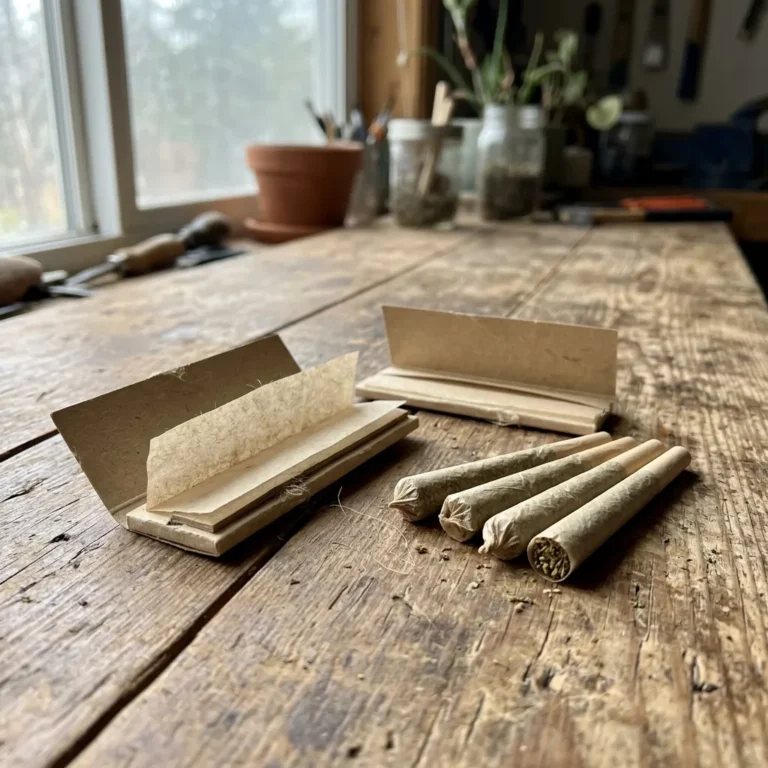

What’s the difference between rice, hemp, and wood pulp? In rolling papers, they are three plant-fiber bases that change taste, burn speed, ash, and how easy the leaf is to roll. Consumer guides (including Monkey King’s rice / hemp / wood pulp breakdown) usually rank them like this: rice for slowest, cleanest flavor; 大麻 for eco balance and grip; 木漿 for classic beginner-friendly sheets that often burn faster.
Ace Rolling 製造 大麻、竹子和木漿 directions for Signature and OEM programs (with ultra-thin options and Arabic gum on applicable SKUs). Rice-style sheets are a common market category—ask the factory what is available to sample if rice is your hero brief. Fiber name alone does not replace a burn test.
Side-by-Side Comparison
| 因素 | 米風格 | 麻 | 木漿 |
|---|---|---|---|
| Typical feel | Ultra-thin, smooth, translucent | Medium, slightly textured | Often thicker / stiffer |
| 味道 | Least paper taste / near neutral | Mild earthy or lightly sweet note | Most “papery,” especially thicker bleached |
| Burn (typical) | Slowest / longest session | Medium-slow, even | Faster than rice or hemp |
| 灰分 | Very low when thin | Low–moderate | Higher / more visible |
| 可捲性 | Hardest for beginners | Easiest daily balance | Very forgiving for learners |
| 環保故事 | Agricultural by-product narrative | Strong regenerative / natural story | Bleached vs unbleached changes the story |
| 最適合 | Flavor purists, skilled rollers | Everyday natural buyers, private label | Beginners, value / classic white packs |
Treat burn/taste rows as typical industry patterns. GSM, watermark, blend, and pack density can move a SKU up or down the table.
Rice Rolling Papers
Rice-style papers are made from processed rice fiber or rice-related furnish (some heritage “rice paper” labels historically meant ultra-thin refined sheets—not always literal rice). Modern natural brands usually mean a rice-fiber or rice-style ultra-thin leaf.
Strengths
- Minimal flavour interference—herb or tobacco leads
- Slow burn and low ash when the sheet is truly thin
- Clean, connoisseur positioning
Trade-offs
- Slippery, tear-prone for new rollers
- Humidity can make handling worse
- Demands careful tuck-and-seal technique
Choose rice when least paper taste is the KPI—not when you need a forgiving first-roll SKU.
Hemp Rolling Papers
Hemp papers use industrial hemp plant fiber. Monkey King–style explainers call out textured grip, a burn between rice and wood pulp, and a mild natural taste some buyers like.
Strengths
- Easier to roll than ultra-thin rice
- Strong “natural / organic / eco” merchandising
- Durable enough for daily use and private-label volume
Trade-offs
- Not fully tasteless—mild plant note vs rice neutrality
- Unbleached tan color is a brand choice some markets love, some do not
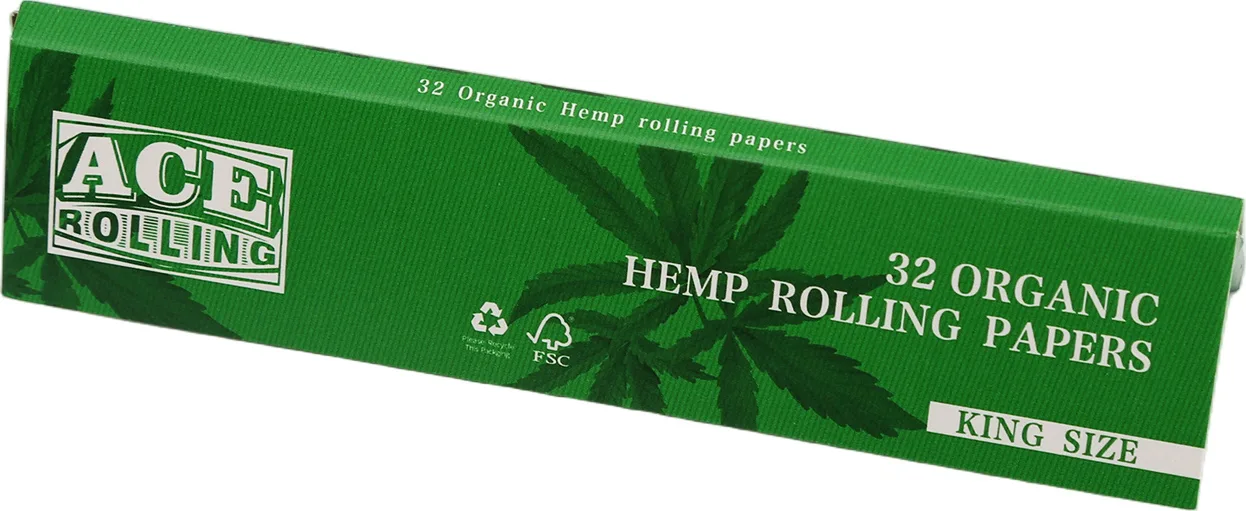
Ace Signature and OEM hemp lines (including organic hemp messaging on applicable packs) sit in this lane. Sample GSM before you print a “slow burn hemp” claim.
木漿捲紙
Wood pulp is the classic base—tree fiber formed into a sturdier leaf. It appears as bright bleached white 或 unbleached brown/tan.
Strengths
- Firm grip; beginner-friendly
- Widely available and familiar on shelves
- Stays lit more readily for quick sessions
Trade-offs
- Faster burn than rice or many hemp SKUs
- More paper taste and ash when the sheet is heavy
- Bleaching/process story matters for “natural” shoppers
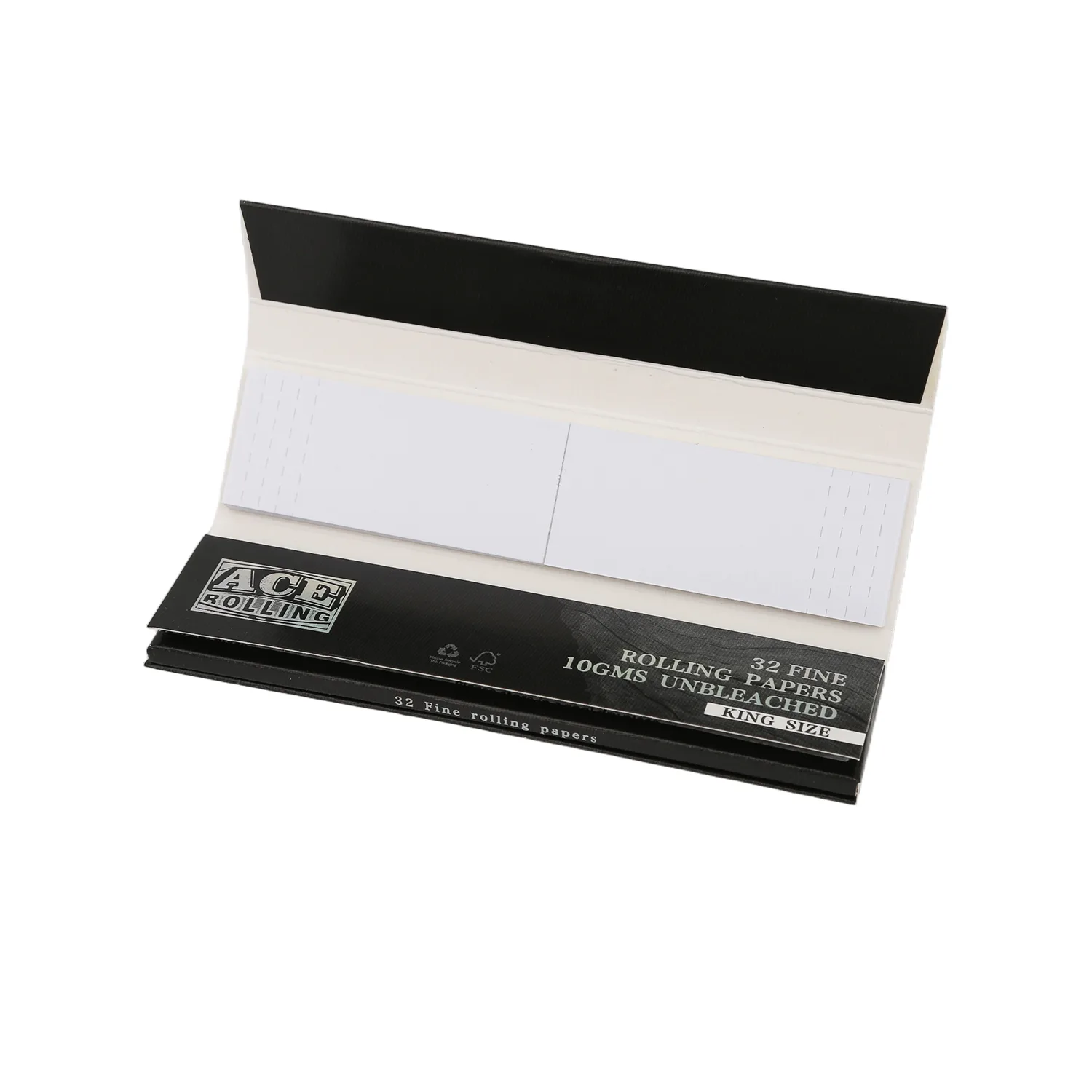
Unbleached pulp is not the same as hemp—read the fiber line on the pack.
Thickness (GSM) Matters as Much as Fiber Name
纖維回答「來自何種植物」。“ 克重 answers how much paper mass burns. Consumer guides often place rice-style in a lower GSM band, hemp in a mid band, and many wood pulp SKUs thicker—but factories can cut thin pulp or thicker hemp. Ace OEM pages highlight ultra-thin / slow-burn positioning (including low-teens gsm and flagship 10克/平方米級別 messaging where applicable).

Rule of thumb: compare fiber + GSM + gum on samples, not fiber logos alone.
Bleached, Unbleached, and Blends
Wood pulp and hemp both appear bleached-white or natural-tan. Color is a process choice, not proof of fiber. A bright white pack can still be pulp; a brown pack can be hemp, unbleached pulp, or a blend. Rice-style leaves are often pale and translucent even without a “kraft” look.
Some retail SKUs blend fibers for strength or cost. If the pack only says “natural” without naming rice, hemp, or wood pulp, treat the fiber as unverified until you get a factory spec sheet.
Which Should You Choose?
| 您想要… | 從…開始 |
|---|---|
| Purest flavor / least paper taste | 米紙風格超薄型 |
| Easy roll + natural story | 麻 |
| Beginner forgiveness / classic pack | 木漿(通常較厚) |
| Private-label first hero | Hemp or wood pulp, then add rice-style |
| 匹配的錐形 | Same fiber story as the booklet |
Shops often stock one hemp hero 和 one thin rice-style so customers can self-select. Distributors launching a brand should avoid three fibers × three sizes on day one—prove sell-through on a single material first.
For OEM, Ace Rolling commonly starts custom booklet programs around 2,000 單位, with sample kits before artwork lock. Arabic gum seals apply on applicable programs across materials. Private-label calendars often run about 兩個月 concept to delivery, with mass production about 四至五週 批准後。.
總結
Rice, hemp, and wood pulp differ mainly in thinness, taste interference, burn speed, and rollability: rice for clean slow sessions, hemp for balanced natural daily use, wood pulp for classic easy rolling. Ace Rolling builds hemp, bamboo, and wood pulp programs and can discuss rice-style options for sampling—lock the fiber and GSM on retained samples before you brand bulk.
常見問題
What’s the difference between rice, hemp, and wood pulp rolling papers?
Rice-style papers are usually ultra-thin with the least taste and a slow burn but harder rolling. Hemp is grippier, mildly earthy, and balanced for everyday use. Wood pulp is the classic, often thicker sheet that is easiest for beginners and typically burns faster. GSM and blends can shift any of those traits.
Which burns slower—rice or hemp?
Rice-style ultra-thin papers usually burn slowest when well made; hemp typically sits in a medium-slow band, still slower than many thick wood pulp sheets. Pack density and watermark matter as much as the fiber name. Confirm with a side-by-side burn test on your fill.
Which material is best for beginners?
Wood pulp or mid-weight hemp is usually easier than ultra-thin rice because of grip and tear resistance. Rice rewards skill and dry hands. Ace Rolling often recommends sampling a forgiving hemp or pulp SKU first for new private-label launches, then adding a thin rice-style line later.
Does Ace Rolling make all three materials?
Ace Rolling’s core OEM and Signature manufacturing directions include hemp, bamboo, and wood pulp, with ultra-thin options and Arabic gum on applicable programs. Rice-style availability should be confirmed on a sample request. Custom booklet MOQs commonly start around 2,000 units after approvals.